Home/Exhibits/Earth & Ecology/If there were no life on Earth

If there were no life on Earth

Since the emergence of life, the Earth has shaped the development of life in its own environment.

If there were no life on Earth — Earth & Ecology exhibit for science museums
Studio rendering
CategoryEarth & Ecology
Standard sizeCustom size
SupplySingle unit or batch · OEM to your drawing
Lead timeStandard 4–8 weeks after deposit (confirmed per contract)
Warranty1 year, structure and control
DocumentsSpecification sheet · control diagram · spare-part list

A standard catalogue model: the dimensions, control package and finish are fixed, which is what keeps the price and the lead time predictable. Size, colour and interface language can be adapted without a new design cycle.
Ask about this model → Email us
01 / Overview

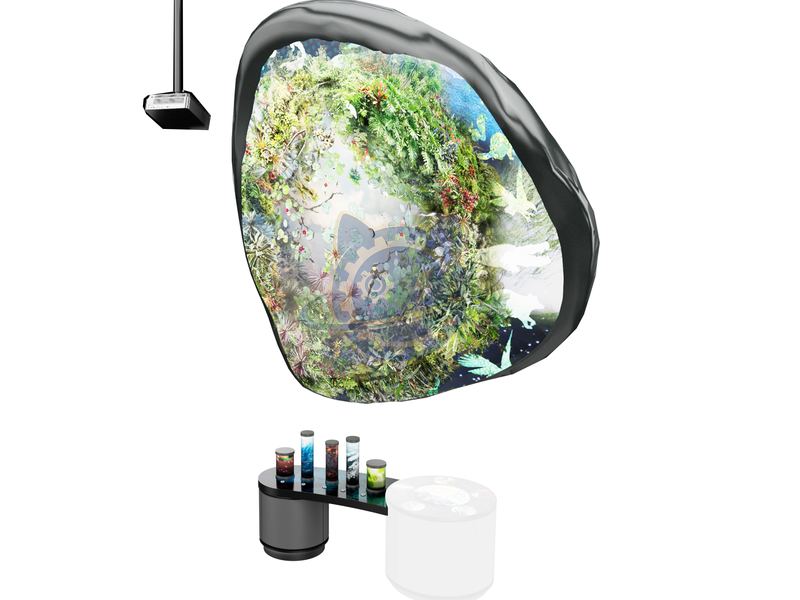
Since the emergence of life, the Earth has shaped the development of life in its own environment. Similarly, the emergence and disappearance of living species will also change the Earth accordingly. If all life on Earth disappeared: animals, plants, algae in the ocean, and even bacteria. What will happen next? The pulsation of the blue dot showcases the unique vitality of the Earth through its iconic blue image in the vast universe. The interweaving of vast oceans and clouds on Earth symbolizes the activity and vitality of the Earth's system. From ocean circulation to atmospheric movement, from ecological diversity to climate change, these are not only natural phenomena, but also vivid manifestations of the Earth as a cradle of life. As a part of this system, humans are deeply analyzing the scientific principles behind these dynamics through technological means, aiming to better understand the Earth, respond to environmental changes, and ensure the health and future of this blue planet.

02 / How visitors use it

The unit is designed for unsupervised public use: controls are recessed or shielded, moving parts are enclosed, and the interface is operable by a child of about six with no instruction. Where a screen is used, the language can be switched without changing the hardware, and the content can be replaced on site.

03 / The science behind it

Earth is the only known planet in the universe with life, and all life on Earth depends on its ecological environment. Since the emergence of life, Earth has shaped the development of life with its own environment, but the emergence of life species has also changed certain aspects of Earth's state. If all life on Earth disappeared: animals, plants, algae in the ocean, and even bacteria. What will happen next? 1. Peel off trees, grass, and shrubs. Eliminate animals, mushrooms, and microorganisms. Quiet birds, frogs, cicadas. Clear the ocean of fish, jellyfish, octopuses, whales, and crabs. 2. Take away the fragments of life, as well as fallen leaves, pearls, and spider webs. Sift out pollen from the wind and remove spores and seeds from the soil. Dig out bird droppings from the island and repair the pit where whales take root and feed on the sea floor. Flatten ant nests and termite mounds, and break beaver dams. 3. Remove fossils, large amounts of bones, and shells.

04 / Built for a public floor

Every unit leaves the factory after a running test: mechanisms cycled, electronics burned in, edges dressed, fixings torqued and marked. Wear parts — bearings, sliders, lamps, belts, touch panels — are modular and listed on the spare-part sheet, so a venue technician can replace them without returning the exhibit. Crating is plywood with foam blocking; the loading plan and packing list travel with the shipment.

Same category

More in Earth & Ecology

Other models from the Earth & Ecology line, all held to the same specification and the same control package.

Start a project

Send us your exhibit list.
We will come back with a price.

Attach a theme outline, a floor plan, or nothing at all — a photo of the space is enough to start. Quotations are issued against a real exhibit list, not per-square-metre guesses.

WeChat QR code — scan to message us Scan to add us
on WeChat