Home/Exhibits/Life Science & Health/AI assisted drug design

AI assisted drug design

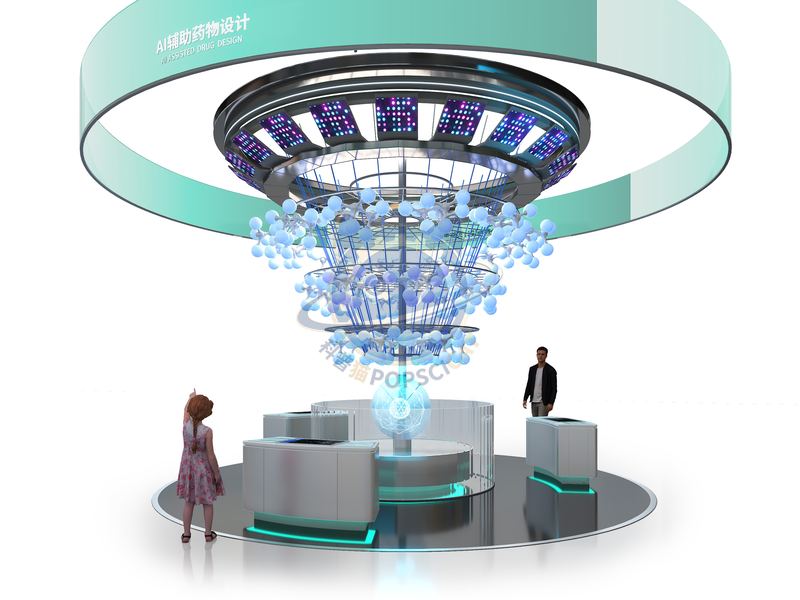
AI assisted drug design is achieved through the integration of high-throughput pharmacokinetic simulations and drug…

AI assisted drug design — Life Science & Health exhibit for science museums
Reference image
CategoryLife Science & Health
Standard sizeCustom size
SupplySingle unit or batch · OEM to your drawing
Lead timeStandard 4–8 weeks after deposit (confirmed per contract)
Warranty1 year, structure and control
DocumentsSpecification sheet · control diagram · spare-part list

A standard catalogue model: the dimensions, control package and finish are fixed, which is what keeps the price and the lead time predictable. Size, colour and interface language can be adapted without a new design cycle.

Ask about this model → Email us
01 / Overview

AI assisted drug design is achieved through the integration of high-throughput pharmacokinetic simulations and drug molecule property predictions, as well as advanced evolutionary algorithms and massive amounts of biological data, to automate the drug design process. This includes various stages such as target discovery and confirmation in drug design, discovery and optimization of drug lead compounds, drug pharmacokinetics, and toxicity evaluation. AI assisted drug design is the trend for future innovative drug development, changing the traditional drug development process that is time-consuming, costly, and has a low success rate, and will strongly promote breakthroughs and innovation in new drug development.

02 / How visitors use it

The unit is designed for unsupervised public use: controls are recessed or shielded, moving parts are enclosed, and the interface is operable by a child of about six with no instruction. Where a screen is used, the language can be switched without changing the hardware, and the content can be replaced on site.

03 / The science behind it

Drug development is a lengthy systematic engineering process that requires stages such as target identification and validation, lead discovery, lead optimization, preclinical research, clinical trials, and marketing. Recently, drug development has been in a state of high investment and low output, requiring new technologies to bring progress in drug development. It is worth considering how artificial intelligence and big data can play a role in today's drug development. The data-driven AI model can avoid the drawbacks of wasting manpower and resources in previous experimental trial and error models, making drug development more precise, personalized, information-based, and intelligent. AI technology has been involved in the development of new drugs for decades and has achieved significant success. AI helps find drug targets, perform virtual screening, optimize structures, and improve the efficiency and quality of exploring pharmaceuticals.

04 / Built for a public floor

Every unit leaves the factory after a running test: mechanisms cycled, electronics burned in, edges dressed, fixings torqued and marked. Wear parts — bearings, sliders, lamps, belts, touch panels — are modular and listed on the spare-part sheet, so a venue technician can replace them without returning the exhibit. Crating is plywood with foam blocking; the loading plan and packing list travel with the shipment.

Same category

More in Life Science & Health

Other models from the Life Science & Health line, all held to the same specification and the same control package.

Start a project

Send us your exhibit list.
We will come back with a price.

Attach a theme outline, a floor plan, or nothing at all — a photo of the space is enough to start. Quotations are issued against a real exhibit list, not per-square-metre guesses.

WeChat QR code — scan to message us Scan to add us
on WeChat