Home/Exhibits/Life Science & Health/The development of gene sequencing

The development of gene sequencing

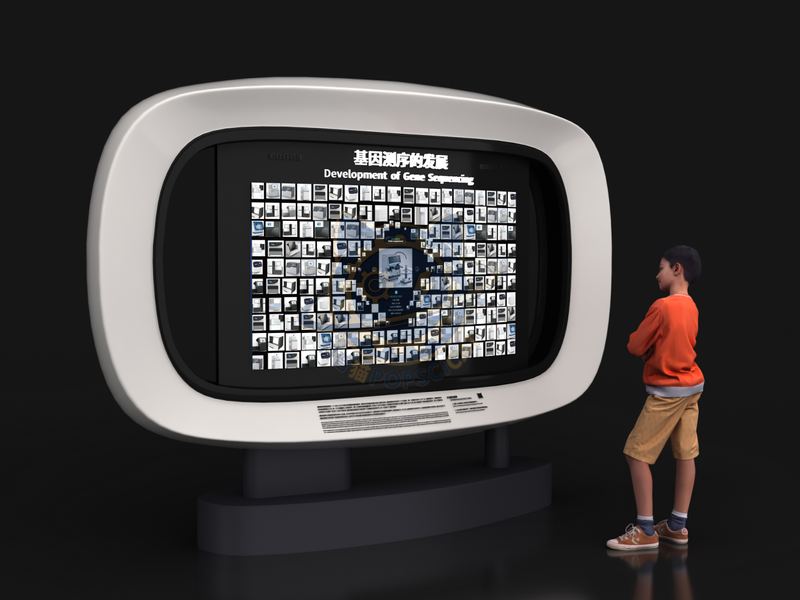
Gene sequencing refers to determining the precise sequence of nucleotides in a DNA molecule fragment, helping…

The development of gene sequencing — Life Science & Health exhibit for science museums
Reference image
CategoryLife Science & Health
Standard sizeCustom size
SupplySingle unit or batch · OEM to your drawing
Lead timeStandard 4–8 weeks after deposit (confirmed per contract)
Warranty1 year, structure and control
DocumentsSpecification sheet · control diagram · spare-part list

A standard catalogue model: the dimensions, control package and finish are fixed, which is what keeps the price and the lead time predictable. Size, colour and interface language can be adapted without a new design cycle.

Ask about this model → Email us
01 / Overview

Gene sequencing refers to determining the precise sequence of nucleotides in a DNA molecule fragment, helping scientists decipher genetic information. Up to now, gene sequencing technology has gone through three generations of development: the first generation of sequencing began in 1977, when Professor Frederick Sanger invented the dideoxy chain termination method, which had low throughput and high cost; The second generation sequencing, also known as high-throughput sequencing, began around 2005. It enabled scientists to sequence large amounts of DNA fragments in parallel, greatly improving sequencing speed and efficiency; The third-generation sequencing technology, namely single-molecule sequencing, began around 2008 and can directly read continuous sequences of tens or even hundreds of thousands of bases, further improving sequencing speed. Gene sequencer is the core equipment of gene sequencing. With the joint promotion of scientific breakthroughs and technological progress, gene sequencer has become increasingly efficient and economical. It can be said that the history of the advancement of gene sequencers is also the history of the development of gene sequencing. By comparing.
02 / How visitors use it

The unit is designed for unsupervised public use: controls are recessed or shielded, moving parts are enclosed, and the interface is operable by a child of about six with no instruction. Where a screen is used, the language can be switched without changing the hardware, and the content can be replaced on site.

03 / The science behind it

A gene sequencer, also known as a DNA sequencer, is an instrument specifically designed to determine nucleotide sequences in DNA or RNA molecules. These devices help scientists decipher genetic information by identifying the order of the four bases that make up genes (adenine A, thymine T, cytosine C, and guanine G). After four generations of technological development, gene sequencing has become highly efficient and cost-effective, providing stronger support for personalized medicine and precision therapy.

04 / Built for a public floor

Every unit leaves the factory after a running test: mechanisms cycled, electronics burned in, edges dressed, fixings torqued and marked. Wear parts — bearings, sliders, lamps, belts, touch panels — are modular and listed on the spare-part sheet, so a venue technician can replace them without returning the exhibit. Crating is plywood with foam blocking; the loading plan and packing list travel with the shipment.

Same category

More in Life Science & Health

Other models from the Life Science & Health line, all held to the same specification and the same control package.

Start a project

Send us your exhibit list.
We will come back with a price.

Attach a theme outline, a floor plan, or nothing at all — a photo of the space is enough to start. Quotations are issued against a real exhibit list, not per-square-metre guesses.

WeChat QR code — scan to message us Scan to add us
on WeChat