Home/Exhibits/Life Science & Health/Identify your differences

Identify your differences

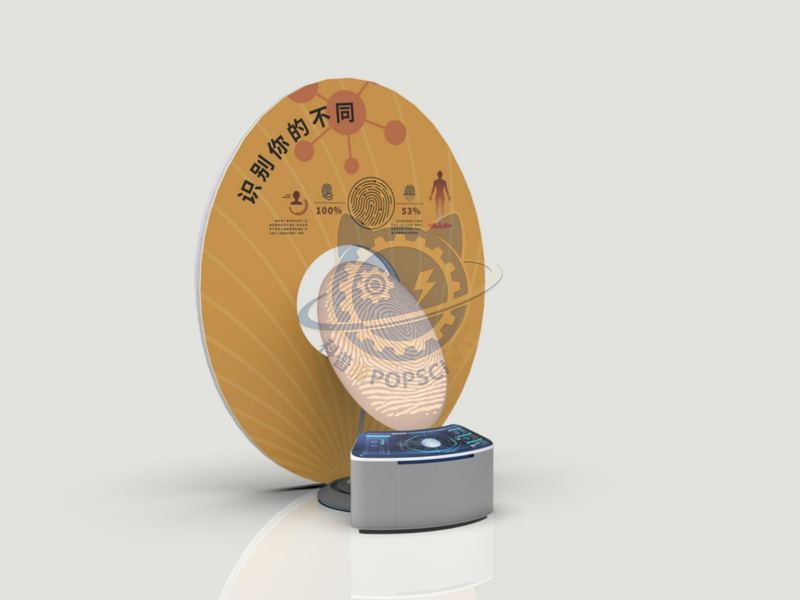
Fingerprint is a unique texture pattern on the skin at the end of human fingers, composed of a series of concave and…

Identify your differences — Life Science & Health exhibit for science museums
Reference image
CategoryLife Science & Health
Standard sizeCustom size
SupplySingle unit or batch · OEM to your drawing
Lead timeStandard 4–8 weeks after deposit (confirmed per contract)
Warranty1 year, structure and control
DocumentsSpecification sheet · control diagram · spare-part list

A standard catalogue model: the dimensions, control package and finish are fixed, which is what keeps the price and the lead time predictable. Size, colour and interface language can be adapted without a new design cycle.
Ask about this model → Email us
01 / Overview

Fingerprint is a unique texture pattern on the skin at the end of human fingers, composed of a series of concave and convex lines, which is the innate identity symbol of every person. These patterns are already determined during fetal development and remain unchanged throughout life. This feature makes fingerprints a reliable personal identification marker, widely used in fields such as identity authentication, financial transactions, and criminal investigations.

02 / How visitors use it

The unit is designed for unsupervised public use: controls are recessed or shielded, moving parts are enclosed, and the interface is operable by a child of about six with no instruction. Where a screen is used, the language can be switched without changing the hardware, and the content can be replaced on site.

03 / The science behind it

Fingerprints, also known as handprints, are raised lines on the surface of the skin. Due to the combined effect of genetics and environment, fingerprints are produced by everyone, but they are different from each other. Due to the extremely low similarity rate of fingerprints, approximately one in 15 billion, it is called a "human ID card".

04 / Built for a public floor

Every unit leaves the factory after a running test: mechanisms cycled, electronics burned in, edges dressed, fixings torqued and marked. Wear parts — bearings, sliders, lamps, belts, touch panels — are modular and listed on the spare-part sheet, so a venue technician can replace them without returning the exhibit. Crating is plywood with foam blocking; the loading plan and packing list travel with the shipment.

Same category

More in Life Science & Health

Other models from the Life Science & Health line, all held to the same specification and the same control package.

Start a project

Send us your exhibit list.
We will come back with a price.

Attach a theme outline, a floor plan, or nothing at all — a photo of the space is enough to start. Quotations are issued against a real exhibit list, not per-square-metre guesses.

WeChat QR code — scan to message us Scan to add us
on WeChat