The "four investigators" on the probe refer to the four key technical devices used during the Tianwen-1 Mars landing…
| Category | Aerospace & Astronomy |
|---|---|
| Standard size | Custom size |
| Supply | Single unit or batch · OEM to your drawing |
| Lead time | Standard 4–8 weeks after deposit (confirmed per contract) |
| Warranty | 1 year, structure and control |
| Documents | Specification sheet · control diagram · spare-part list |
A standard catalogue model: the dimensions, control package and finish are fixed, which is what keeps the price and the lead time predictable. Size, colour and interface language can be adapted without a new design cycle.
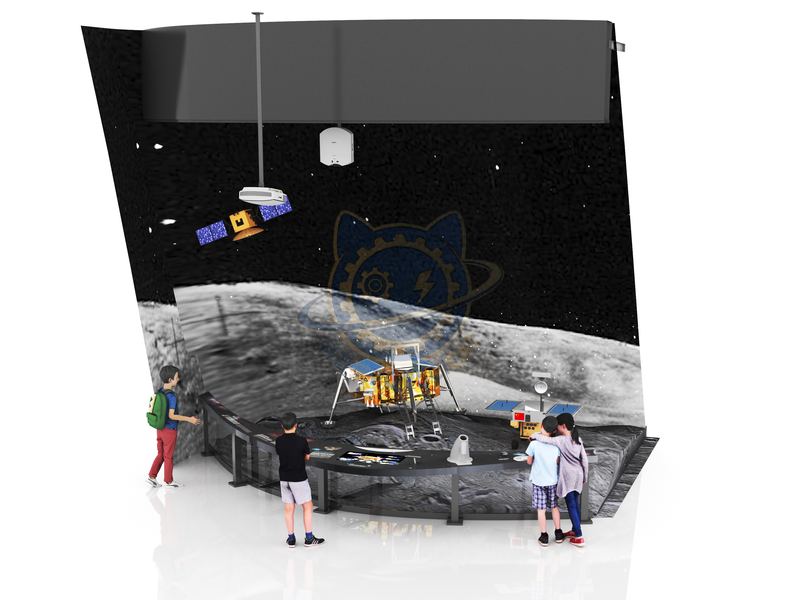
The "four investigators" on the probe refer to the four key technical devices used during the Tianwen-1 Mars landing process: laser ranging, microwave ranging and speed measurement, optical coarse obstacle avoidance, and laser 3D imaging. These devices together ensure that the probe can accurately measure distance and velocity to the surface of Mars, identify and avoid obstacles, and during the last 100 meters of hovering phase, quickly obtain data three times, each time for three seconds, through a time window of only 10 seconds, to determine the optimal landing site. If the correct data cannot be obtained within this short period of time, the detector will have to perform blind descent. In China's lunar exploration missions, the Chang'e-3 and Chang'e-4 probes use key technological equipment similar to the Tianwen-1 Mars probe to ensure that they can accurately identify landing sites, avoid potential obstacles, and achieve a smooth landing on the lunar surface.
The unit is designed for unsupervised public use: controls are recessed or shielded, moving parts are enclosed, and the interface is operable by a child of about six with no instruction. Where a screen is used, the language can be switched without changing the hardware, and the content can be replaced on site.
The laser detection obstacle avoidance movement technology of the lunar rover uses laser sensors to perceive the surrounding environment, navigate and avoid obstacles for the lunar rover. This technology can help lunar rovers avoid obstacles on the surface of the moon, such as rocks, traps, etc., ensuring the safety and success of the mission. The detector's multiple safety devices include laser ranging, microwave ranging and speed measurement, optical coarse obstacle avoidance, and laser 3D imaging, such as four investigators searching for the best landing point. The laser detection obstacle avoidance and movement technology of lunar rover usually includes the following steps: 1 Laser emission: The laser on the lunar rover emits a laser beam, and the energy of the laser beam propagates at the speed of light. two Laser detection: The laser beam will shine on the surface of surrounding objects, and some of the laser energy will be reflected back to the lunar rover. three Reflection detection: The laser sensor on the lunar rover will receive the reflected laser beam and measure the time difference of the laser return. four Distance calculation: based on laser return.
Every unit leaves the factory after a running test: mechanisms cycled, electronics burned in, edges dressed, fixings torqued and marked. Wear parts — bearings, sliders, lamps, belts, touch panels — are modular and listed on the spare-part sheet, so a venue technician can replace them without returning the exhibit. Crating is plywood with foam blocking; the loading plan and packing list travel with the shipment.
Other models from the Aerospace & Astronomy line, all held to the same specification and the same control package.

A curved screen and twelve seats for a six-minute flight.

Move a planet across the band and watch liquid water survive or boil.

A comet model whose tail always points away from the light source.

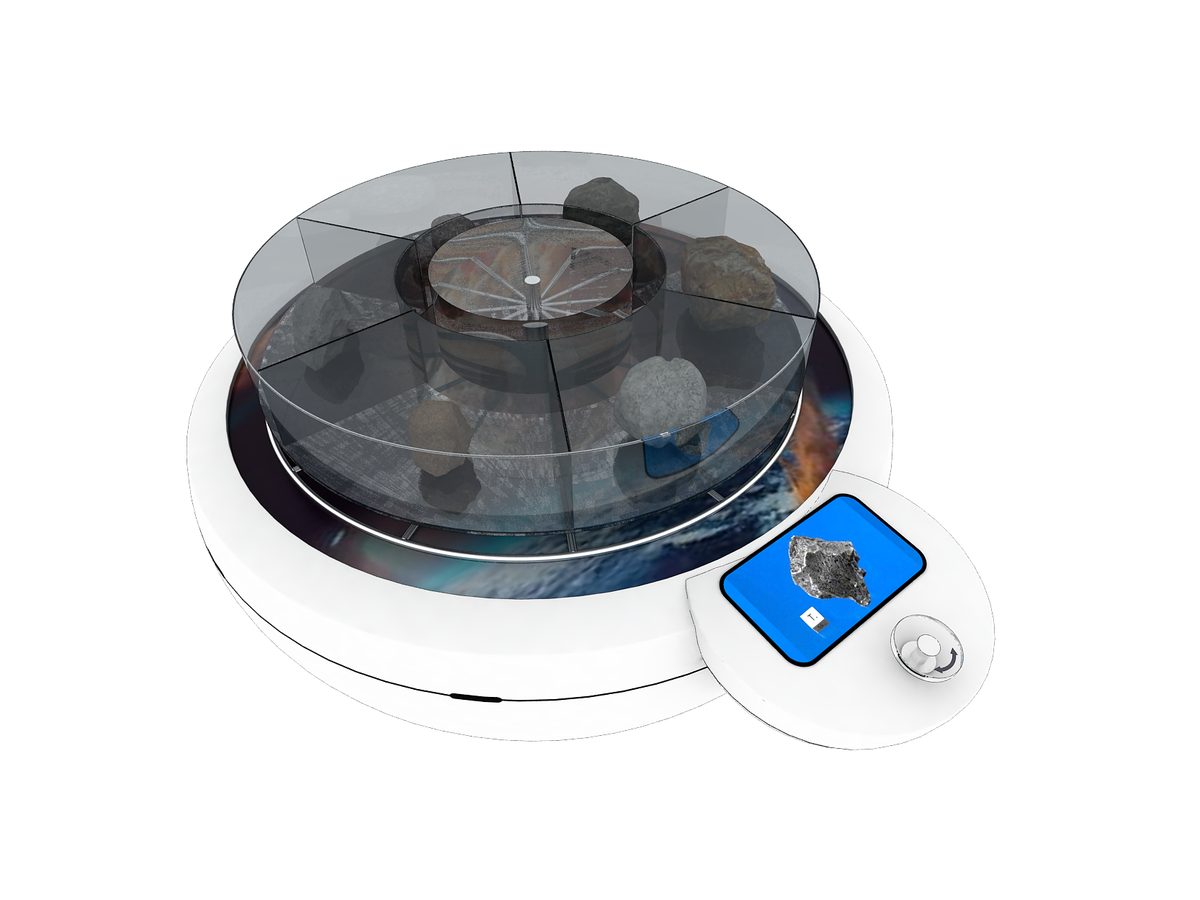
Real meteorite samples beside a simulated entry trail.
Attach a theme outline, a floor plan, or nothing at all — a photo of the space is enough to start. Quotations are issued against a real exhibit list, not per-square-metre guesses.
Scan to add us