Home/Exhibits/Aerospace & Astronomy/Intelligent 'Butler' on the Space Station

Intelligent 'Butler' on the Space Station

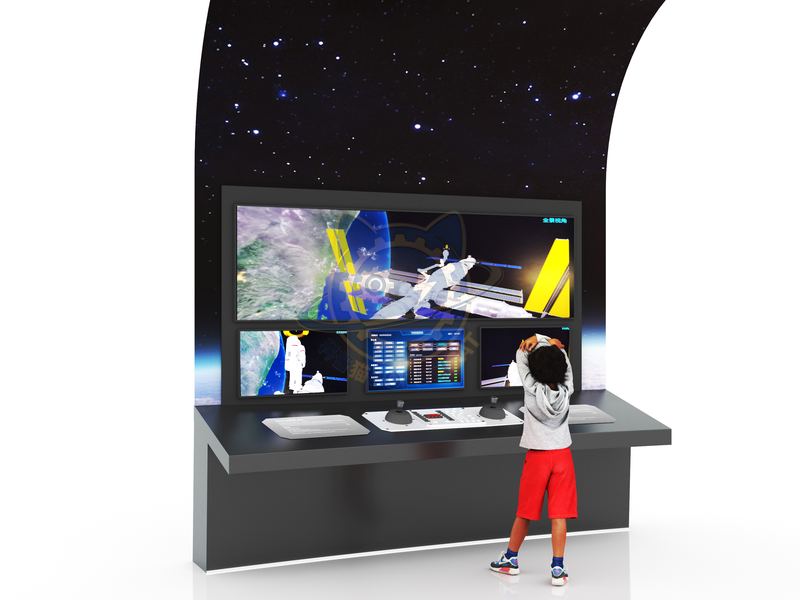
The core module of the Tiangong space station is equipped with an intelligent "steward" - a large robotic arm,…

Intelligent 'Butler' on the Space Station — Aerospace & Astronomy exhibit for science museums
Reference image
CategoryAerospace & Astronomy
Standard sizeCustom size
SupplySingle unit or batch · OEM to your drawing
Lead timeStandard 4–8 weeks after deposit (confirmed per contract)
Warranty1 year, structure and control
DocumentsSpecification sheet · control diagram · spare-part list

A standard catalogue model: the dimensions, control package and finish are fixed, which is what keeps the price and the lead time predictable. Size, colour and interface language can be adapted without a new design cycle.
Ask about this model → Email us
01 / Overview

The core module of the Tiangong space station is equipped with an intelligent "steward" - a large robotic arm, consisting of seven joints, two end effectors, two hand eye cameras, two arm rods, two elbow cameras, and a central controller. Among them, the seven joints that rotate independently are designed with multiple degrees of freedom, reducing the disturbance force generated by the base and allowing the end effector to be sent to the designated position. The robotic arm can perform tasks such as space station module repositioning and auxiliary docking, hovering spacecraft capture and auxiliary docking, assisting astronauts in extravehicular activities, and various load handling outside the cabin.

02 / How visitors use it

The unit is designed for unsupervised public use: controls are recessed or shielded, moving parts are enclosed, and the interface is operable by a child of about six with no instruction. Where a screen is used, the language can be switched without changing the hardware, and the content can be replaced on site.

03 / The science behind it

Space robots, as a typical intelligent operating system, are gradually changing the traditional modes of space transportation, in orbit construction, in orbit maintenance, and planetary exploration. They are one of the important enabling means for future unmanned and manned space missions. In manned space exploration activities, space robots serve as explorers before manned missions, assistants during manned missions, and maintainers after manned missions; In unmanned space exploration activities, robots can effectively expand the range of human activities and control.

04 / Built for a public floor

Every unit leaves the factory after a running test: mechanisms cycled, electronics burned in, edges dressed, fixings torqued and marked. Wear parts — bearings, sliders, lamps, belts, touch panels — are modular and listed on the spare-part sheet, so a venue technician can replace them without returning the exhibit. Crating is plywood with foam blocking; the loading plan and packing list travel with the shipment.

Same category

More in Aerospace & Astronomy

Other models from the Aerospace & Astronomy line, all held to the same specification and the same control package.

Start a project

Send us your exhibit list.
We will come back with a price.

Attach a theme outline, a floor plan, or nothing at all — a photo of the space is enough to start. Quotations are issued against a real exhibit list, not per-square-metre guesses.

WeChat QR code — scan to message us Scan to add us
on WeChat