Home/Exhibits/Aerospace & Astronomy/Rocket Launch Simulator

Rocket Launch Simulator

Countdown, throttle and staging on a two-metre launch pad.

Rocket Launch Simulator — Aerospace & Astronomy exhibit for science museums
Model CX-QY-03Reference image
CategoryAerospace & Astronomy
Model codeCX-QY-03
Standard size4 x 2.5 x 5 m
SupplySingle unit or batch · OEM to your drawing
Lead timeStandard 4–8 weeks after deposit (confirmed per contract)
Warranty2 years, structure and control
DocumentsSpecification sheet · control diagram · spare-part list

A standard catalogue model: the dimensions, control package and finish are fixed, which is what keeps the price and the lead time predictable. Size, colour and interface language can be adapted without a new design cycle.

Ask about this model → Email us
01 / Overview

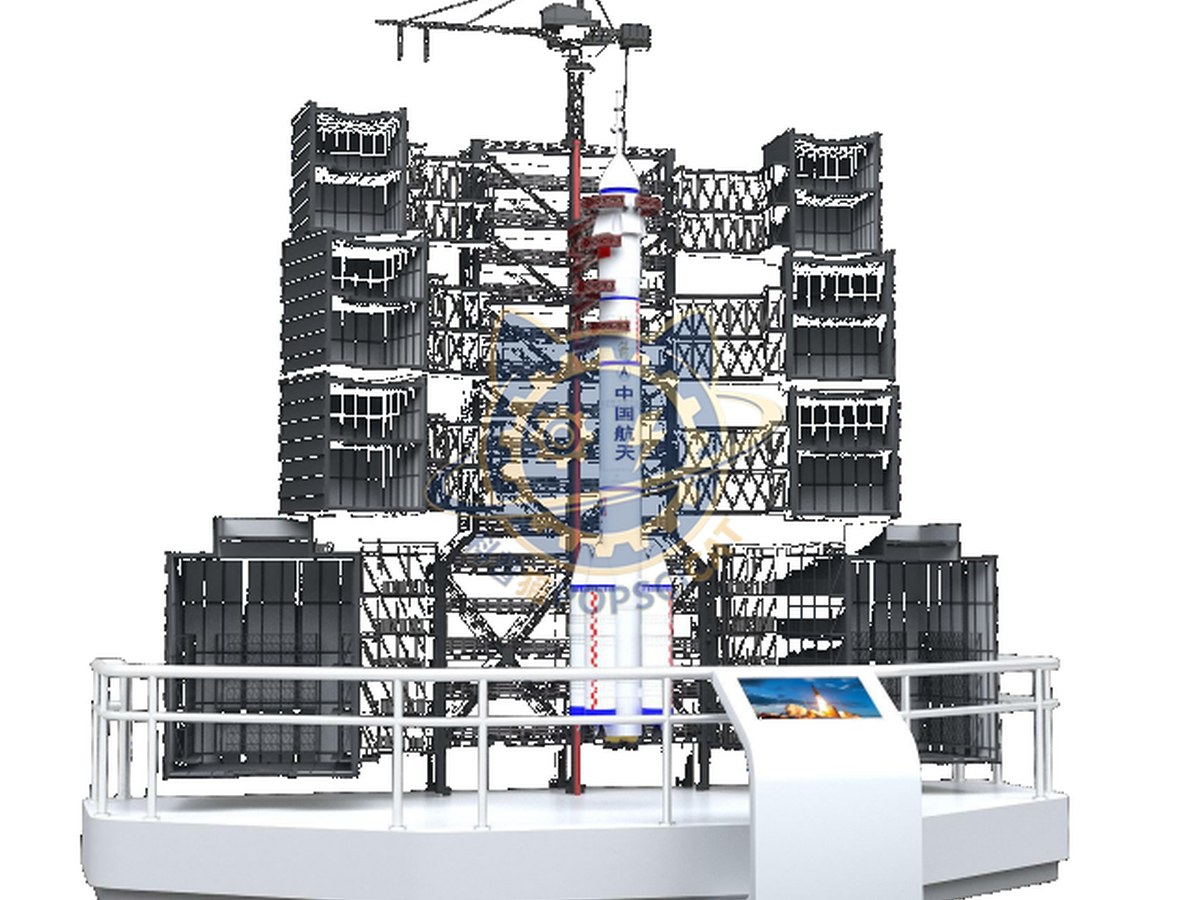
The history of China's rocket development began in the 1950s, starting from the initial imitation of Soviet technology. Through independent research and innovation, it gradually developed into a global space power with multiple models and the ability to perform diverse space missions. Special rocket launch method: Sea launch. At 11:30 am on April 30, 2022, the Long March 11 carrier rocket successfully launched the Jilin-1 high-resolution series satellites developed by Jilin Changguang Satellite Co., Ltd. into the designated orbit in China's waters using the "one rocket, five stars" method. The launch mission was a complete success. Sea rocket launches not only significantly improve the safety of rocket launches, but also enable the launch platform to be moved to different sea areas according to the needs of the launch mission, providing greater flexibility for launches.

02 / How visitors use it

The unit is designed for unsupervised public use: controls are recessed or shielded, moving parts are enclosed, and the interface is operable by a child of about six with no instruction. Where a screen is used, the language can be switched without changing the hardware, and the content can be replaced on site.

03 / The science behind it

A rocket is a jet propulsion device that sprays hot air at high speed backwards and uses the generated reaction force to move forward. By igniting the combustion agent and oxidant in the combustion chamber, high-temperature and high-pressure gas is generated and injected backwards at high speed, thereby obtaining forward thrust. After decades of development, China's rocket technology has formed a complete rocket family, including multiple types of rockets such as the Long March series, which can meet launch missions of different masses and orbit requirements. The characteristics of Chinese rockets lie in their independent and controllable propulsion technology, as well as high reliability and safety. For example, the Long March 5 rocket, with its powerful carrying capacity, has become the most powerful rocket in China, capable of carrying out various deep space exploration missions including lunar exploration and Mars exploration. In addition, China is actively developing a new generation of carrier rockets, such as the Long March 9, which is expected to reach a new level of thrust to meet the needs of future larger scale space exploration.
04 / Built for a public floor

Every unit leaves the factory after a running test: mechanisms cycled, electronics burned in, edges dressed, fixings torqued and marked. Wear parts — bearings, sliders, lamps, belts, touch panels — are modular and listed on the spare-part sheet, so a venue technician can replace them without returning the exhibit. Crating is plywood with foam blocking; the loading plan and packing list travel with the shipment.

Same category

More in Aerospace & Astronomy

Other models from the Aerospace & Astronomy line, all held to the same specification and the same control package.

Start a project

Send us your exhibit list.
We will come back with a price.

Attach a theme outline, a floor plan, or nothing at all — a photo of the space is enough to start. Quotations are issued against a real exhibit list, not per-square-metre guesses.