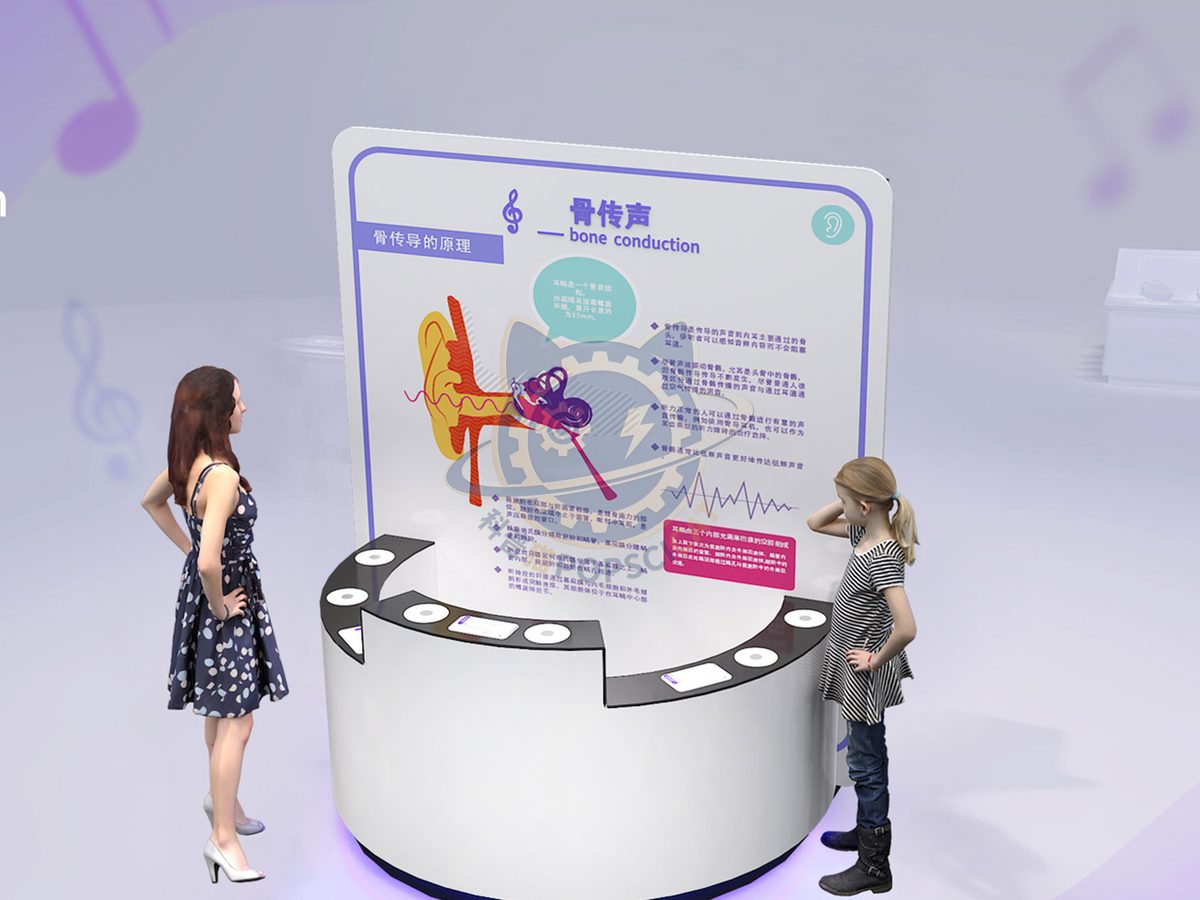
Hold the transducer to your skull and the sound bypasses the ear drum.
| Category | Basic Science |
|---|---|
| Interaction | Interactive installation |
| Model code | — |
| Standard size | Custom size |
| Supply | Single unit or batch · OEM to your drawing |
| Lead time | Standard 4–8 weeks after deposit (confirmed per contract) |
| Warranty | 2 years, structure and control |
| Documents | Specification sheet · control diagram · spare-part list |
A standard catalogue model: the drawing, control package and finish are fixed, which is what keeps the price and the lead time predictable. Size, colour and interface language can be adapted without a new design cycle.
Understand the principle of bone conduction through the interactive process of placing the elbow in a designated position and hearing clear sounds. The exhibit mainly consists of players, bone conduction devices, etc. Press the start button, place your elbow in the designated position, or place your chin on the designated position to hear a very clear sound. This is because when the elbow or chin comes into contact with a metal piece, the vibration of the sound source is transmitted through the metal piece to the skull or jawbone, and then transmitted to the auditory nerve and brain, thereby feeling the sound. This sound transmission method is called bone conduction. Experiments have shown that the transmission of sound through the skull and jawbone is better than through air. Bone conduction headphones and hearing aids both utilize the principle of bone conduction. Target audience: Adolescents aged 6-15. Display format: Electromechanical interactive device operation instructions (audience experience) 1 Visitors press the start button to initiate interaction; 2. Visitors place their elbows on the vibrating platform or place their chin on it.
Interaction type: Interactive installation. The unit is designed for unsupervised public use: controls are recessed or shielded, moving parts are enclosed, and the interface is operable by a child of about six with no instruction. Where a screen is used, the language can be switched without changing the hardware, and the content can be replaced on site.
Bone conduction is a way in which sound waves are transmitted to the inner ear: sound waves directly pass through the skull, causing corresponding fluctuations in the external lymph nodes and stimulating the spiral organ of the cochlea to produce hearing. Bone conduction refers to the proliferation and elongation of oriented osteogenic precursor cells from the host bone surface and bone marrow around the implant bed into the surface of the implanted bone and its cavity, producing osteoblasts to form new bone. The external sound heard by the human ear is the vibration of the external air, which transmits the information of the sound to the auditory nerve through the eardrum. With the processing of the brain, it forms what we call hearing. And the sound we hear when we speak ourselves is transmitted directly from the skull to the auditory nerve through the vibration of the vocal cords, combined with the processing of the brain to form another type of hearing. Reference materials.
Every unit leaves the factory after a running test: mechanisms cycled, electronics burned in, edges dressed, fixings torqued and marked. Wear parts — bearings, sliders, lamps, belts, touch panels — are modular and listed on the spare-part sheet, so a venue technician can replace them without returning the exhibit. Crating is plywood with foam blocking; the loading plan and packing list travel with the shipment.
Other models from the Basic Science line, all held to the same drawing and the same control package.

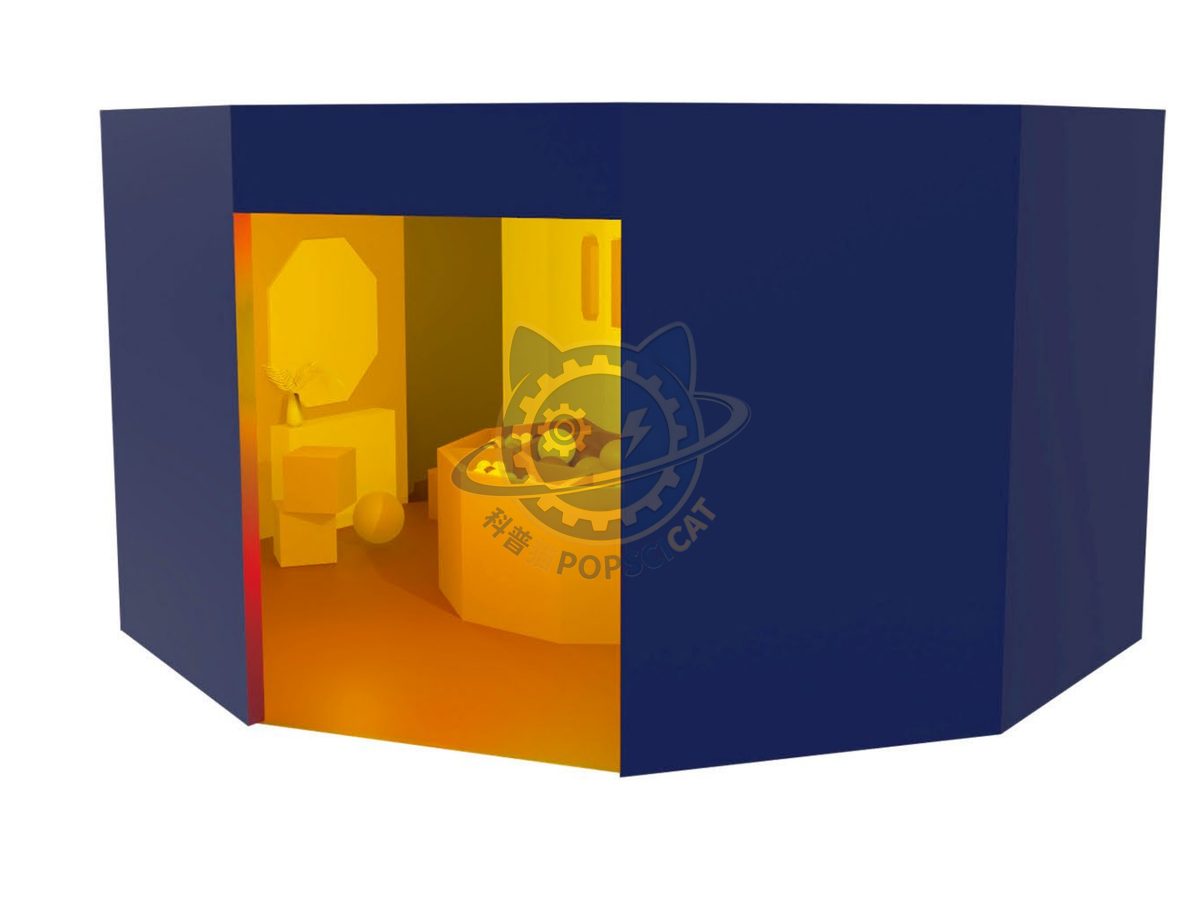
A box of mirrors that repeats the visitor into an endless corridor of light.

Coloured discs drain to grey as the spin speed passes the eye's limit.

Gas discharge tubes and a slit spectroscope show emission lines directly.
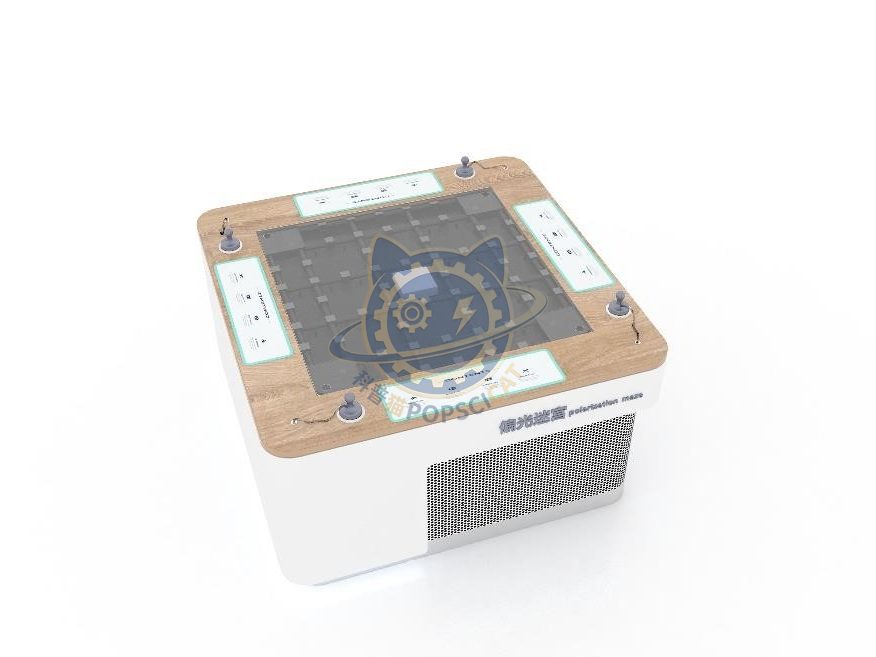
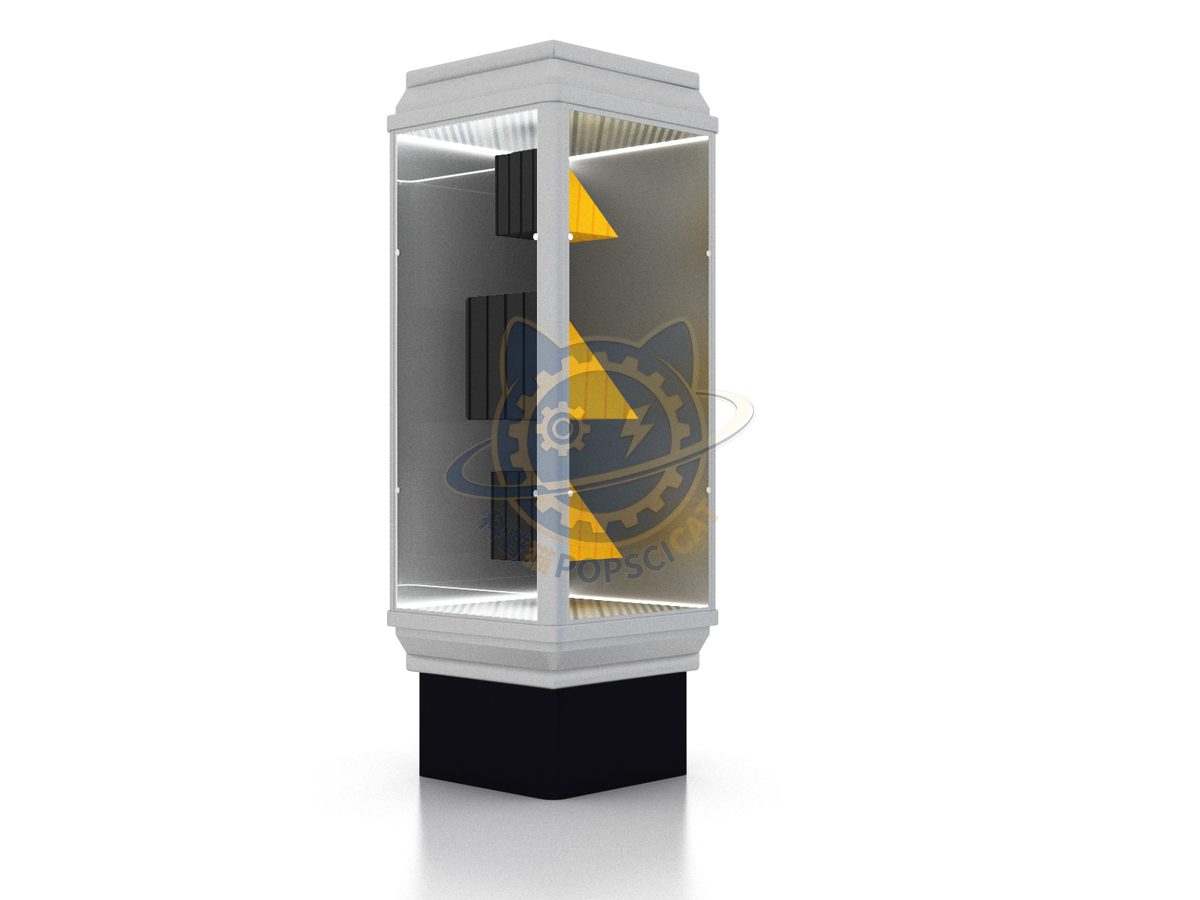
KX-GY-03Rotate two polarising filters and watch colours appear and vanish.
Attach a theme outline, a floor plan, or nothing at all — a photo of the space is enough to start. Quotations are issued against real drawings, not per-square-metre guesses.