Pantograph

A contact wire and pantograph keep current flowing at speed.

Pantograph — City & Society exhibit for science museums
Model PANTOGRAPHStudio rendering
CategoryCity & Society
Model code—
Standard sizeCustom size
SupplySingle unit or batch · OEM to your drawing
Lead timeStandard 4–8 weeks after deposit (confirmed per contract)
Warranty2 years, structure and control
DocumentsSpecification sheet · control diagram · spare-part list

A standard catalogue model: the drawing, control package and finish are fixed, which is what keeps the price and the lead time predictable. Size, colour and interface language can be adapted without a new design cycle.
Ask about this model → Email us
01 / Overview

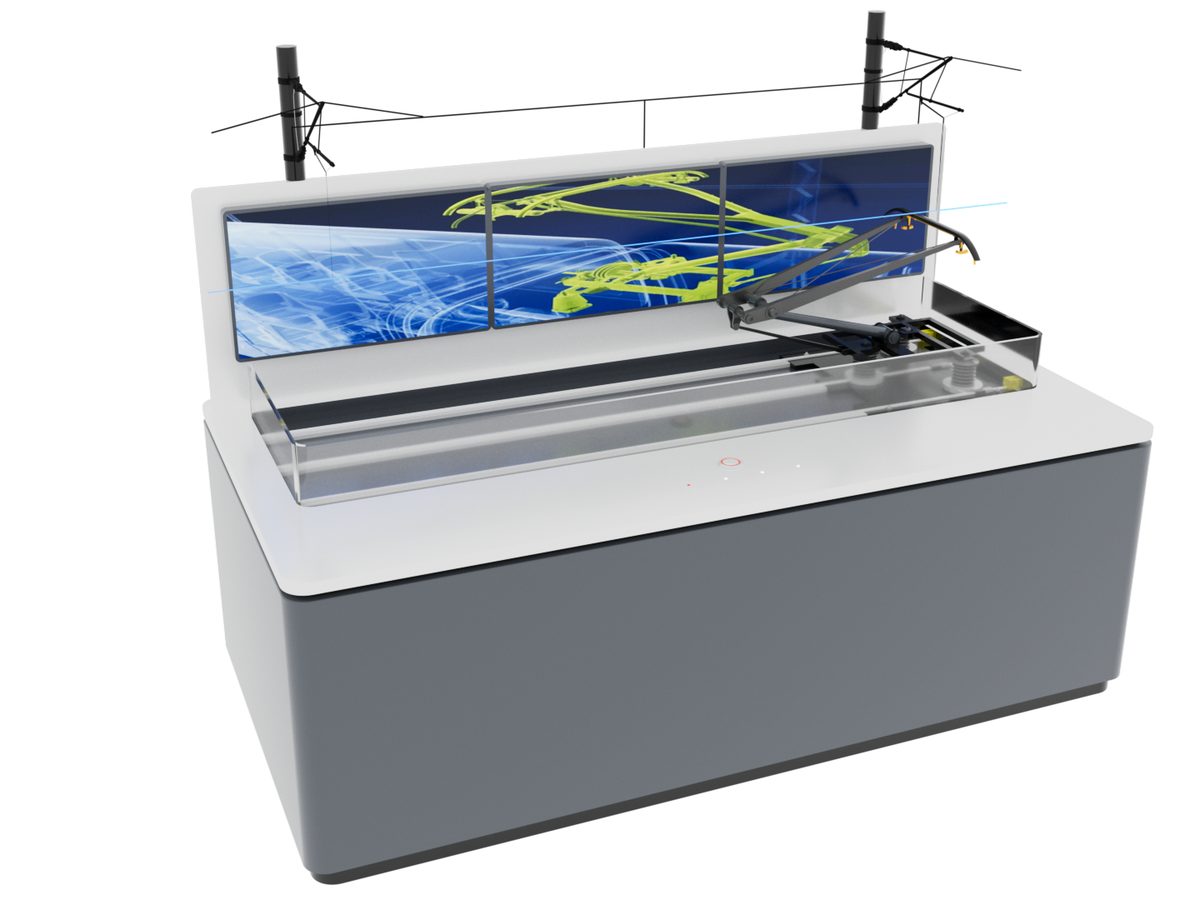
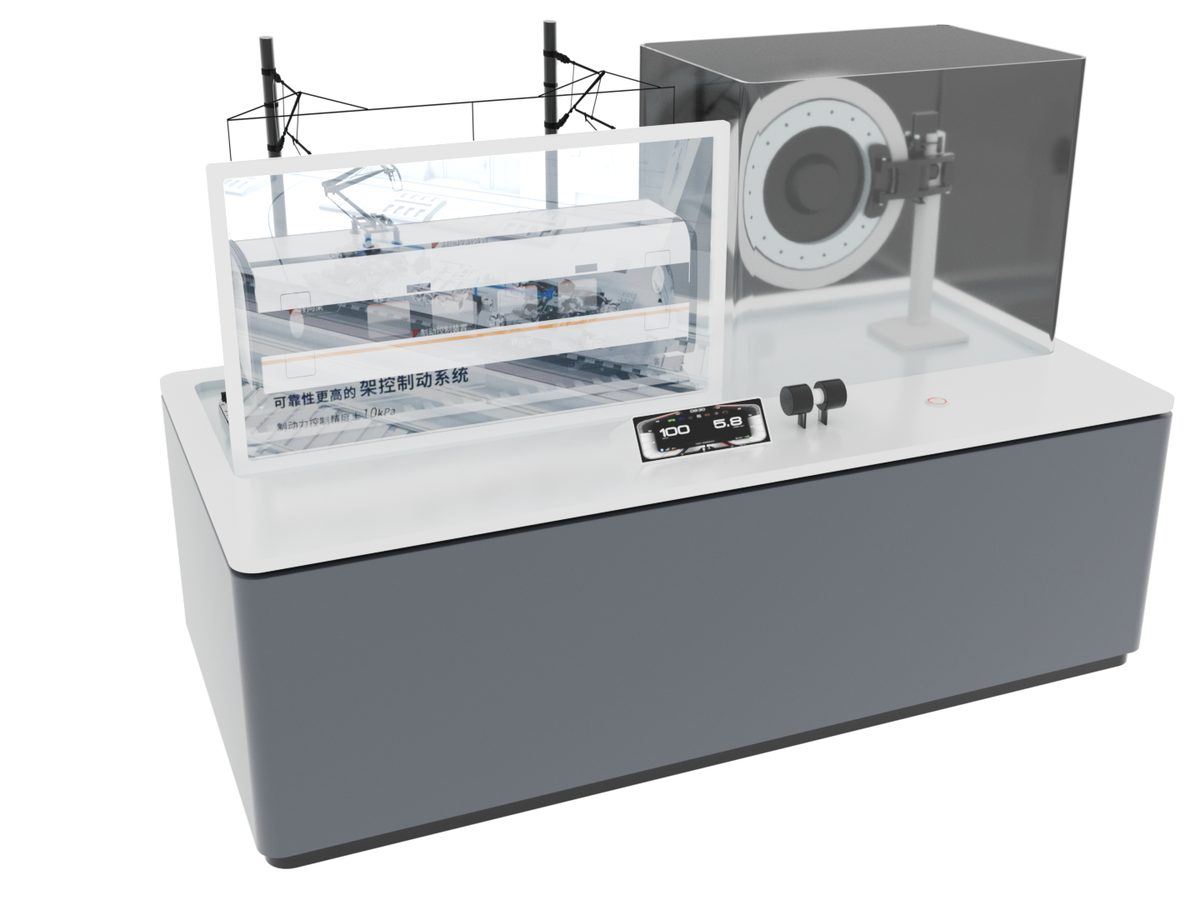
The exhibit will consist of a pantograph mechanical device and an LED screen. The mechanical interaction device includes a movable pantograph model and a contact wire track. The pantograph model will focus on showcasing the current mechanical structure of the pantograph and the process of raising the pantograph. The pantograph is equipped with a motor and a track, which will move forward and backward along the track, vividly demonstrating the laying relationship between high-voltage wires and train tracks - the zigzag laying of high-voltage wires. Visitors can intuitively see that the carbon slider of the pantograph maintains uniform friction with the high-voltage wires, reducing losses. The LED screen will be linked with the buttons and progress indicator lights on the table. After pressing the start button, the progress indicator lights will light up in one step, including the steps of raising the pantograph, connecting to the contact network, delivering current, and driving the train forward. The LED screen will assist in explaining the process.

02 / How visitors use it

The unit is designed for unsupervised public use: controls are recessed or shielded, moving parts are enclosed, and the interface is operable by a child of about six with no instruction. Where a screen is used, the language can be switched without changing the hardware, and the content can be replaced on site.

03 / The science behind it

The pantograph takes high voltage electricity from the overhead contact system and sends it into the vehicle. The electricity is first reduced to a suitable voltage through the main transformer, and then converted into electricity that can be used by the motor through the traction inverter, driving the traction motor to drive the wheels forward. When driving at high speeds, the bow feels shaky and the contact is unstable. The double four-bar linkage keeps the skateboard level during lifting, buffers vibrations, and evenly applies pressure, making contact more stable and reducing bow jumping and instantaneous power outages. The wire follows the character "zhi" to move the contact point of the skateboard left and right. Wear and tear are more dispersed, durable, and less prone to arcing and sparking. Carbon (graphite) composite materials have good conductivity, low friction, and self-lubricating properties. Skateboards are replaceable wear parts. First, grind the skateboard to protect the more expensive and difficult to repair contact wire.

04 / Built for a public floor

Every unit leaves the factory after a running test: mechanisms cycled, electronics burned in, edges dressed, fixings torqued and marked. Wear parts — bearings, sliders, lamps, belts, touch panels — are modular and listed on the spare-part sheet, so a venue technician can replace them without returning the exhibit. Crating is plywood with foam blocking; the loading plan and packing list travel with the shipment.

Same category

More in City & Society

Other models from the City & Society line, all held to the same drawing and the same control package.

Start a project

Send us your exhibit list.
We will come back with drawings and a price.

Attach a theme outline, a floor plan, or nothing at all — a photo of the space is enough to start. Quotations are issued against real drawings, not per-square-metre guesses.