Home/Exhibits/Digital & AI/Generative AI

Generative AI

Type a sentence and watch the model complete an image beside it.

Generative AI — Digital & AI exhibit for science museums
Model GENERATIVE-AIStudio rendering
CategoryDigital & AI
Model code—
Standard sizeCustom size
SupplySingle unit or batch · OEM to your drawing
Lead timeStandard 4–8 weeks after deposit (confirmed per contract)
Warranty2 years, structure and control
DocumentsSpecification sheet · control diagram · spare-part list

A standard catalogue model: the drawing, control package and finish are fixed, which is what keeps the price and the lead time predictable. Size, colour and interface language can be adapted without a new design cycle.

Ask about this model → Email us
01 / Overview

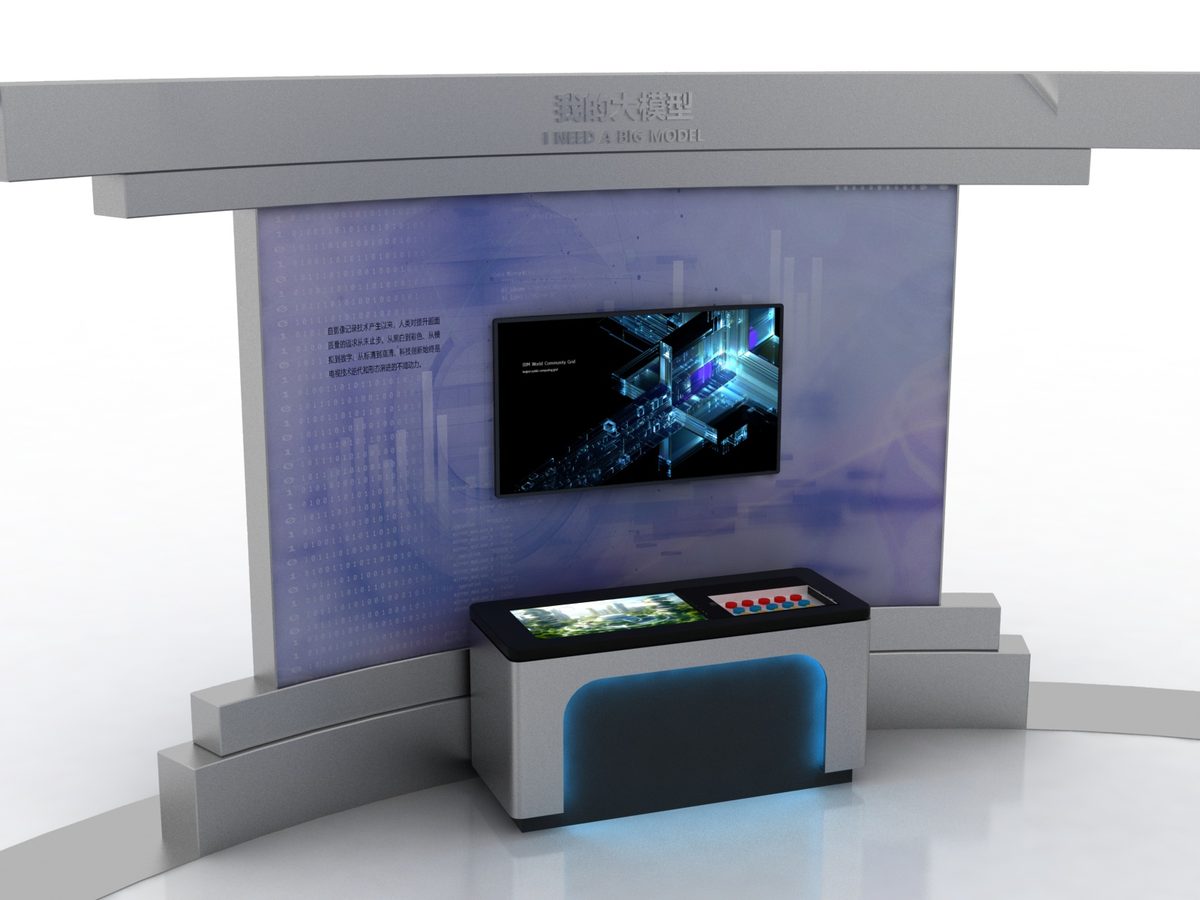
The core principle of a big model is based on deep learning technology, which learns and trains massive amounts of data to make the big model a universal artificial intelligence with cross domain learning capabilities. General artificial intelligence, represented by large models, has ushered in a new era. Various types of text generated images, videos, and even multimodal large models are emerging one after another. With the continuous development of technology, future large models will become more intelligent and diversified, and can better adapt to and meet the application needs of various fields such as education, healthcare, finance, and automotive.

02 / How visitors use it

The unit is designed for unsupervised public use: controls are recessed or shielded, moving parts are enclosed, and the interface is operable by a child of about six with no instruction. Where a screen is used, the language can be switched without changing the hardware, and the content can be replaced on site.

03 / The science behind it

A large model refers to a deep learning model with a very large number of parameters, typically used to process large-scale datasets and capable of learning complex features of the data, thus having significant advantages in handling complex tasks. Large scale models have gone through three stages of development: pre trained models, large-scale pre trained models, and ultra large scale pre trained models, with parameter scales ranging from billions to trillions. The Transformer architecture has become the mainstream algorithm foundation in the field of large models, giving rise to two main technical routes: GPT and BERT. The modes supported by the large model are more diversified, from a single task under a single mode to supporting multiple tasks under multiple modes. The application areas of big models include general big models and industry big models. According to input types, there are three main categories: atmospheric language models (NLP), visual models (CV), and multimodal models. The core principle of the big model is based on deep learning technology, which involves processing massive amounts of data.
04 / Built for a public floor

Every unit leaves the factory after a running test: mechanisms cycled, electronics burned in, edges dressed, fixings torqued and marked. Wear parts — bearings, sliders, lamps, belts, touch panels — are modular and listed on the spare-part sheet, so a venue technician can replace them without returning the exhibit. Crating is plywood with foam blocking; the loading plan and packing list travel with the shipment.

Same category

More in Digital & AI

Other models from the Digital & AI line, all held to the same drawing and the same control package.

Start a project

Send us your exhibit list.
We will come back with drawings and a price.

Attach a theme outline, a floor plan, or nothing at all — a photo of the space is enough to start. Quotations are issued against real drawings, not per-square-metre guesses.