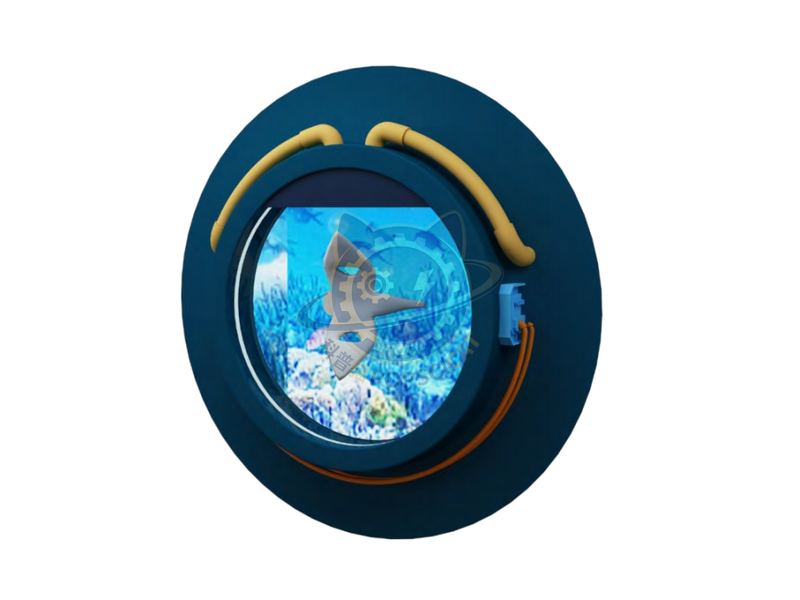
Biomimetic unmanned underwater vehicle (BUV) is a new concept unmanned underwater vehicle designed based on…
| Category | Earth & Ecology |
|---|---|
| Standard size | Custom size |
| Supply | Single unit or batch · OEM to your drawing |
| Lead time | Standard 4–8 weeks after deposit (confirmed per contract) |
| Warranty | 1 year, structure and control |
| Documents | Specification sheet · control diagram · spare-part list |
A standard catalogue model: the dimensions, control package and finish are fixed, which is what keeps the price and the lead time predictable. Size, colour and interface language can be adapted without a new design cycle.
Standard models from this range are also listed in our online store, priced in USD — see the price yourself ↗
Biomimetic unmanned underwater vehicle (BUV) is a new concept unmanned underwater vehicle designed based on biomimetic methods. Inspired by the deep-sea lionfish, the bionic soft robot fish developed by Zhejiang University adopts the strategy of "overcoming rigidity with softness": hard devices are integrated into the gel shaped soft body, and at the same time, a pair of flexible pectoral fins are driven rhythmically to flapping wings through the electric driving artificial muscle technology to achieve flexible swimming. This design allows the robotic fish to withstand deep-sea hydrostatic pressure up to tens of thousands of meters without the need for a pressure resistant casing. It can autonomously swim under a high pressure of 110 megapascals, providing a new tool for deep-sea exploration and seabed data collection.
The unit is designed for unsupervised public use: controls are recessed or shielded, moving parts are enclosed, and the interface is operable by a child of about six with no instruction. Where a screen is used, the language can be switched without changing the hardware, and the content can be replaced on site.
The deep-sea lionfish, whose scientific name is Pseudoliparis swirei, is one of the deepest living fishes found so far. It mainly inhabits the extreme deep-sea environment of 6000-11034 meters in the Mariana Trench. Its unique biological characteristics are the core reason why it adapts to the high-pressure environment of 10000 meters. This kind of fish is small in size, 11-16cm in length, 20-35g in weight, covered with a translucent gel like skin of only 1-2mm in thickness, has no scales, and can clearly see the internal pink organs. The skeleton is in a partially calcified state, with a compressive strength of 108MPa, and contains osmotic pressure regulating protein (TM) with a concentration of 400mmol/L in the body. AO) to maintain the balance of osmotic pressure, and at the same time, the absence of airbag structure to avoid high-pressure damage, and can only survive in the high-pressure environment of 10000 meters of seabed, unable to adapt to the normal pressure on land Based on the biomimetic inspiration of the deep-sea lionfish, Zhejiang University.
Every unit leaves the factory after a running test: mechanisms cycled, electronics burned in, edges dressed, fixings torqued and marked. Wear parts — bearings, sliders, lamps, belts, touch panels — are modular and listed on the spare-part sheet, so a venue technician can replace them without returning the exhibit. Crating is plywood with foam blocking; the loading plan and packing list travel with the shipment.
Other models from the Earth & Ecology line, all held to the same specification and the same control package.

A vertical slice through a storm showing eye, eyewall and spiral bands.

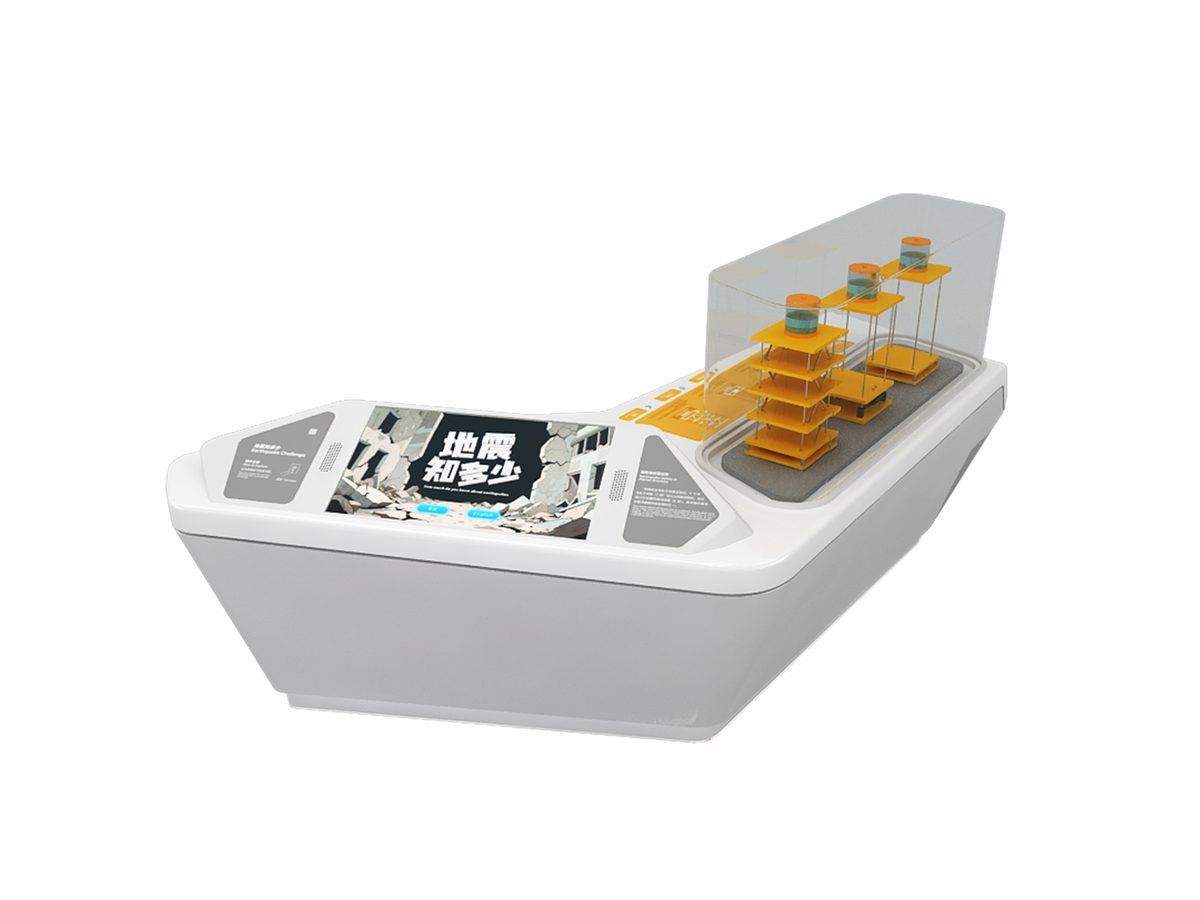
A platform shakes at recorded intensities while a seismograph traces the movement.

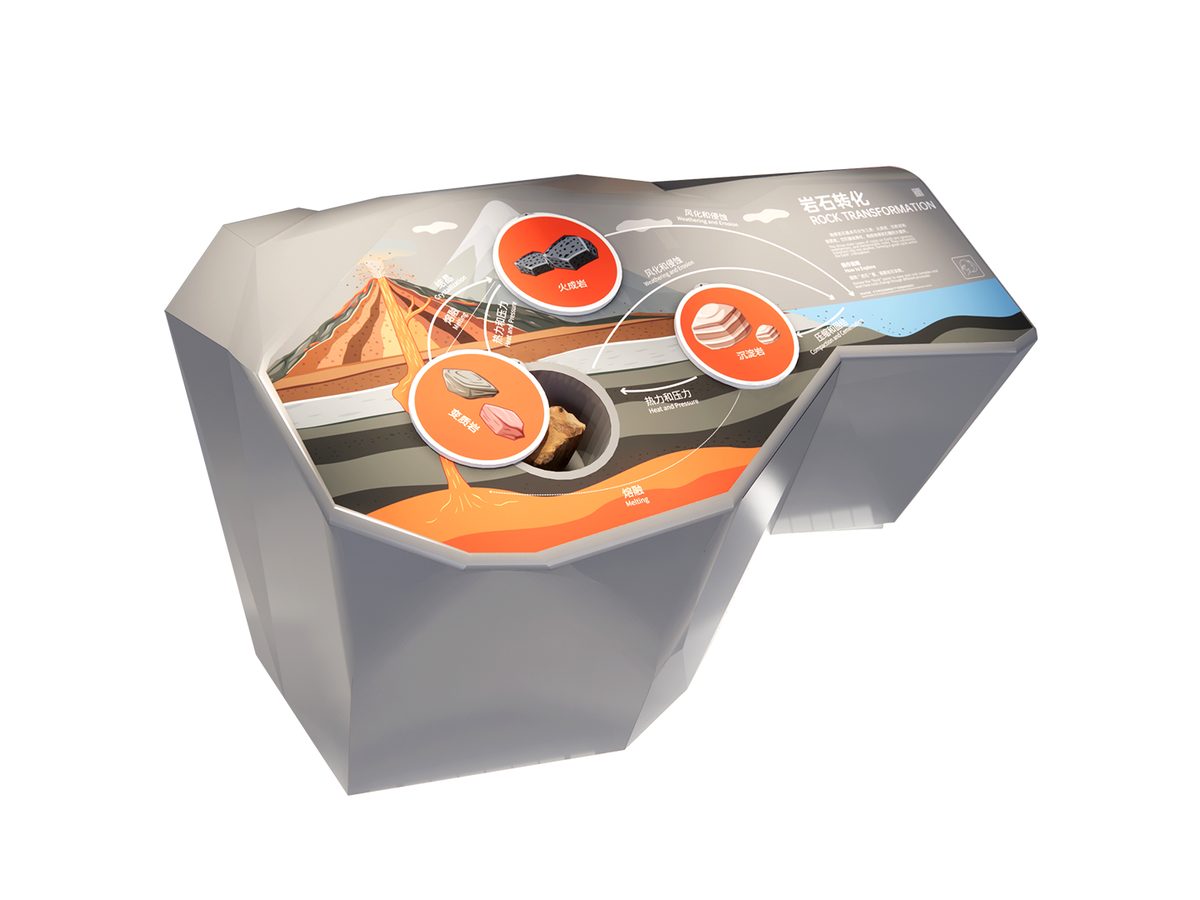
Heat and pressure turn one rock type into another on a turntable.

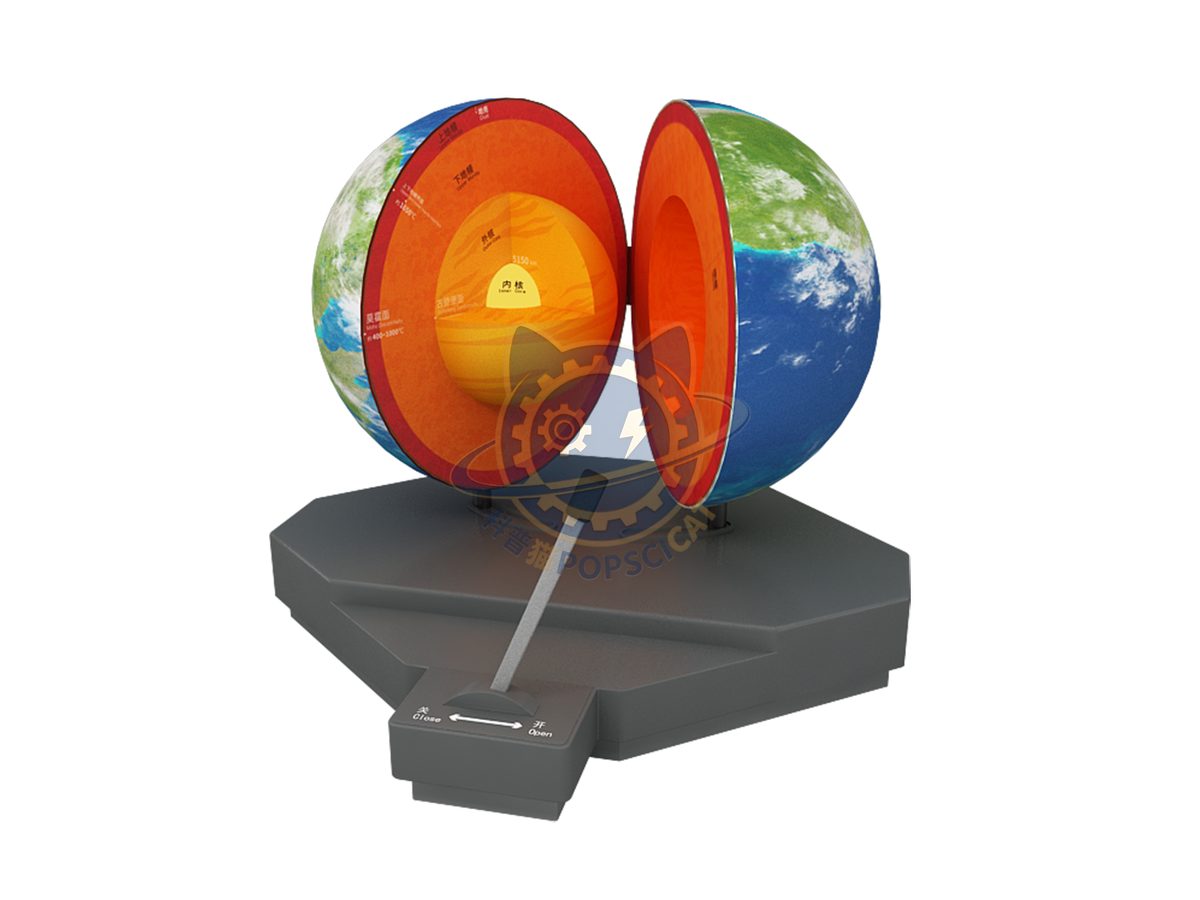
Cut-away globe showing crust, mantle, outer and inner core.
Attach a theme outline, a floor plan, or nothing at all — a photo of the space is enough to start. Quotations are issued against a real exhibit list, not per-square-metre guesses.
Scan to add us