The "Luling" deep-sea multi-point lander and rover submersible system is a new concept unmanned submersible designed…
| Category | Earth & Ecology |
|---|---|
| Standard size | Custom size |
| Supply | Single unit or batch · OEM to your drawing |
| Lead time | Standard 4–8 weeks after deposit (confirmed per contract) |
| Warranty | 1 year, structure and control |
| Documents | Specification sheet · control diagram · spare-part list |
A standard catalogue model: the dimensions, control package and finish are fixed, which is what keeps the price and the lead time predictable. Size, colour and interface language can be adapted without a new design cycle.
Standard models from this range are also listed in our online store, priced in USD — see the price yourself ↗
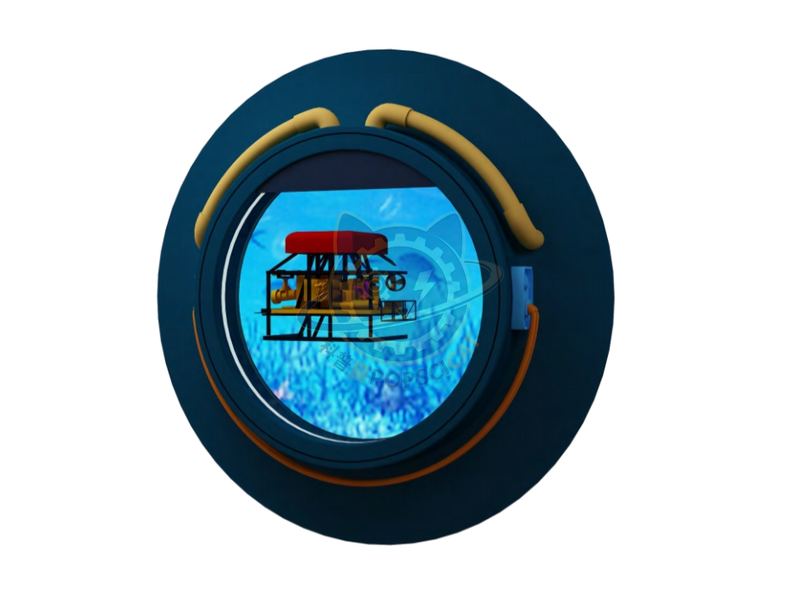
The "Luling" deep-sea multi-point lander and rover submersible system is a new concept unmanned submersible designed specifically for extreme environments such as cold springs and hydrothermal fluids. It innovatively draws on deep space detector technology, integrating the long-term fixed-point stationing of the Multi Point Lander (M-Lander) with the maneuvering detection of the Roaming Submersible (R-ROV). Through the mode of "mobile base station guiding sub machine operations", it achieves efficient and low-cost exploration of multiple underwater points in a single dive. The entire system relies on multiple communication technologies such as acoustics, radio, and fiber optics to ensure reliable operation and real-time data transmission in complex deep-sea environments, providing new equipment and technical support for precise deep-sea bottom exploration operations in extreme environments.
The unit is designed for unsupervised public use: controls are recessed or shielded, moving parts are enclosed, and the interface is operable by a child of about six with no instruction. Where a screen is used, the language can be switched without changing the hardware, and the content can be replaced on site.
(1) The "Deep Sea Multi Point Lander and Rover Submarine System" is a new concept submersible consisting of two equipment: the Multi Point Lander (M-Lander) and the Rover Submarine (R-ROV). R-ROV has two modes: floating in water and crawling on the seabed. The crawling mode R-ROV consists of a floating mode R-ROV equipped with a crawling chassis, and the two modes need to be switched on the mother ship before launching for operation. With the support of the national key research and development program "Deep Sea Key Technologies and Equipment" and the key special project "Research on Deep Sea Multi Point Lander and Roamer Submersible System", the new concept submersible "Luling" developed by the Institute of Deep Sea of the Chinese Academy of Sciences has successfully completed sea trial acceptance. During the experiment, the maximum diving depth of the "Luling" was 3252 meters, and a single dive completed a cumulative total of 11 locations.
Every unit leaves the factory after a running test: mechanisms cycled, electronics burned in, edges dressed, fixings torqued and marked. Wear parts — bearings, sliders, lamps, belts, touch panels — are modular and listed on the spare-part sheet, so a venue technician can replace them without returning the exhibit. Crating is plywood with foam blocking; the loading plan and packing list travel with the shipment.
Other models from the Earth & Ecology line, all held to the same specification and the same control package.

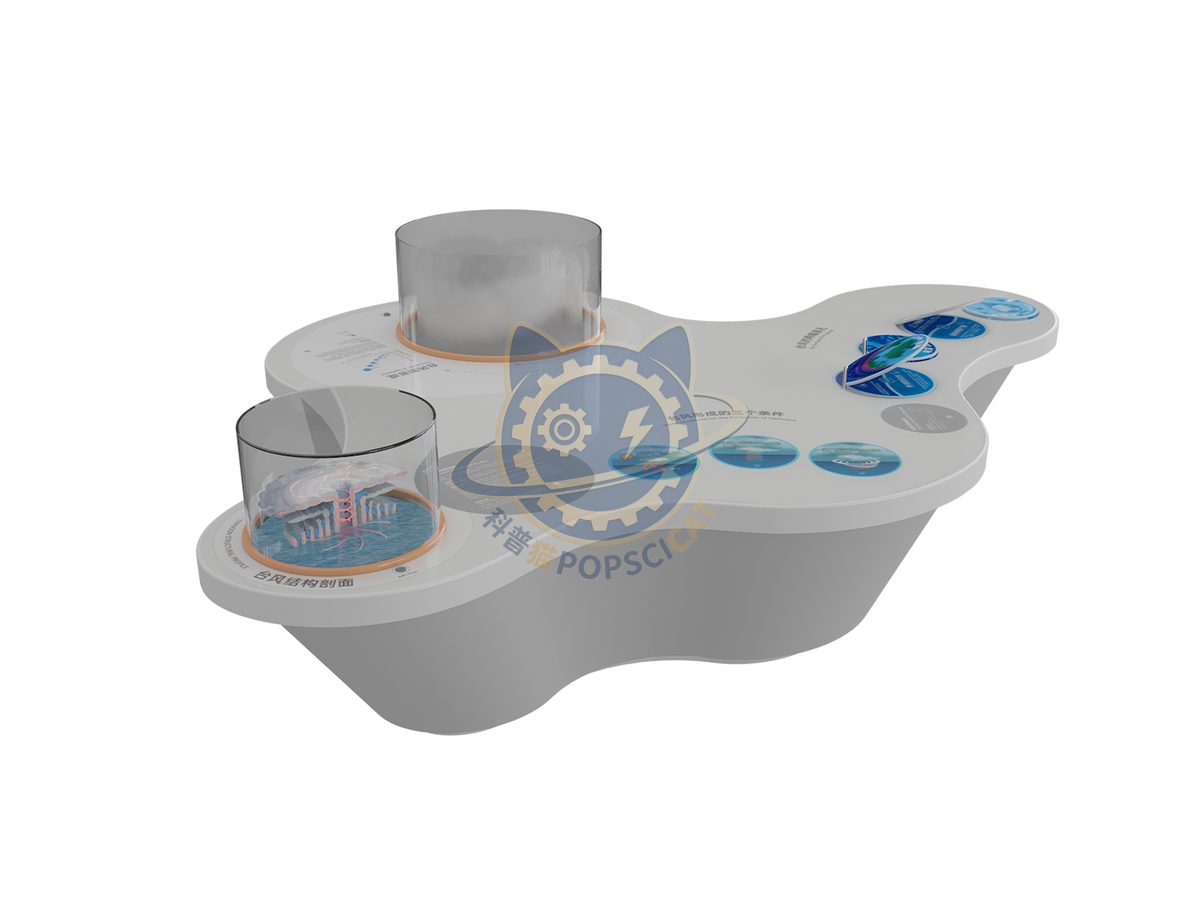
A vertical slice through a storm showing eye, eyewall and spiral bands.

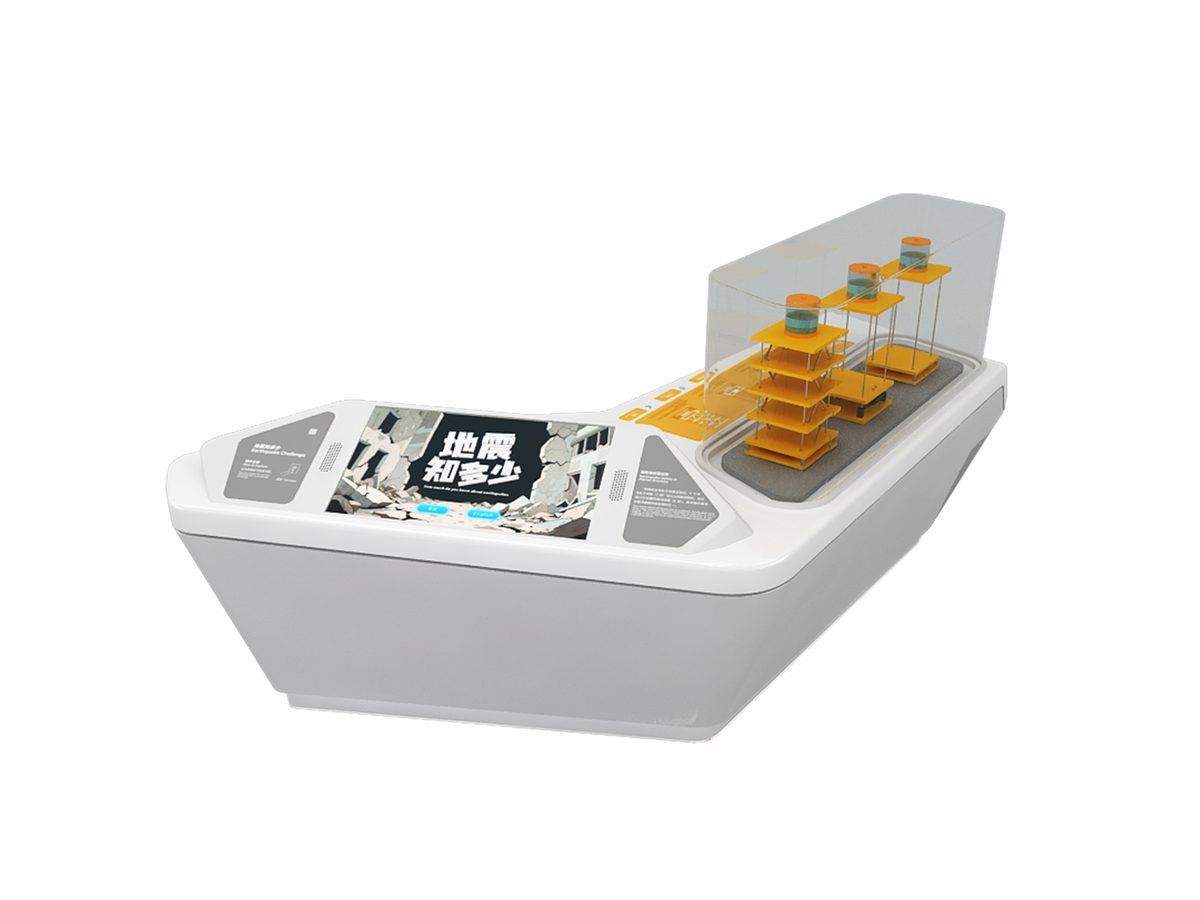
A platform shakes at recorded intensities while a seismograph traces the movement.

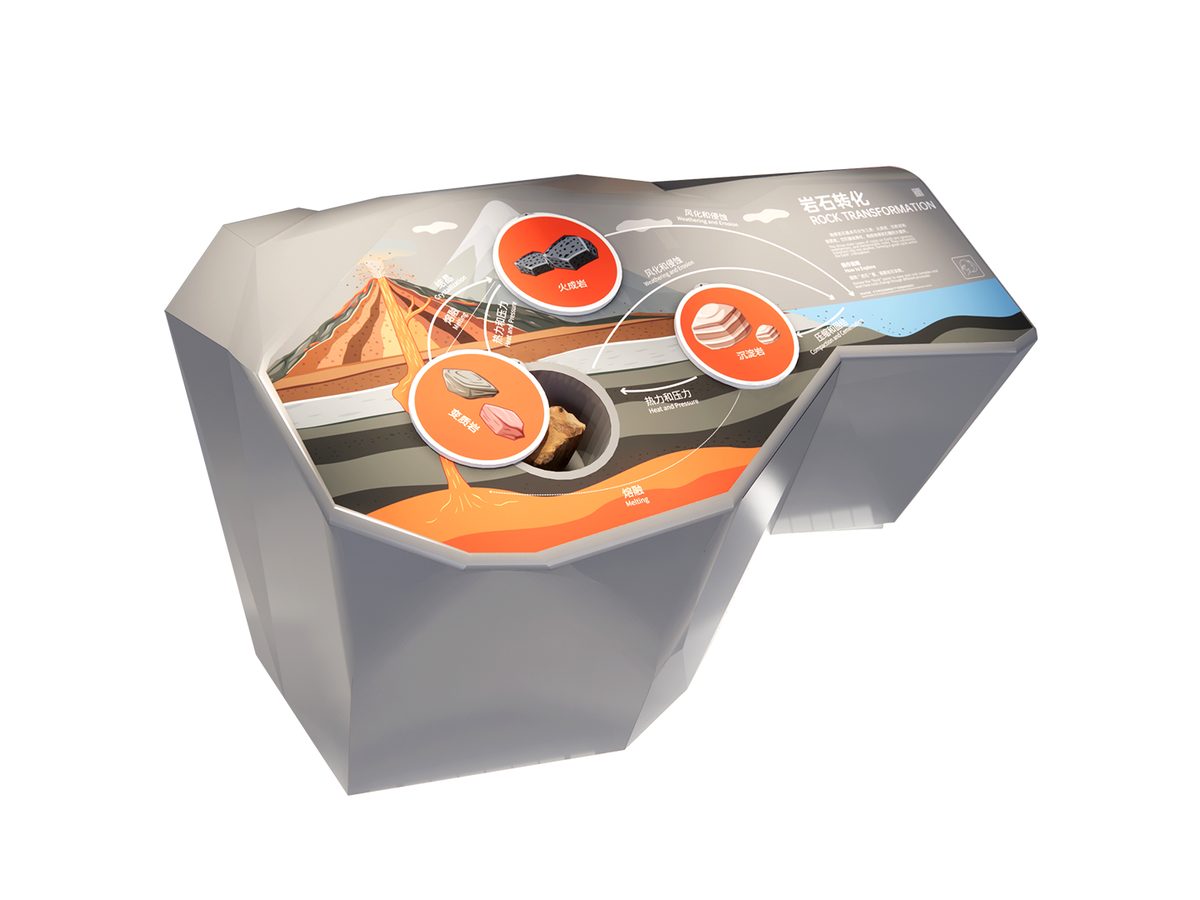
Heat and pressure turn one rock type into another on a turntable.

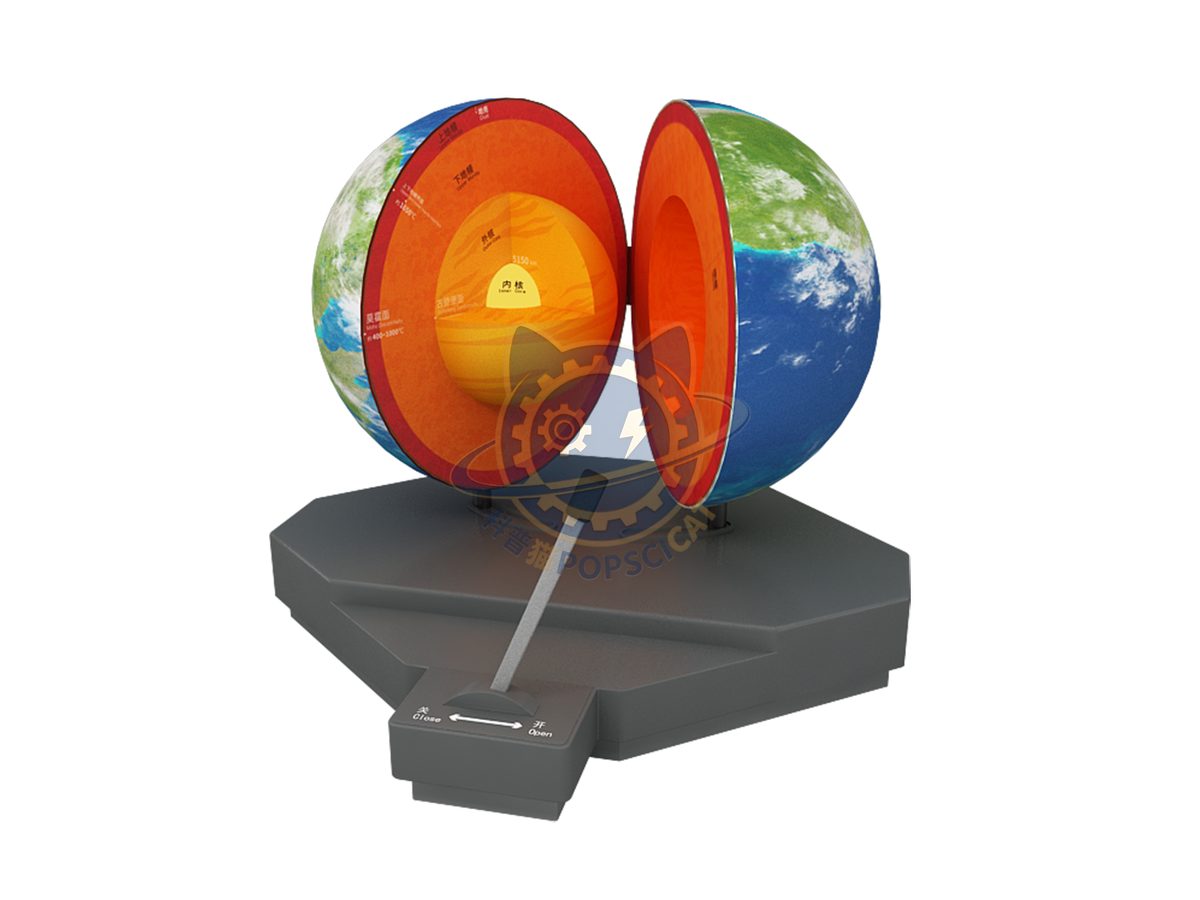
Cut-away globe showing crust, mantle, outer and inner core.
Attach a theme outline, a floor plan, or nothing at all — a photo of the space is enough to start. Quotations are issued against a real exhibit list, not per-square-metre guesses.
Scan to add us