Deep diving to a depth of ten thousand meters; Long voyage, to the boundless sea.
| Category | Earth & Ecology |
|---|---|
| Standard size | Custom size |
| Supply | Single unit or batch · OEM to your drawing |
| Lead time | Standard 4–8 weeks after deposit (confirmed per contract) |
| Warranty | 1 year, structure and control |
| Documents | Specification sheet · control diagram · spare-part list |
A standard catalogue model: the dimensions, control package and finish are fixed, which is what keeps the price and the lead time predictable. Size, colour and interface language can be adapted without a new design cycle.
Standard models from this range are also listed in our online store, priced in USD — see the price yourself ↗
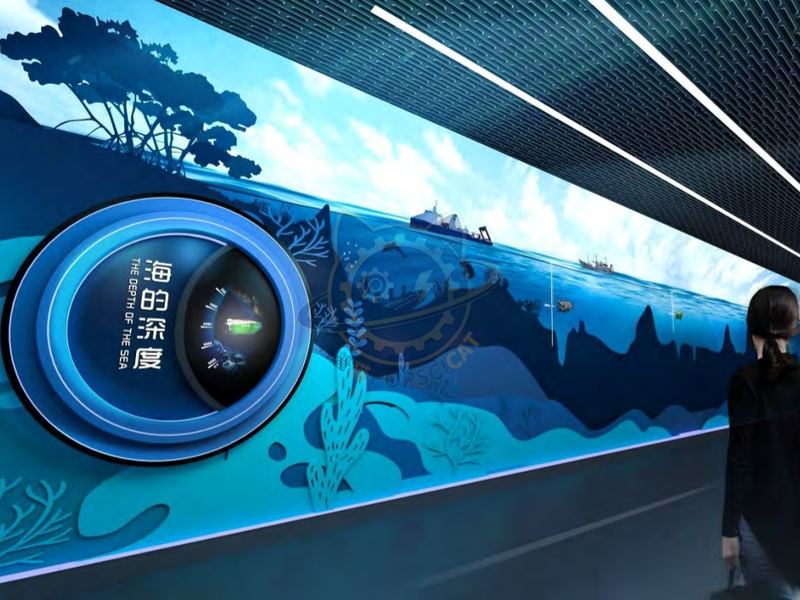
Deep diving to a depth of ten thousand meters; Long voyage, to the boundless sea. According to ocean depth data, about 90% of the world's oceans are deeper than 1000 meters, with the Mariana Trench reaching a maximum depth of approximately 10935 meters. From an Earth scale perspective, its vertical distance is not considered distant, but complex conditions such as extreme high pressure, low temperature, and darkness make deep-sea exploration difficult. A hundred years ago, humans explored the deep sea solely through bottom trawling; Nowadays, deep-sea submersibles have become the core equipment for deep-sea scientific research, assisting in the development, utilization, and protection of marine resources. *Note: This is the measured value released by the National Oceanic and Atmospheric Administration (NOAA) of the United States in 2021. The above data are authoritative reference values as of May 2026.
The unit is designed for unsupervised public use: controls are recessed or shielded, moving parts are enclosed, and the interface is operable by a child of about six with no instruction. Where a screen is used, the language can be switched without changing the hardware, and the content can be replaced on site.
About 71% of the Earth's surface is covered by oceans, with an average depth of 3800 meters, of which 95% of water bodies are hidden below 1000 meters. According to lighting and ecological characteristics, the ocean is divided into five vertical levels, and modern deep-sea exploration technology provides support for us to uncover its mysterious veil. Vertical stratification of the ocean: Five distinct layers of underwater world. Vertical stratification of the ocean is an "ecological gradient" formed by environmental factors such as light and pressure changing with depth. Each layer nurtures life adapted to extreme environments, forming a complete deep-sea ecosystem. A. Upper zone (0-200 meters): A "marine oasis" nourished by sunlight. The upper zone, also known as the translucent zone, is the only area where photosynthesis can occur. Here, the light is abundant, and phytoplankton such as diatoms and blue-green algae form the foundation of the marine food chain, nourishing organisms such as sharks and dolphins. More than 90% of marine life inhabits here, while also laying the temperature foundation for ocean circulation. B. Middle zone (200-10).
Every unit leaves the factory after a running test: mechanisms cycled, electronics burned in, edges dressed, fixings torqued and marked. Wear parts — bearings, sliders, lamps, belts, touch panels — are modular and listed on the spare-part sheet, so a venue technician can replace them without returning the exhibit. Crating is plywood with foam blocking; the loading plan and packing list travel with the shipment.
Other models from the Earth & Ecology line, all held to the same specification and the same control package.

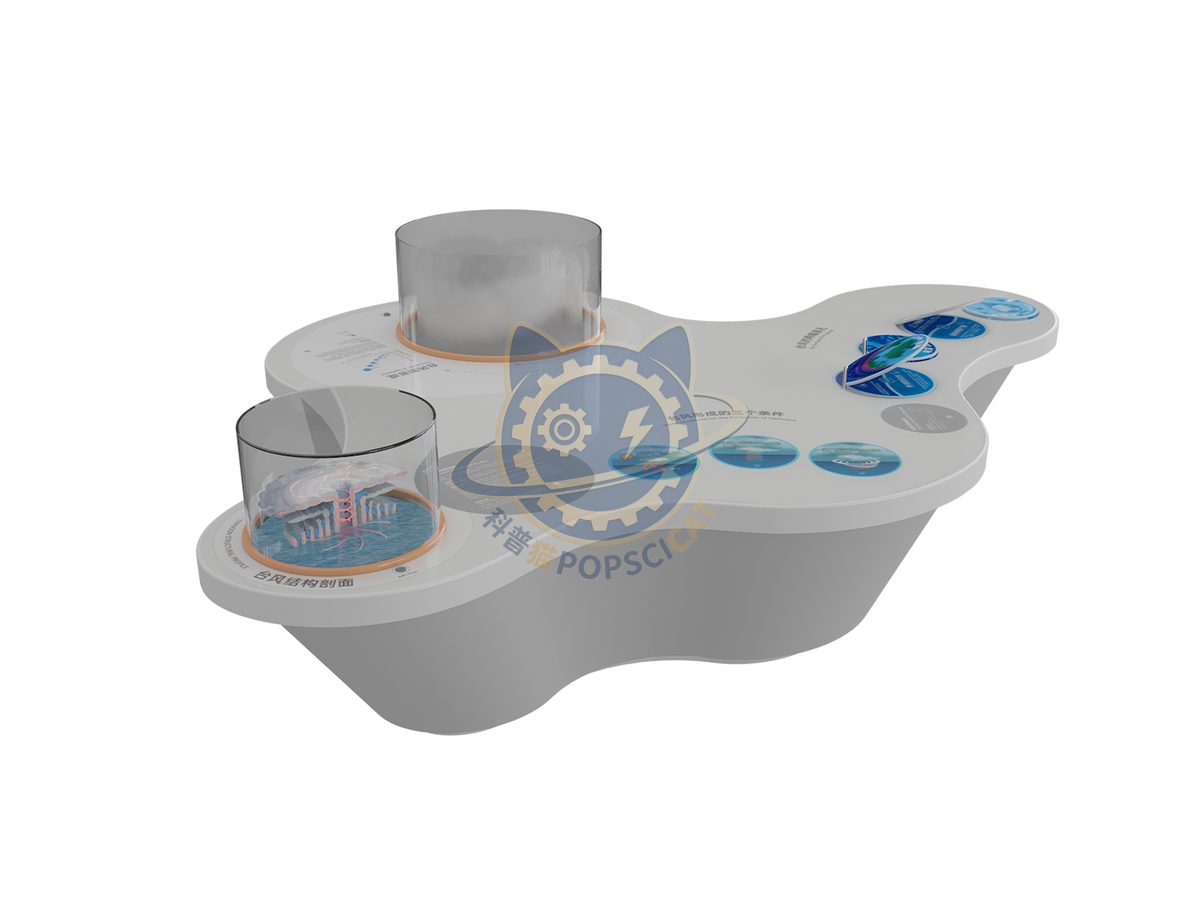
A vertical slice through a storm showing eye, eyewall and spiral bands.

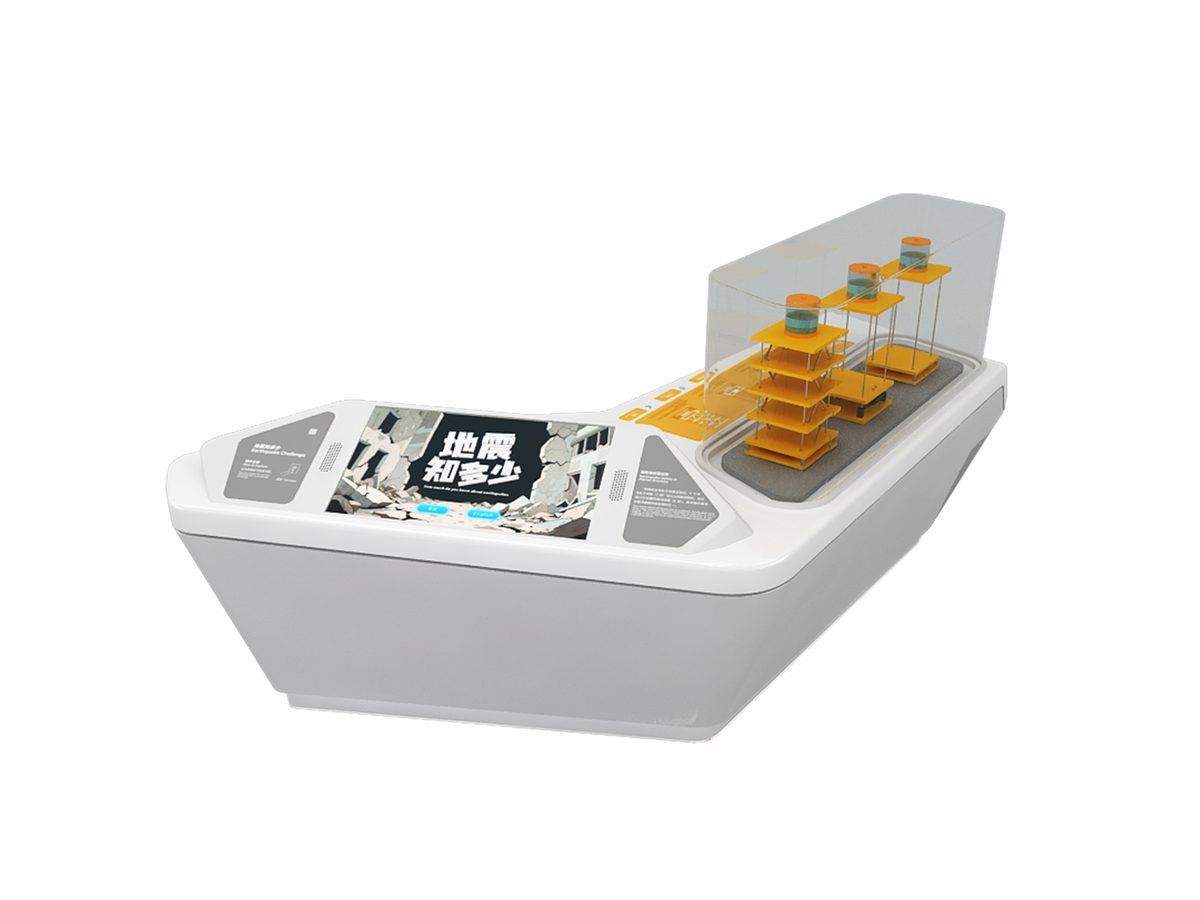
A platform shakes at recorded intensities while a seismograph traces the movement.

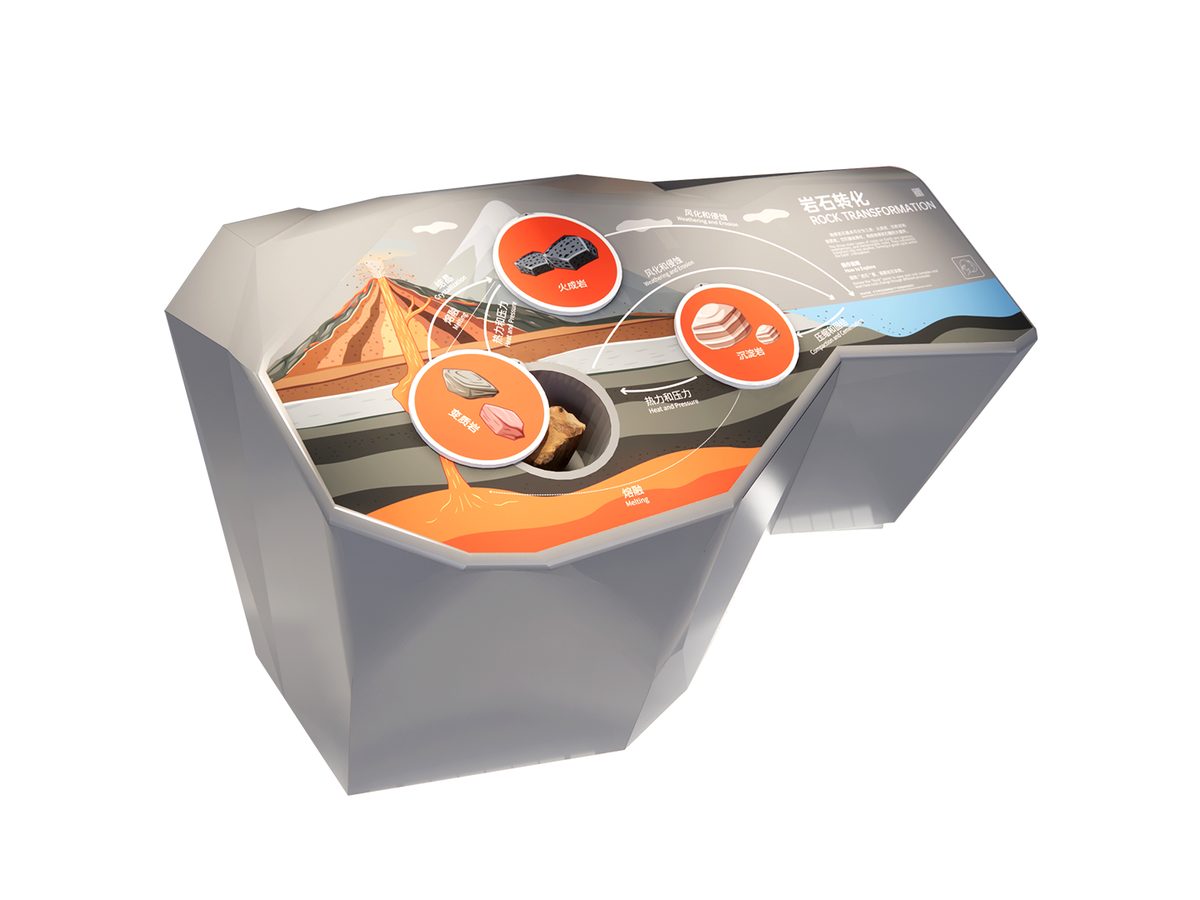
Heat and pressure turn one rock type into another on a turntable.

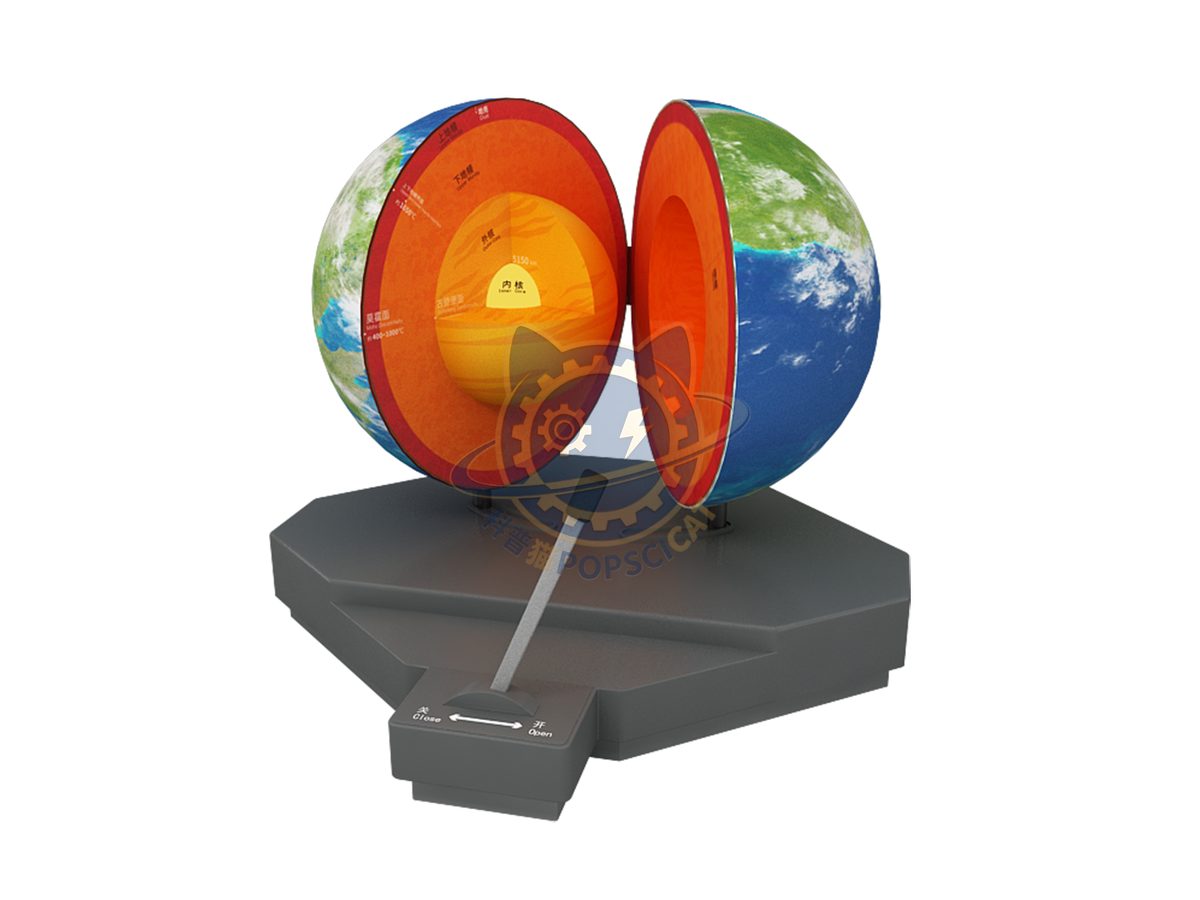
Cut-away globe showing crust, mantle, outer and inner core.
Attach a theme outline, a floor plan, or nothing at all — a photo of the space is enough to start. Quotations are issued against a real exhibit list, not per-square-metre guesses.
Scan to add us