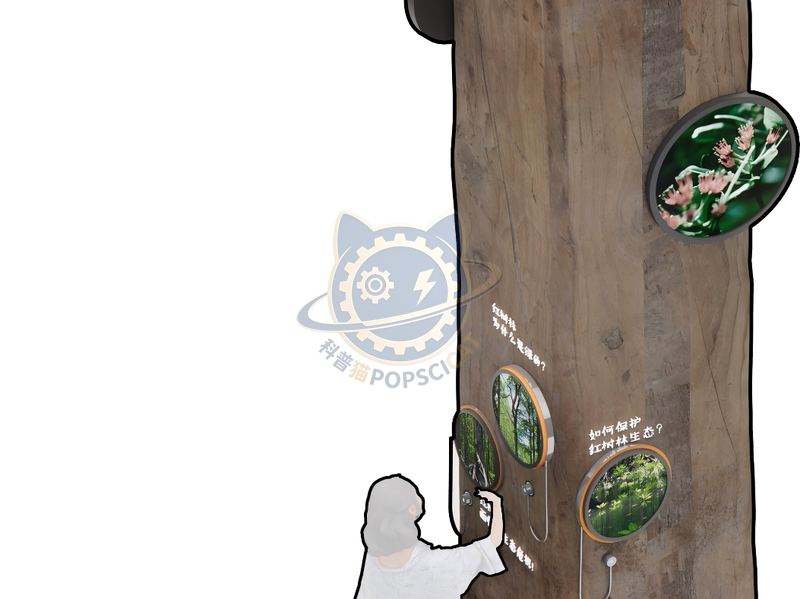
The exhibit introduces the knowledge of 37 types of mangroves in the South China Sea through rotating tree shaped…
| Category | Earth & Ecology |
|---|---|
| Standard size | Custom size |
| Supply | Single unit or batch · OEM to your drawing |
| Lead time | Standard 4–8 weeks after deposit (confirmed per contract) |
| Warranty | 1 year, structure and control |
| Documents | Specification sheet · control diagram · spare-part list |
A standard catalogue model: the dimensions, control package and finish are fixed, which is what keeps the price and the lead time predictable. Size, colour and interface language can be adapted without a new design cycle.
Standard models from this range are also listed in our online store, priced in USD — see the price yourself ↗
The exhibit introduces the knowledge of 37 types of mangroves in the South China Sea through rotating tree shaped devices, enhancing visitors' understanding of the diversity of mangroves in the South China Sea and inspiring their enthusiasm for participating in natural environmental protection. 1. Please pick up the receiver and listen to the little secrets of the mangrove forest together. 2. Please turn the turntable to feed the seeds you are interested in into the soil and witness their growth process together! Hainan has the highest number of mangrove species, and all recorded species in China are distributed in Hainan. 1. True mangrove plants: Halophytes and pointed leaved Halophytes of the Halofern family; The woody fruit of the Meliaceae family; Sea lacquer from the Euphorbiaceae family; Cup sepal sea mulberry, sea mulberry, Hainan sea mulberry, egg leaf sea mulberry, and pseudo sea mulberry of the family Rosaceae; Magnolia and sea lotus of the mangrove family; Sharp petal sea lotus, horn fruit wood, autumn eggplant, red tree, red sea olive, and red mangrove; The red and black plums of the noble family; The paulownia tree of the Purple Gold Cattle family; White bone soil of the family Verbenaceae; The mouse box and small flower mouse box of the noble bed family; Bottle flowers of the Rubiaceae family; The Palm Family.
The unit is designed for unsupervised public use: controls are recessed or shielded, moving parts are enclosed, and the interface is operable by a child of about six with no instruction. Where a screen is used, the language can be switched without changing the hardware, and the content can be replaced on site.
Every unit leaves the factory after a running test: mechanisms cycled, electronics burned in, edges dressed, fixings torqued and marked. Wear parts — bearings, sliders, lamps, belts, touch panels — are modular and listed on the spare-part sheet, so a venue technician can replace them without returning the exhibit. Crating is plywood with foam blocking; the loading plan and packing list travel with the shipment.
Other models from the Earth & Ecology line, all held to the same specification and the same control package.

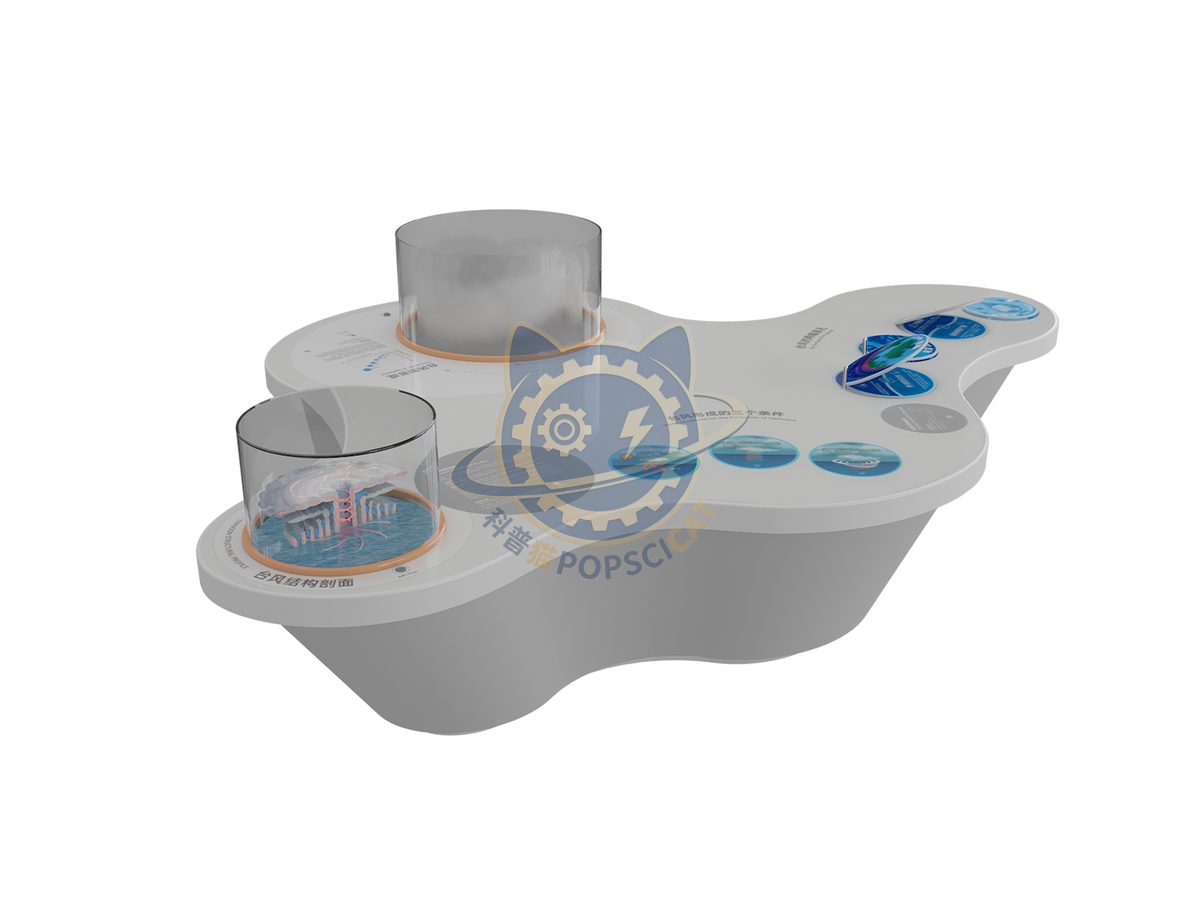
A vertical slice through a storm showing eye, eyewall and spiral bands.

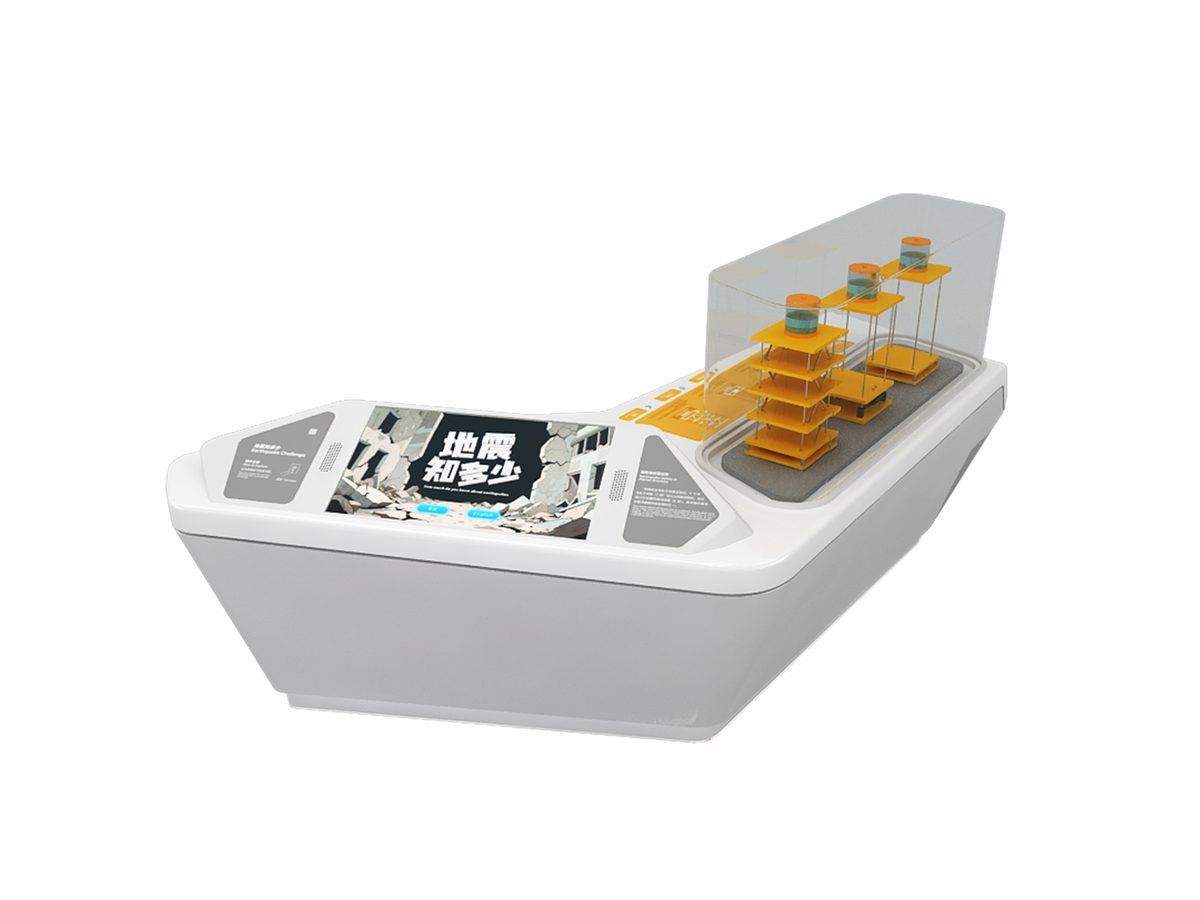
A platform shakes at recorded intensities while a seismograph traces the movement.

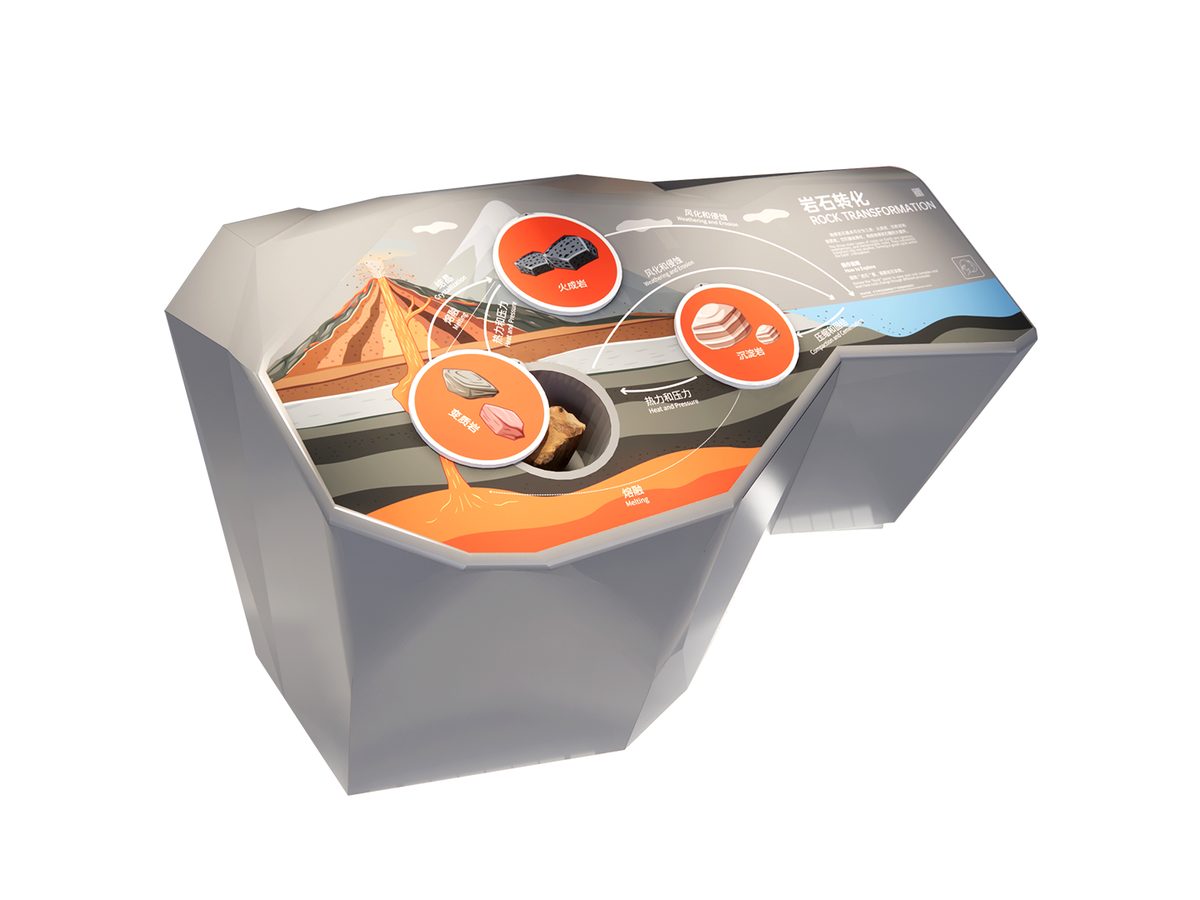
Heat and pressure turn one rock type into another on a turntable.

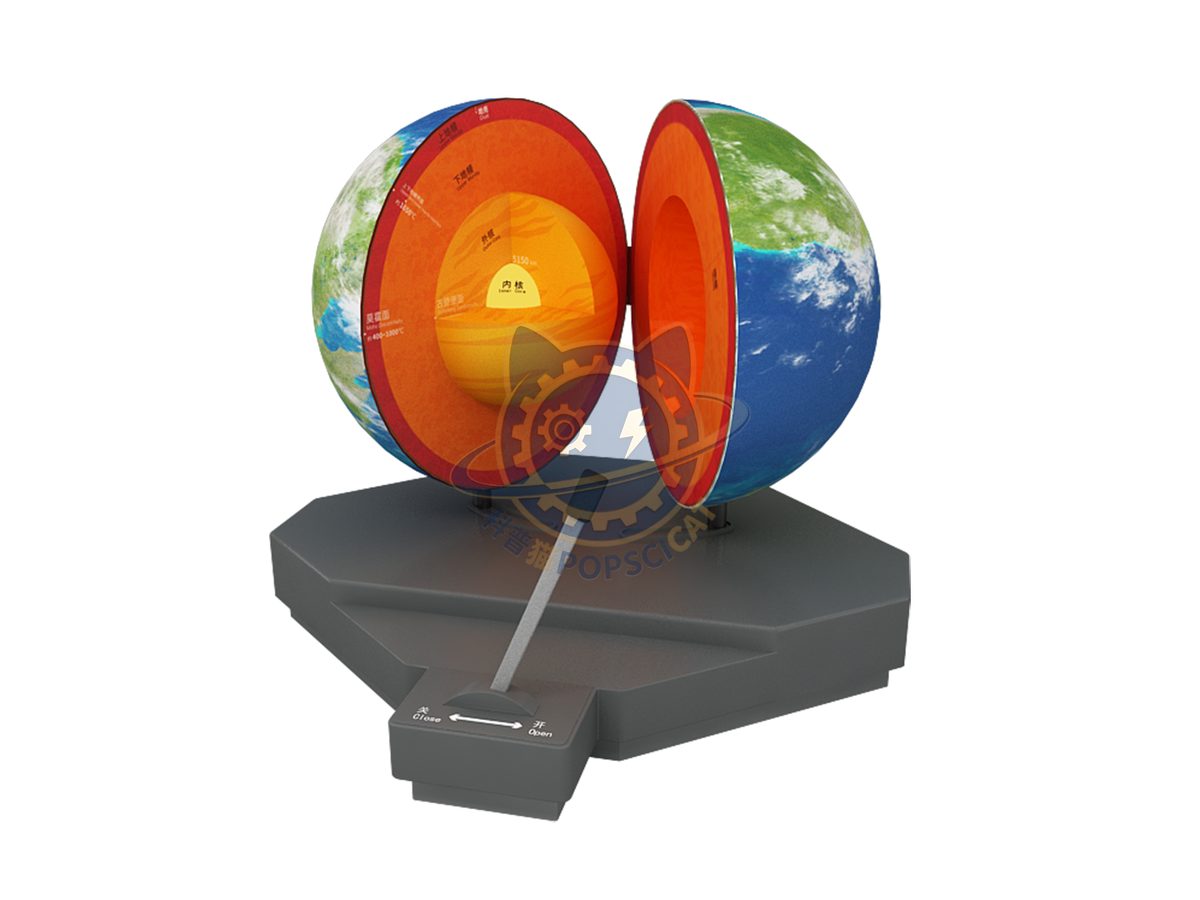
Cut-away globe showing crust, mantle, outer and inner core.
Attach a theme outline, a floor plan, or nothing at all — a photo of the space is enough to start. Quotations are issued against a real exhibit list, not per-square-metre guesses.
Scan to add us