Home/Exhibits/Earth & Ecology/How Scientists Observe Weather

How Scientists Observe Weather

The history of weather observation can be traced back to ancient times, when people used measures such as observing…

How Scientists Observe Weather — Earth & Ecology exhibit for science museums
Reference image
CategoryEarth & Ecology
Standard sizeCustom size
SupplySingle unit or batch · OEM to your drawing
Lead timeStandard 4–8 weeks after deposit (confirmed per contract)
Warranty1 year, structure and control
DocumentsSpecification sheet · control diagram · spare-part list

A standard catalogue model: the dimensions, control package and finish are fixed, which is what keeps the price and the lead time predictable. Size, colour and interface language can be adapted without a new design cycle.

Ask about this model → Email us

Standard models from this range are also listed in our online store, priced in USD — see the price yourself ↗
01 / Overview

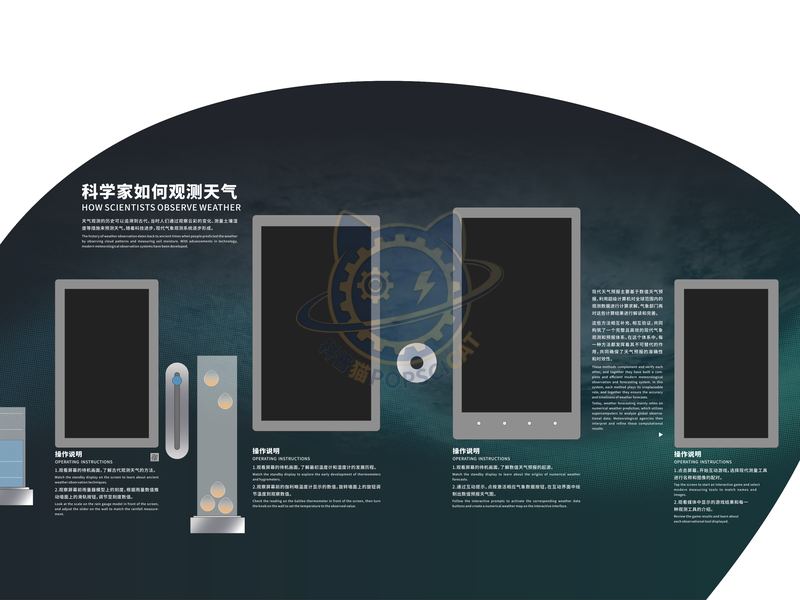
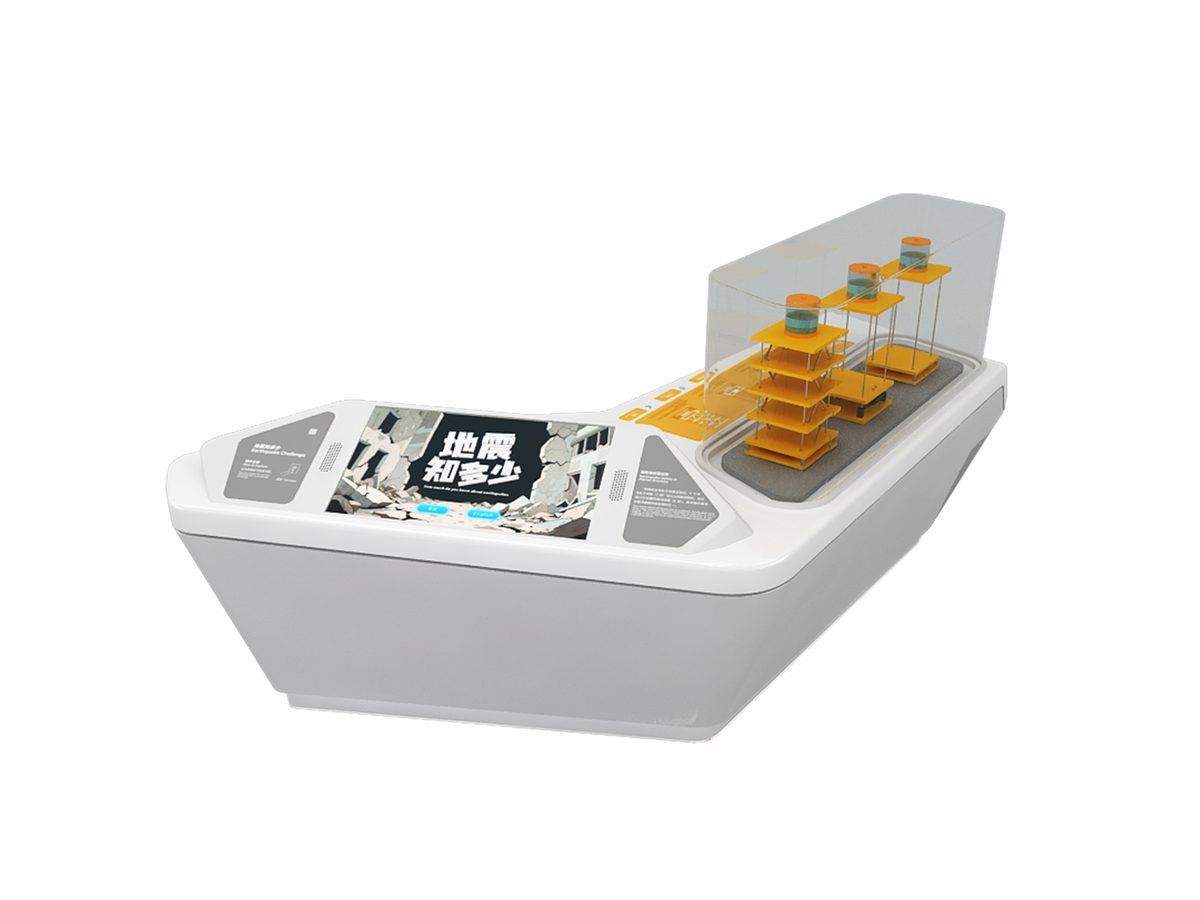
The history of weather observation can be traced back to ancient times, when people used measures such as observing changes in clouds and measuring soil moisture to predict weather. With the advancement of technology, modern meteorological observation systems are gradually taking shape. Modern weather forecasting is mainly based on numerical weather forecasting, using supercomputers to calculate and solve observation data worldwide, and meteorological departments then interpret and improve these calculation results. These methods complement and validate each other, jointly constructing a complete and efficient modern meteorological observation and forecasting system. In this system, each method plays an irreplaceable role in ensuring the accuracy and timeliness of weather forecasting.

02 / How visitors use it

The unit is designed for unsupervised public use: controls are recessed or shielded, moving parts are enclosed, and the interface is operable by a child of about six with no instruction. Where a screen is used, the language can be switched without changing the hardware, and the content can be replaced on site.

03 / The science behind it

The development of early weather forecasting. In the 16th year of the Kangxi reign of the Qing Dynasty, the meteorological department "Qintianjian" was established, which was the first ground-based meteorological observation network in Chinese history. Tang Ruowang was the first foreign supervisor of the Qintianjian, the royal astronomical institution of the Qing Dynasty, and they unified the production of rain gauges. This is the first ground-based meteorological observation network in Chinese history. The birth of modern weather forecasting. Aristotle's work "The General Synopsis of Meteorology" is the earliest meteorological treatise in the world, which finally made knowledge about weather phenomena a systematic discipline. In the 16th to 19th centuries AD, many meteorological instruments were invented, such as the thermometer invented by Galileo and the hygrometer designed by Leonardo da Vinci. The advent of numerical weather forecasting. The true driving force behind the modernization of weather forecasting technology is the birth of numerical weather forecasting. Jules Gregory Chani von Neumann and others calculated the first numerical weather forecast map in history. From then on, numerical weather forecasting methods gradually became weather forecasts.

04 / Built for a public floor

Every unit leaves the factory after a running test: mechanisms cycled, electronics burned in, edges dressed, fixings torqued and marked. Wear parts — bearings, sliders, lamps, belts, touch panels — are modular and listed on the spare-part sheet, so a venue technician can replace them without returning the exhibit. Crating is plywood with foam blocking; the loading plan and packing list travel with the shipment.

Same category

More in Earth & Ecology

Other models from the Earth & Ecology line, all held to the same specification and the same control package.

Start a project

Send us your exhibit list.
We will come back with a price.

Attach a theme outline, a floor plan, or nothing at all — a photo of the space is enough to start. Quotations are issued against a real exhibit list, not per-square-metre guesses.

WeChat QR code — scan to message us Scan to add us
on WeChat