A tree trunk replaced by silica with the growth rings still readable.
| Category | Earth & Ecology |
|---|---|
| Model code | — |
| Standard size | Custom size |
| Supply | Single unit or batch · OEM to your drawing |
| Lead time | Standard 4–8 weeks after deposit (confirmed per contract) |
| Warranty | 2 years, structure and control |
| Documents | Specification sheet · control diagram · spare-part list |
A standard catalogue model: the drawing, control package and finish are fixed, which is what keeps the price and the lead time predictable. Size, colour and interface language can be adapted without a new design cycle.
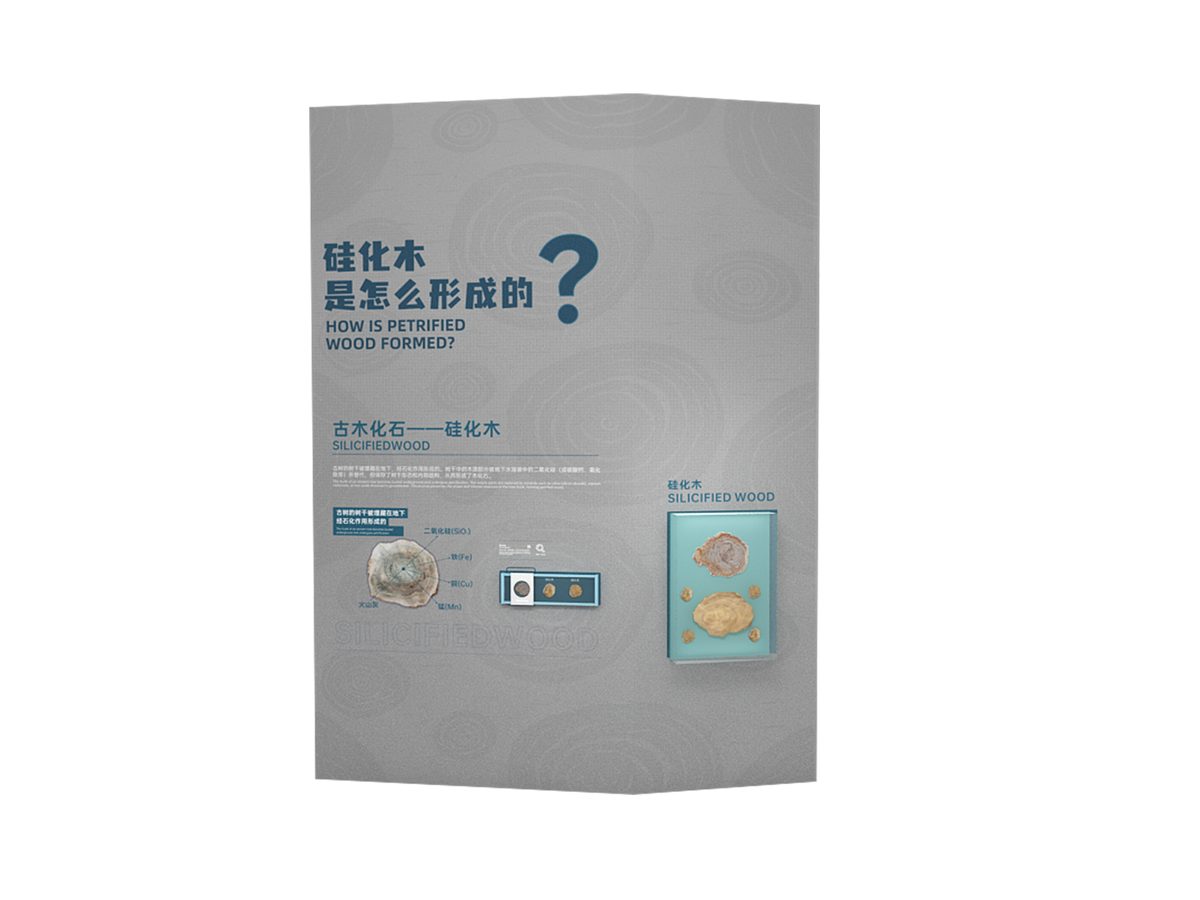
\The trunks of ancient trees are buried underground due to geological processes, and the lack of water or isolation from air makes the wood less prone to decay. The woody part is replaced by silica (or calcium carbonate, iron oxide, etc.) in groundwater solution, and the shape and internal structure of the tree trunk are preserved, thus forming wood fossils. Move the magnifying glass to observe the differences between ordinary wood, silicified wood, and silicified jade. In ancient times, plants and trees were buried in geological layers and underwent a long process of petrification to form wood fossils, known as ancient stone trees. Wood fossils, like other animal and plant fossils, are a highly valuable geological and paleontological relic resource, and are non renewable. When trees are buried by volcanic ash or submerged in silica rich groundwater during a volcanic eruption, they are isolated from oxygen to prevent bacterial decomposition. The volcanic ash or silica in the water gradually seeps into the trees, gradually replacing the original organic matter components until the trees become fossils. Compared to those in high temperature and pressure underground, becoming.
The unit is designed for unsupervised public use: controls are recessed or shielded, moving parts are enclosed, and the interface is operable by a child of about six with no instruction. Where a screen is used, the language can be switched without changing the hardware, and the content can be replaced on site.
Every unit leaves the factory after a running test: mechanisms cycled, electronics burned in, edges dressed, fixings torqued and marked. Wear parts — bearings, sliders, lamps, belts, touch panels — are modular and listed on the spare-part sheet, so a venue technician can replace them without returning the exhibit. Crating is plywood with foam blocking; the loading plan and packing list travel with the shipment.
Other models from the Earth & Ecology line, all held to the same drawing and the same control package.

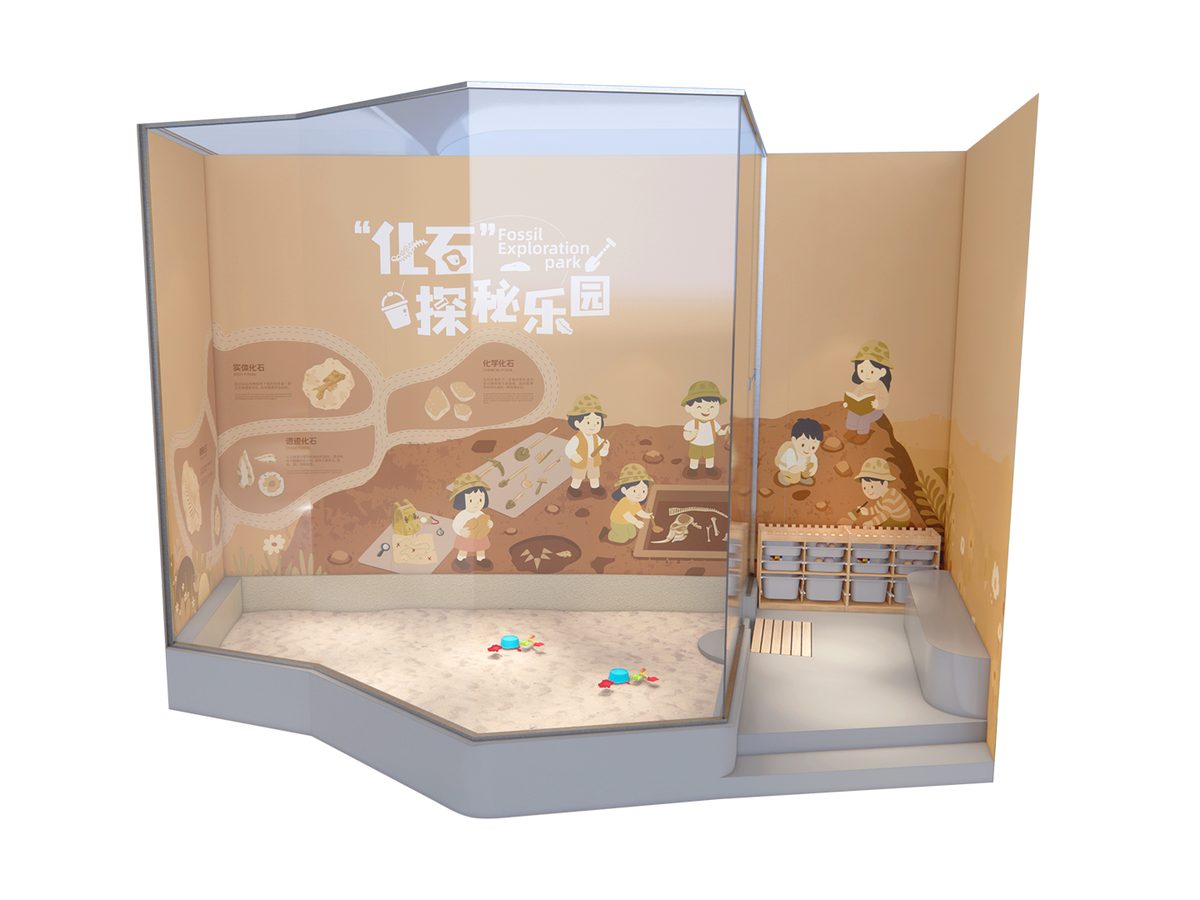
Buried replicas and brushes; visitors excavate, record and label.

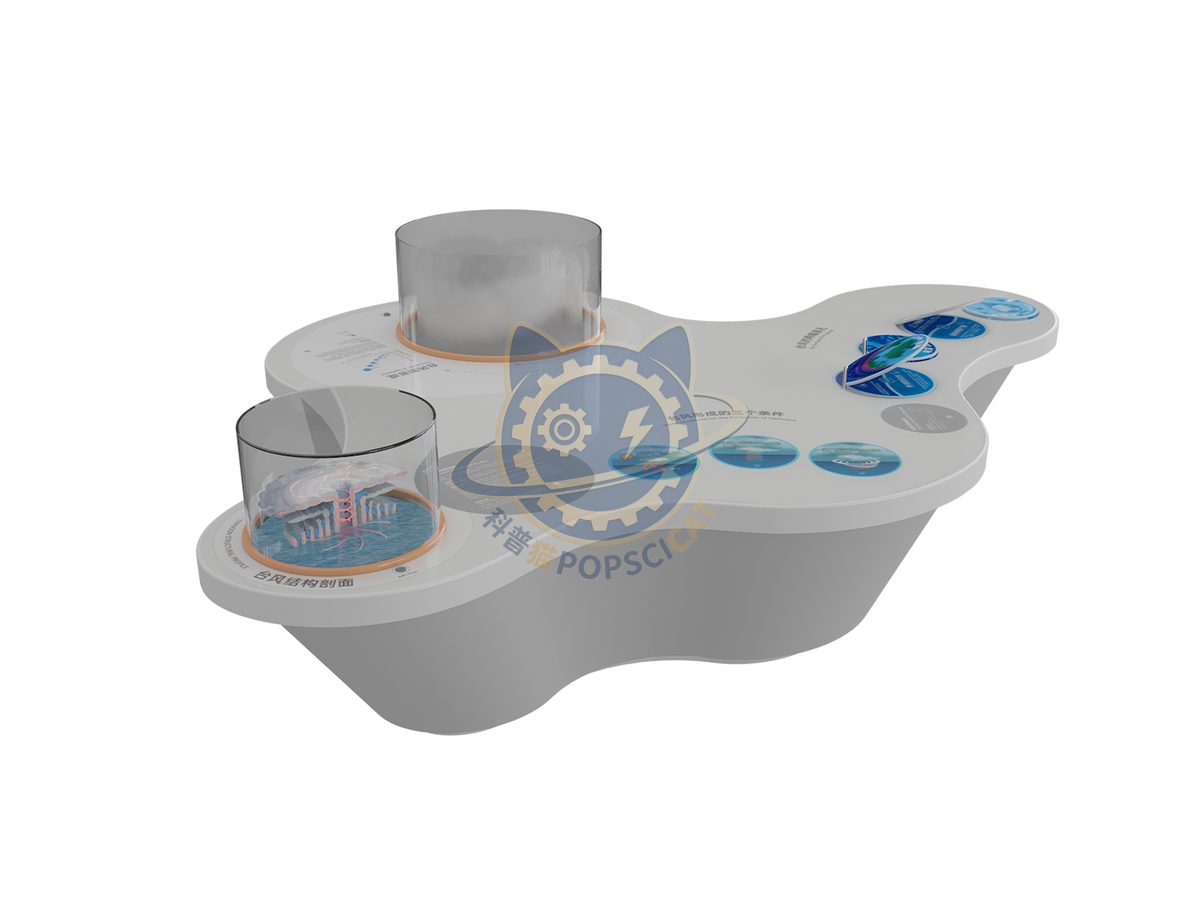
A vertical slice through a storm showing eye, eyewall and spiral bands.

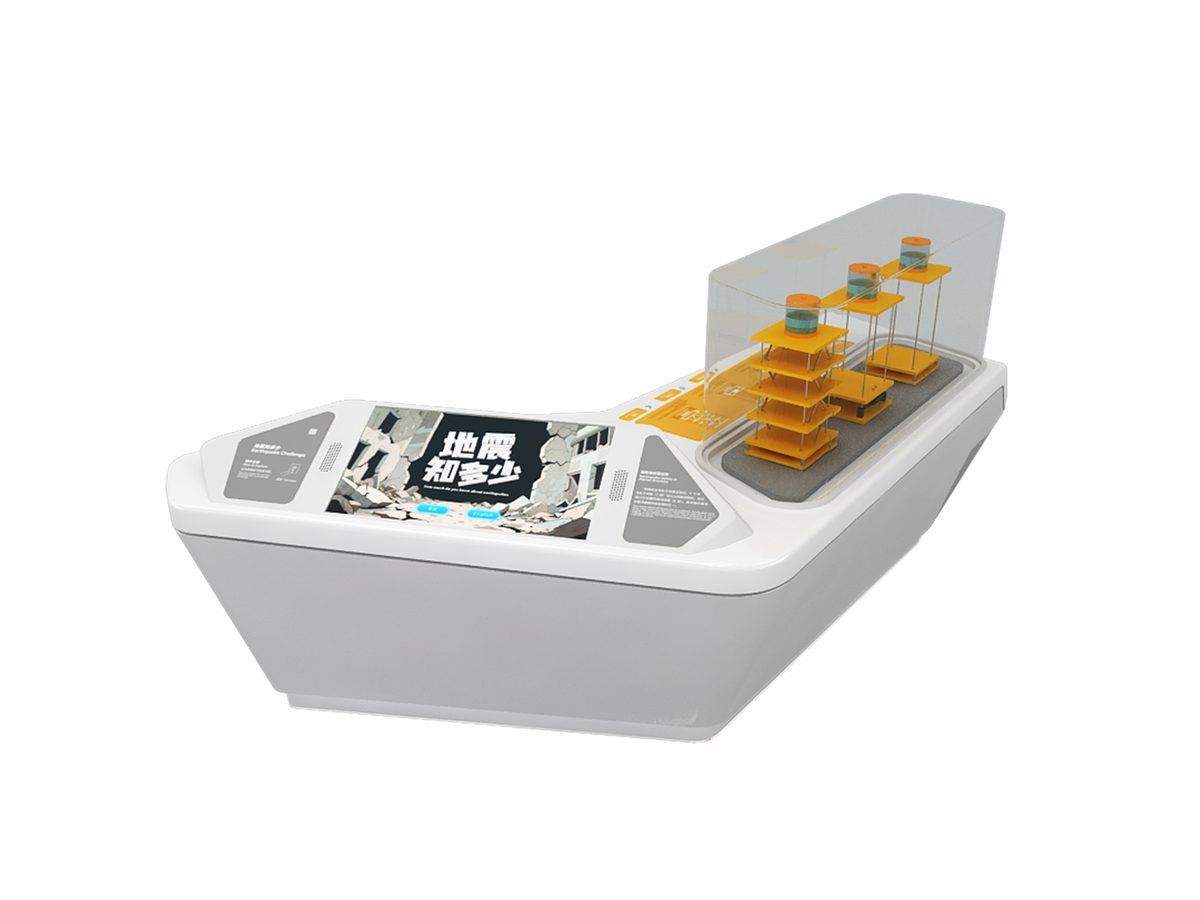
A platform shakes at recorded intensities while a seismograph traces the movement.

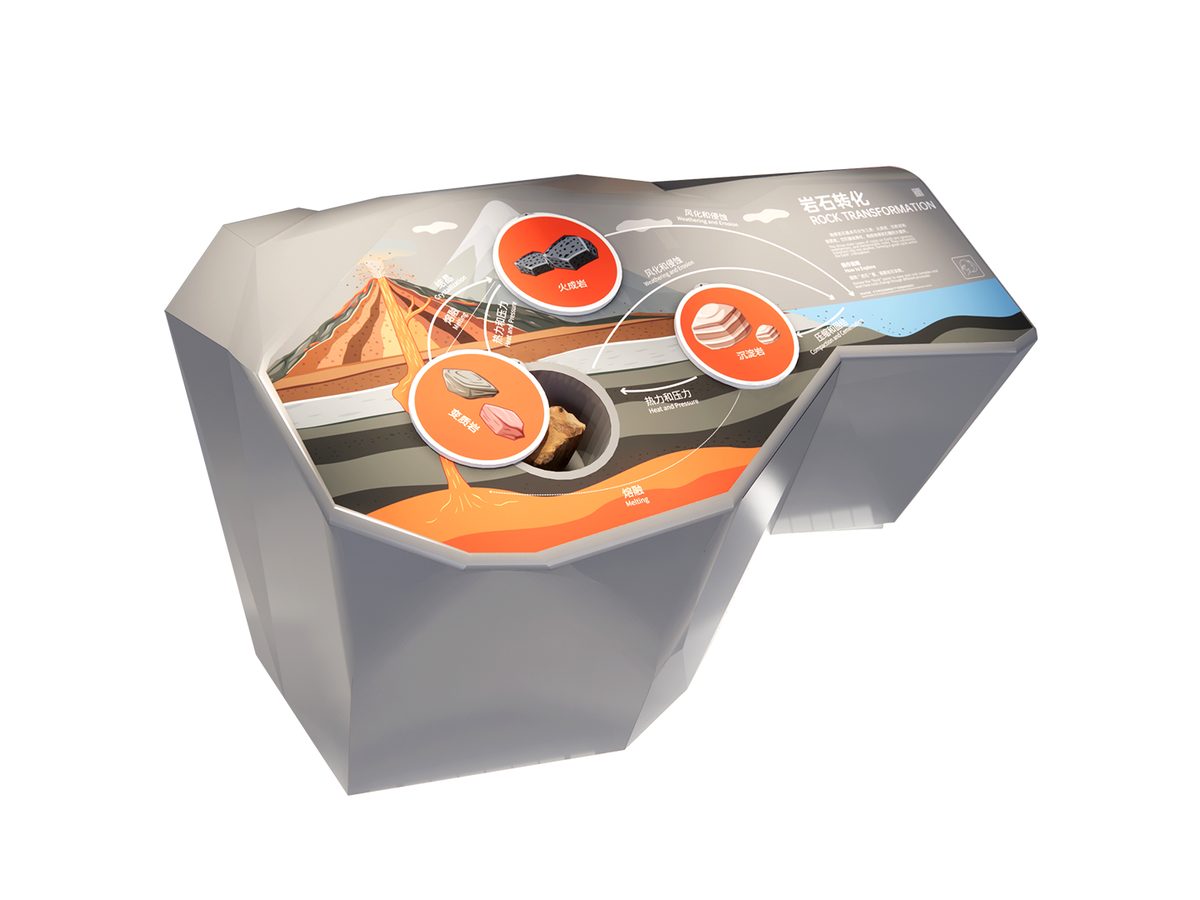
Heat and pressure turn one rock type into another on a turntable.
Attach a theme outline, a floor plan, or nothing at all — a photo of the space is enough to start. Quotations are issued against real drawings, not per-square-metre guesses.