Home/Exhibits/Earth & Ecology/Pressure resistant buoyancy material

Pressure resistant buoyancy material

The "Striver" vessel adopts China's independently developed solid buoyancy material, which is made by mixing hollow…

Pressure resistant buoyancy material — Earth & Ecology exhibit for science museums
Studio rendering
CategoryEarth & Ecology
Standard sizeCustom size
SupplySingle unit or batch · OEM to your drawing
Lead timeStandard 4–8 weeks after deposit (confirmed per contract)
Warranty1 year, structure and control
DocumentsSpecification sheet · control diagram · spare-part list

A standard catalogue model: the dimensions, control package and finish are fixed, which is what keeps the price and the lead time predictable. Size, colour and interface language can be adapted without a new design cycle.

Ask about this model → Email us

Standard models from this range are also listed in our online store, priced in USD — see the price yourself ↗
01 / Overview

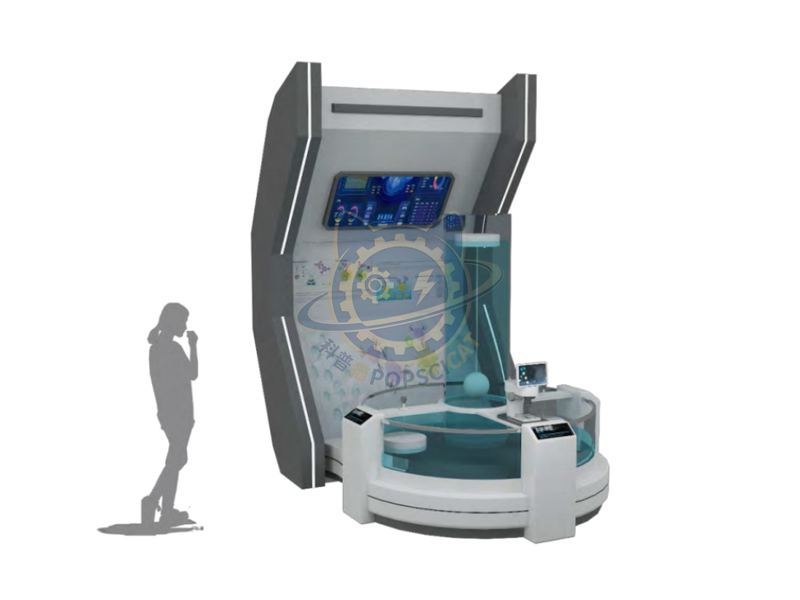
The "Striver" vessel adopts China's independently developed solid buoyancy material, which is made by mixing hollow glass microspheres with resin substrate and undergoing thermal curing process, with high compressive strength and lightweight characteristics. Solid buoyancy materials occupy about 70% of the volume of the "Striver", ensuring that the submersible can safely float from a depth of tens of thousands of meters.

02 / How visitors use it

The unit is designed for unsupervised public use: controls are recessed or shielded, moving parts are enclosed, and the interface is operable by a child of about six with no instruction. Where a screen is used, the language can be switched without changing the hardware, and the content can be replaced on site.

03 / The science behind it

Deep sea pressure resistant buoyancy material is a key component of the "Striver" deep-sea manned submersible. Its core scientific principle is to use a lightweight, high-strength, high-pressure resistant, and corrosion-resistant composite structure to provide stable buoyancy for the submersible in extreme deep-sea environments up to 10000 meters, while ensuring structural safety. The buoyancy material used by the "Striver" vessel is filled with nano-sized glass microspheres as the core material. The diameter of the glass microspheres is only in the nanometer to tens of micrometers range, and they have the characteristics of large specific surface area, low density, and good chemical stability. They are not easily corroded by seawater and have excellent compressive performance due to their dense internal microstructure, which can withstand the huge hydrostatic pressure of tens of thousands of meters deep sea. The solid buoyancy material prepared in this way is lightweight and high-strength, which can significantly reduce the weight of the submersible and provide sufficient buoyancy, effectively improving the operational stability and safety of the submersible in deep-sea environments. China's deep-sea solid buoyancy materials have long relied on imports, which has hindered the development of deep-sea equipment.

04 / Built for a public floor

Every unit leaves the factory after a running test: mechanisms cycled, electronics burned in, edges dressed, fixings torqued and marked. Wear parts — bearings, sliders, lamps, belts, touch panels — are modular and listed on the spare-part sheet, so a venue technician can replace them without returning the exhibit. Crating is plywood with foam blocking; the loading plan and packing list travel with the shipment.

Same category

More in Earth & Ecology

Other models from the Earth & Ecology line, all held to the same specification and the same control package.

Start a project

Send us your exhibit list.
We will come back with a price.

Attach a theme outline, a floor plan, or nothing at all — a photo of the space is enough to start. Quotations are issued against a real exhibit list, not per-square-metre guesses.

WeChat QR code — scan to message us Scan to add us
on WeChat