Community energy consumption covers household electricity consumption, heating and cooling systems, transportation,…
| Category | Technology & Everyday Life |
|---|---|
| Standard size | Custom size |
| Supply | Single unit or batch · OEM to your drawing |
| Lead time | Standard 4–8 weeks after deposit (confirmed per contract) |
| Warranty | 1 year, structure and control |
| Documents | Specification sheet · control diagram · spare-part list |
A standard catalogue model: the dimensions, control package and finish are fixed, which is what keeps the price and the lead time predictable. Size, colour and interface language can be adapted without a new design cycle.
Standard models from this range are also listed in our online store, priced in USD — see the price yourself ↗
Community energy consumption covers household electricity consumption, heating and cooling systems, transportation, and the operation of public facilities such as lighting and elevators, which directly affect the quality of life and comfort of community residents. However, excessive energy consumption not only accelerates the depletion of non renewable resources, but also leads to the emission of a large amount of greenhouse gases. Therefore, reasonable control and management of community energy consumption are of crucial significance for promoting sustainable development and protecting the human living environment.
The unit is designed for unsupervised public use: controls are recessed or shielded, moving parts are enclosed, and the interface is operable by a child of about six with no instruction. Where a screen is used, the language can be switched without changing the hardware, and the content can be replaced on site.
Oil vehicle travel: With a fuel efficiency of 8.0L/100km, the amount of fuel required to travel one kilometer is: fuel quantity (1 kilometer)=8.0L/100km * 1km=0.08L, equivalent to 0.085kg of standard coal. Carbon dioxide emissions (kg)=fuel consumption (L) × 2.7kg/L=0.216kg. Winter heating: 1kg of standard coal emits 2.493kg of carbon dioxide, so the daily carbon dioxide emissions for heating are about 199.44kg. Summer cooling: 1 kWh of electricity can be equivalent to 0.1229kg of standard coal, so the carbon emissions are about 7.35kg. Household lighting: Ordinary fluorescent lamps are generally 40W, and the difference is not much. 0.3 kWh of electricity is needed for daily lighting. Equivalent to 0.037kg of standard coal, the carbon emissions are approximately 0.092kg. Clothing washing: A washing machine typically has a power of around 250W-380W and consumes around 250W-380W per day.
Every unit leaves the factory after a running test: mechanisms cycled, electronics burned in, edges dressed, fixings torqued and marked. Wear parts — bearings, sliders, lamps, belts, touch panels — are modular and listed on the spare-part sheet, so a venue technician can replace them without returning the exhibit. Crating is plywood with foam blocking; the loading plan and packing list travel with the shipment.
Other models from the Technology & Everyday Life line, all held to the same specification and the same control package.

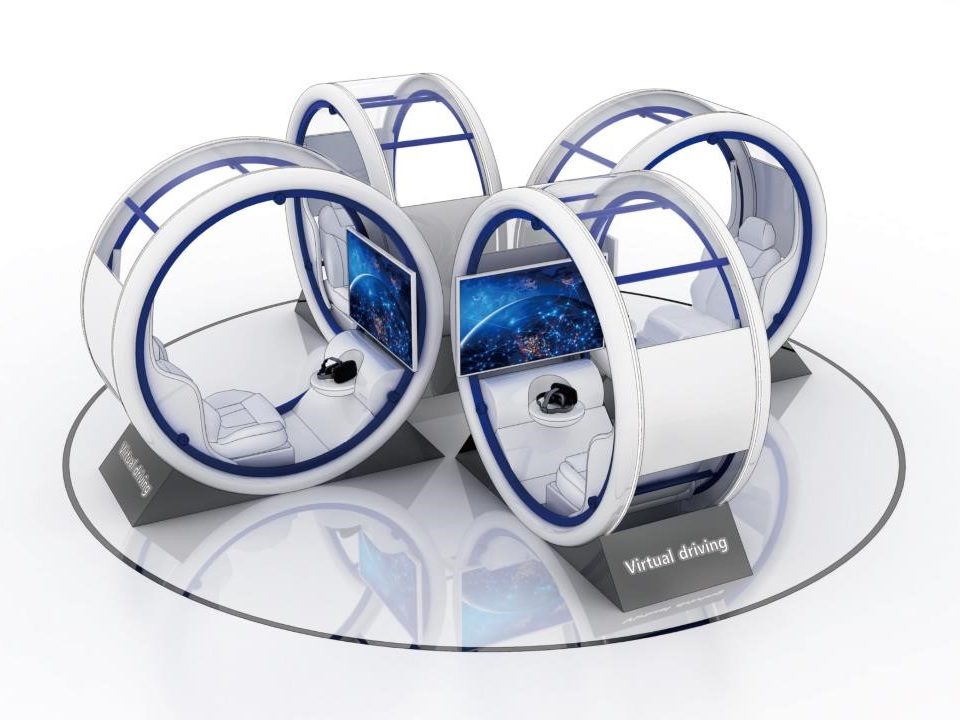
A fixed-base cockpit with a city route and a reaction-time score.

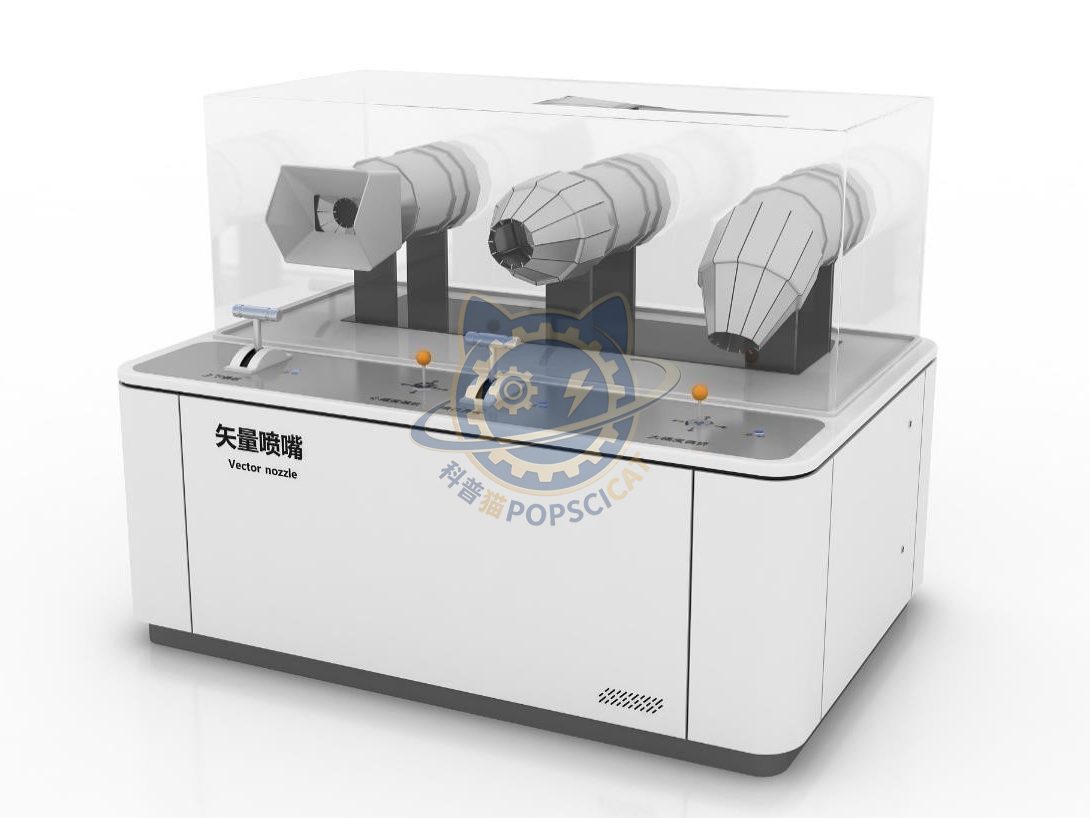
Tilt the nozzle and watch the thrust vector swing.

Angle the panel, watch the current and race the model.

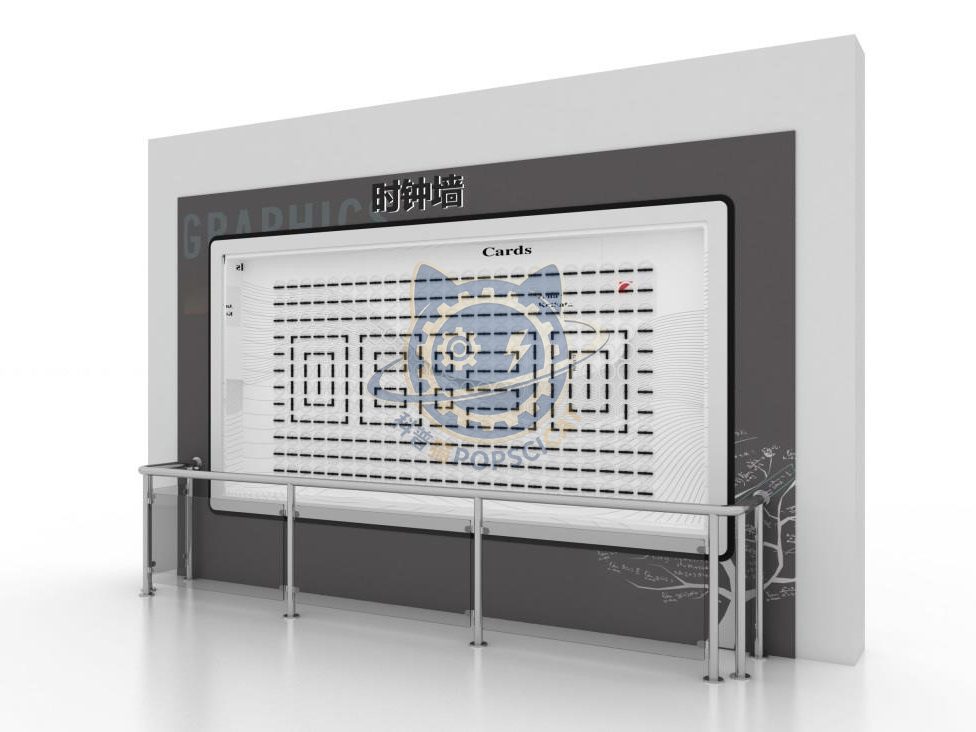
Forty movements from water clock to quartz all reading the same second.
Attach a theme outline, a floor plan, or nothing at all — a photo of the space is enough to start. Quotations are issued against a real exhibit list, not per-square-metre guesses.
Scan to add us