garbage classification

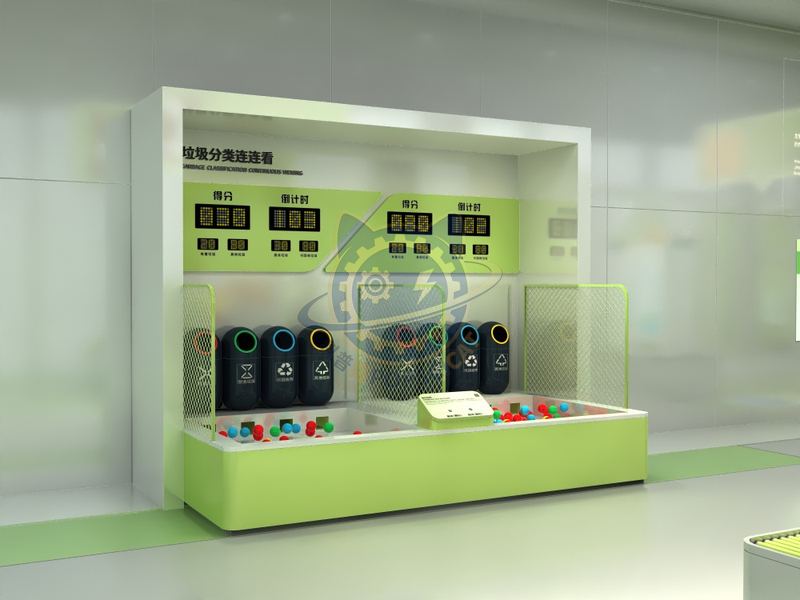
Garbage classification refers to the process of categorizing garbage into different types for disposal and treatment…

garbage classification — Technology & Everyday Life exhibit for science museums
Reference image
CategoryTechnology & Everyday Life
Standard sizeCustom size
SupplySingle unit or batch · OEM to your drawing
Lead timeStandard 4–8 weeks after deposit (confirmed per contract)
Warranty1 year, structure and control
DocumentsSpecification sheet · control diagram · spare-part list

A standard catalogue model: the dimensions, control package and finish are fixed, which is what keeps the price and the lead time predictable. Size, colour and interface language can be adapted without a new design cycle.

Ask about this model → Email us

Standard models from this range are also listed in our online store, priced in USD — see the price yourself ↗
01 / Overview

Garbage classification refers to the process of categorizing garbage into different types for disposal and treatment according to certain standards or regulations. By collecting, transporting, and treating different types of garbage through classification, the goal is to maximize resource utilization and minimize environmental impact. Garbage classification reduces the amount of landfill and incineration waste, lowers energy consumption and carbon emissions, helps to conserve resources, and promotes the development of a circular economy.

02 / How visitors use it

The unit is designed for unsupervised public use: controls are recessed or shielded, moving parts are enclosed, and the interface is operable by a child of about six with no instruction. Where a screen is used, the language can be switched without changing the hardware, and the content can be replaced on site.

03 / The science behind it

Garbage classification generally refers to a series of activities that classify, store, dispose of, and transport garbage according to certain regulations or standards, in order to transform it into a public resource. Proper classification is also an act of reducing carbon emissions. The benefits of household waste classification are as follows: (1) Reducing land occupation: Garbage classification removes recyclable and non degradable substances, reducing the amount of garbage by more than 50%. (2) Reduce environmental pollution: Waste batteries and other materials containing toxic substances such as metallic mercury can pose serious hazards to humans, and plastic waste in soil can lead to reduced crop yields. Therefore, recycling can reduce harm. (3) Turning waste into treasure: China uses 3 billion plastic fast food boxes and 500-600 million instant noodle bowls every year, and plastic waste accounts for 3% -7% of household waste. One ton of waste plastic can recycle 600 kilograms of unleaded gasoline and diesel. Recycling 1500 tons of waste paper can avoid cutting down trees used to produce 1200 tons of paper. Therefore, garbage recycling is both environmentally friendly and cost-effective.

04 / Built for a public floor

Every unit leaves the factory after a running test: mechanisms cycled, electronics burned in, edges dressed, fixings torqued and marked. Wear parts — bearings, sliders, lamps, belts, touch panels — are modular and listed on the spare-part sheet, so a venue technician can replace them without returning the exhibit. Crating is plywood with foam blocking; the loading plan and packing list travel with the shipment.

Same category

More in Technology & Everyday Life

Other models from the Technology & Everyday Life line, all held to the same specification and the same control package.

Start a project

Send us your exhibit list.
We will come back with a price.

Attach a theme outline, a floor plan, or nothing at all — a photo of the space is enough to start. Quotations are issued against a real exhibit list, not per-square-metre guesses.

WeChat QR code — scan to message us Scan to add us
on WeChat