Home/Exhibits/Technology & Everyday Life/Three dimensional green system

Three dimensional green system

The three-dimensional green system is an innovative greening method that plants are planted on the surface or…

Three dimensional green system — Technology & Everyday Life exhibit for science museums
Reference image
CategoryTechnology & Everyday Life
Standard sizeCustom size
SupplySingle unit or batch · OEM to your drawing
Lead timeStandard 4–8 weeks after deposit (confirmed per contract)
Warranty1 year, structure and control
DocumentsSpecification sheet · control diagram · spare-part list

A standard catalogue model: the dimensions, control package and finish are fixed, which is what keeps the price and the lead time predictable. Size, colour and interface language can be adapted without a new design cycle.

Ask about this model → Email us

Standard models from this range are also listed in our online store, priced in USD — see the price yourself ↗
01 / Overview

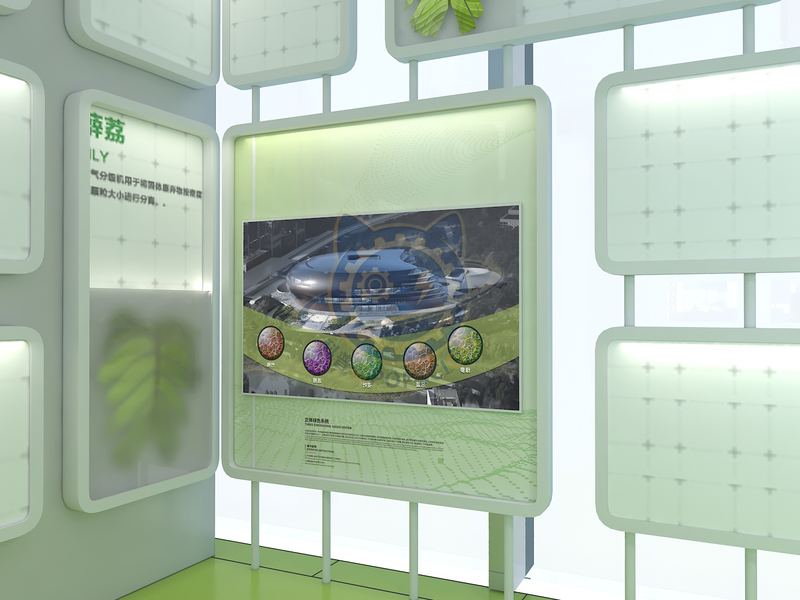
The three-dimensional green system is an innovative greening method that plants are planted on the surface or interior space of buildings. It mainly utilizes the climbing, adsorption, or hanging characteristics of plants to form green landscapes on the walls, roofs, and other locations of buildings. The three-dimensional green system is one of the important forms of urban greening, mainly applied to high-rise buildings, commercial complexes, residential areas and other places in cities. It can not only beautify the urban environment, but also improve air quality, reduce noise pollution, insulation and save energy.

02 / How visitors use it

The unit is designed for unsupervised public use: controls are recessed or shielded, moving parts are enclosed, and the interface is operable by a child of about six with no instruction. Where a screen is used, the language can be switched without changing the hardware, and the content can be replaced on site.

03 / The science behind it

Vertical greening forms a natural insulation layer by covering the building facade with plant walls. This insulation layer can reduce heat loss in winter and effectively block the intrusion of external heat in summer. Plant walls reduce the temperature of the wall surface by absorbing and reflecting solar radiation heat, thereby reducing the acquisition of indoor heat and saving energy consumption of indoor air conditioning. At the same time, the air layer inside the plant wall can form an effective thermal buffer layer, making indoor temperature changes smoother and improving the comfort of the indoor environment. Secondly, photosynthesis in plants can absorb carbon dioxide and release oxygen, which helps improve indoor air quality. Meanwhile, the transpiration of plants can increase air humidity and regulate indoor microclimate. All of these contribute to creating a healthier and more comfortable indoor environment. Eight types of plants: Ficus microcarpa, Climbing Wall Tiger, Coral Vine, Five Leaf Earthly Brocade, Cannon Flower, Purple Cloud Vine, First Crown Vine, Golden edged Phoenix.

04 / Built for a public floor

Every unit leaves the factory after a running test: mechanisms cycled, electronics burned in, edges dressed, fixings torqued and marked. Wear parts — bearings, sliders, lamps, belts, touch panels — are modular and listed on the spare-part sheet, so a venue technician can replace them without returning the exhibit. Crating is plywood with foam blocking; the loading plan and packing list travel with the shipment.

Same category

More in Technology & Everyday Life

Other models from the Technology & Everyday Life line, all held to the same specification and the same control package.

Start a project

Send us your exhibit list.
We will come back with a price.

Attach a theme outline, a floor plan, or nothing at all — a photo of the space is enough to start. Quotations are issued against a real exhibit list, not per-square-metre guesses.

WeChat QR code — scan to message us Scan to add us
on WeChat