Home/Exhibits/Life Science & Health/Cracking the sound code

Cracking the sound code

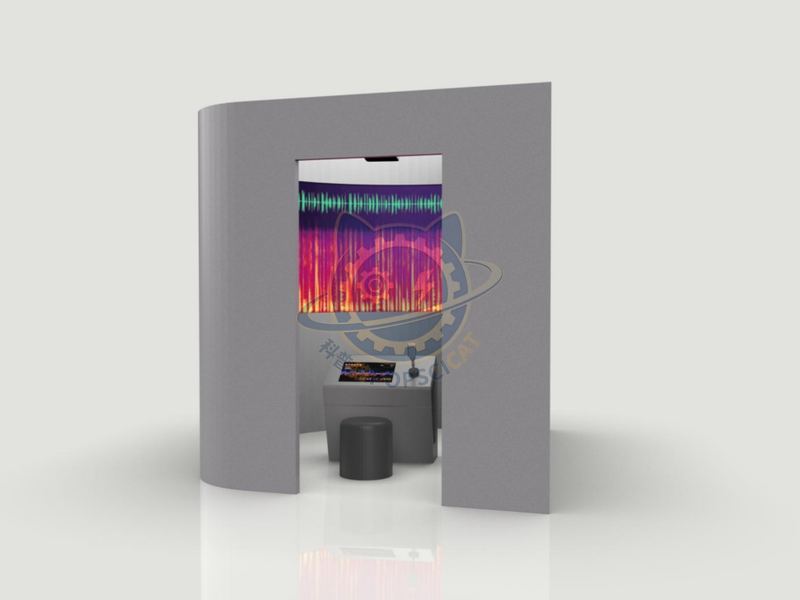
Voiceprint refers to the frequency spectrum of sound waves carrying speech information displayed by electroacoustic…

Cracking the sound code — Life Science & Health exhibit for science museums
Reference image
CategoryLife Science & Health
Standard sizeCustom size
SupplySingle unit or batch · OEM to your drawing
Lead timeStandard 4–8 weeks after deposit (confirmed per contract)
Warranty1 year, structure and control
DocumentsSpecification sheet · control diagram · spare-part list

A standard catalogue model: the dimensions, control package and finish are fixed, which is what keeps the price and the lead time predictable. Size, colour and interface language can be adapted without a new design cycle.

Ask about this model → Email us

Standard models from this range are also listed in our online store, priced in USD — see the price yourself ↗
01 / Overview

Voiceprint refers to the frequency spectrum of sound waves carrying speech information displayed by electroacoustic instruments. It is the key to studying sound codes, determined by factors such as vocal cord vibration frequency and oral shape, and has specific and stable characteristics. Voiceprint recognition technology is widely used in fields such as public safety, financial transactions, and social insurance.

02 / How visitors use it

The unit is designed for unsupervised public use: controls are recessed or shielded, moving parts are enclosed, and the interface is operable by a child of about six with no instruction. Where a screen is used, the language can be switched without changing the hardware, and the content can be replaced on site.

03 / The science behind it

1. Sound imaging technology is based on microphone array measurement technology, which measures the phase difference of sound waves reaching each microphone in a certain space, determines the position of the sound source based on phased array principle, measures the amplitude of the sound source, and displays the spatial distribution of the sound source in the form of an image, that is, obtaining a spatial sound field distribution cloud image - sound image, where the color and brightness of the image represent the strength. two The principle of speech recognition technology is to enable machines to recognize and convert speech signals into text, and then convert understanding into instructions. three Sound simulation technology, also known as AI voice transformation technology, relies heavily on the support of deep learning and neural networks for its implementation. 4. Voiceprint analysis (identity authentication, health check, emotion analysis, etc.) Voiceprint is the frequency spectrum of sound waves carrying speech information displayed by electroacoustic instruments, consisting of wavelength, frequency, and intensity.

04 / Built for a public floor

Every unit leaves the factory after a running test: mechanisms cycled, electronics burned in, edges dressed, fixings torqued and marked. Wear parts — bearings, sliders, lamps, belts, touch panels — are modular and listed on the spare-part sheet, so a venue technician can replace them without returning the exhibit. Crating is plywood with foam blocking; the loading plan and packing list travel with the shipment.

Same category

More in Life Science & Health

Other models from the Life Science & Health line, all held to the same specification and the same control package.

Start a project

Send us your exhibit list.
We will come back with a price.

Attach a theme outline, a floor plan, or nothing at all — a photo of the space is enough to start. Quotations are issued against a real exhibit list, not per-square-metre guesses.

WeChat QR code — scan to message us Scan to add us
on WeChat