I mainly utilize the principles of reflection and transmission in optics.
| Category | Life Science & Health |
|---|---|
| Standard size | Custom size |
| Supply | Single unit or batch · OEM to your drawing |
| Lead time | Standard 4–8 weeks after deposit (confirmed per contract) |
| Warranty | 1 year, structure and control |
| Documents | Specification sheet · control diagram · spare-part list |
A standard catalogue model: the dimensions, control package and finish are fixed, which is what keeps the price and the lead time predictable. Size, colour and interface language can be adapted without a new design cycle.
Standard models from this range are also listed in our online store, priced in USD — see the price yourself ↗
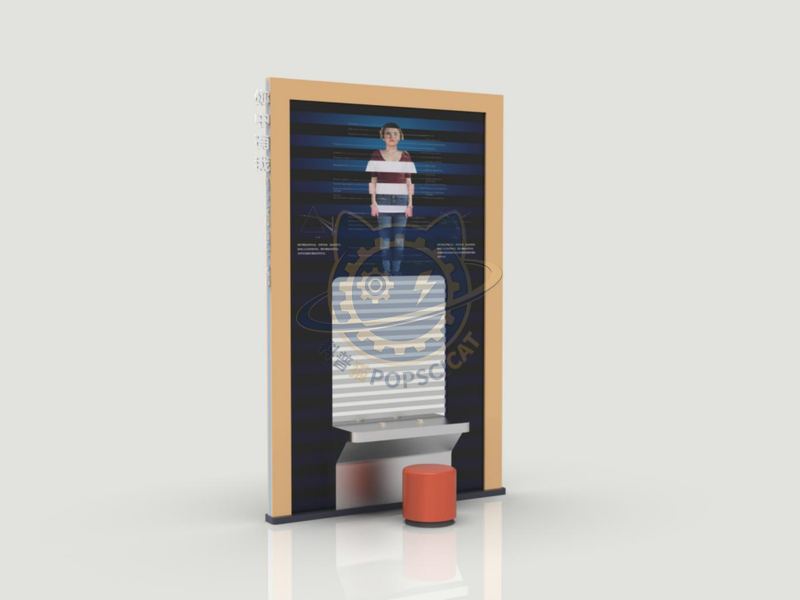
I mainly utilize the principles of reflection and transmission in optics. Transparent glass allows some light to pass through, while flat mirrors reflect light. When two viewers sit face to face in front of a mirror, the light reflected from their faces will pass through a staggered arrangement of transparent glass and flat mirrors, ultimately forming a new face in the mirror. This new face is a mixture of facial features from two viewers, creating a unique visual effect due to the superposition and interference of light.
The unit is designed for unsupervised public use: controls are recessed or shielded, moving parts are enclosed, and the interface is operable by a child of about six with no instruction. Where a screen is used, the language can be switched without changing the hardware, and the content can be replaced on site.
In optics, when light encounters interfaces between different media, reflection and transmission phenomena usually occur. Reflection refers to the phenomenon where light changes its propagation direction at an interface and returns to the original medium. It follows the law of reflection: reflected light, incident light, and normal are in the same plane, and the reflection angle is equal to the incident angle. According to the smoothness of the surface, reflection can be divided into specular reflection that can form a clear image and diffuse reflection that directs light towards all directions. Transmission refers to the phenomenon of light passing through a medium and exiting on the other side. The degree of transmission depends on the characteristics of the material and the wavelength of light, for example, glass has high transmittance for visible light. During the transmission process, the speed and direction of light propagation may change due to refraction.
Every unit leaves the factory after a running test: mechanisms cycled, electronics burned in, edges dressed, fixings torqued and marked. Wear parts — bearings, sliders, lamps, belts, touch panels — are modular and listed on the spare-part sheet, so a venue technician can replace them without returning the exhibit. Crating is plywood with foam blocking; the loading plan and packing list travel with the shipment.
Other models from the Life Science & Health line, all held to the same specification and the same control package.

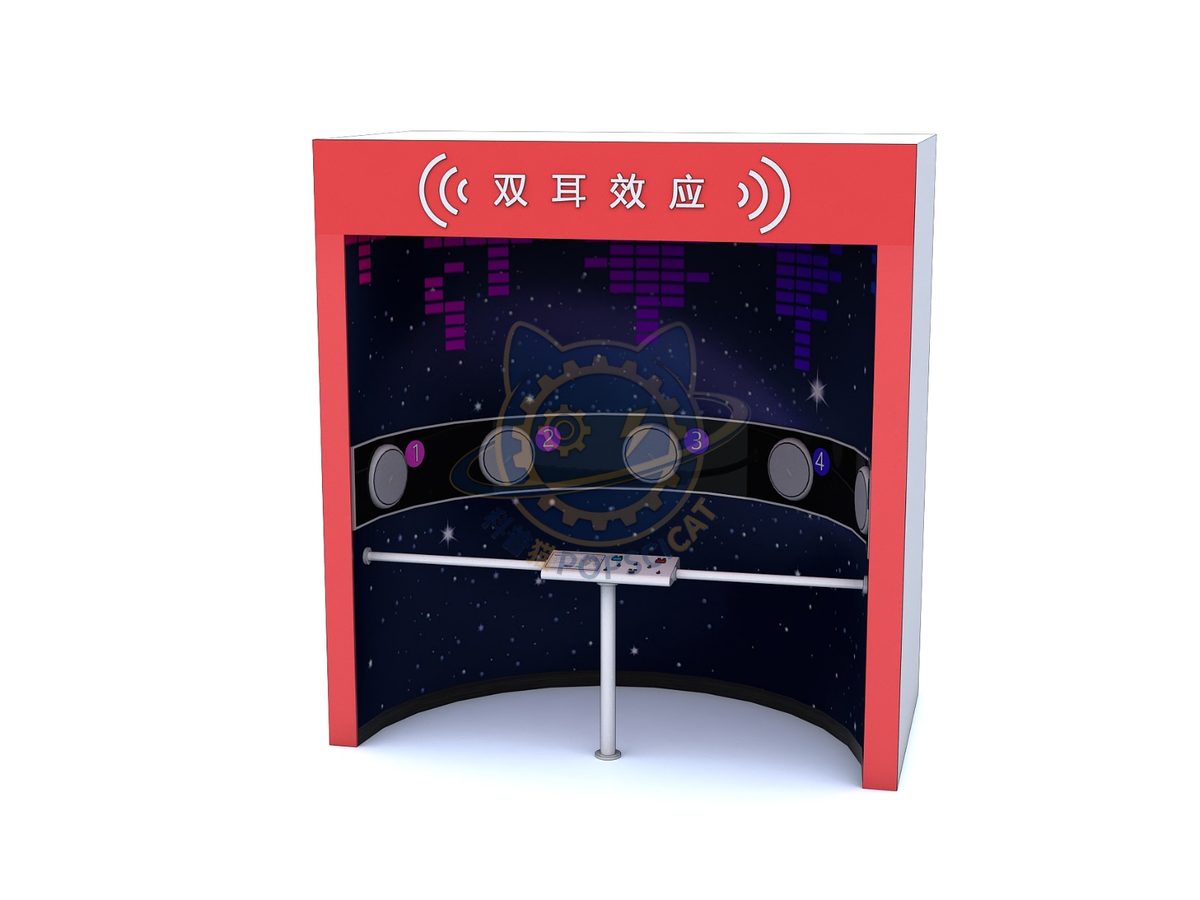
Sound reaches two ears at different times; visitors point to the source.

An adjustable lens projects a real image onto a retina screen.

Projected anatomy on a body-sized screen layer by layer.

Contract a model biceps and watch the tendon pull the forearm.
Attach a theme outline, a floor plan, or nothing at all — a photo of the space is enough to start. Quotations are issued against a real exhibit list, not per-square-metre guesses.
Scan to add us