Communication is the process of transmitting information between the sender and receiver through a medium.
| Category | Signature & Outdoor |
|---|---|
| Standard size | Custom size |
| Supply | Single unit or batch · OEM to your drawing |
| Lead time | Standard 4–8 weeks after deposit (confirmed per contract) |
| Warranty | 1 year, structure and control |
| Documents | Specification sheet · control diagram · spare-part list |
A standard catalogue model: the dimensions, control package and finish are fixed, which is what keeps the price and the lead time predictable. Size, colour and interface language can be adapted without a new design cycle.
Standard models from this range are also listed in our online store, priced in USD — see the price yourself ↗
Communication is the process of transmitting information between the sender and receiver through a medium. The communication system is mainly composed of three elements: source, channel, and destination. The source is the sender of information, the channel is the propagation channel of information, and the destination is the receiver of information. When the source, channel, and destination are connected, information begins to be transmitted. From plants to animals, from Earth to deep space, communication is ubiquitous.
The unit is designed for unsupervised public use: controls are recessed or shielded, moving parts are enclosed, and the interface is operable by a child of about six with no instruction. Where a screen is used, the language can be switched without changing the hardware, and the content can be replaced on site.
Communication broadly refers to the accurate and secure transmission of information from one party to another using any method or medium, without violating their respective wishes, by two or more parties who require information. Source: A source can be a person, a machine, a system, or any entity capable of generating information. The source determines the content transmitted. It may be text, speech, images, videos, or other forms of data. For example, in telephone communication, the speaker is the source of information. Channel: A channel is a medium or path through which information is transmitted from a source to a receiver. It can be physical (such as optical fiber, copper wire) or virtual (such as Internet protocol, wireless signal). The function of a channel is to transmit information from the source to the receiver. During transmission, the quality and bandwidth of the channel affect the efficiency and accuracy of information transmission. In addition, the channel may be affected by noise interference, resulting in information loss or erroneous transmission. Destination: The destination can be another person, device, or.
Every unit leaves the factory after a running test: mechanisms cycled, electronics burned in, edges dressed, fixings torqued and marked. Wear parts — bearings, sliders, lamps, belts, touch panels — are modular and listed on the spare-part sheet, so a venue technician can replace them without returning the exhibit. Crating is plywood with foam blocking; the loading plan and packing list travel with the shipment.
Other models from the Signature & Outdoor line, all held to the same specification and the same control package.

Whisper at one focus and be heard clearly at the other.

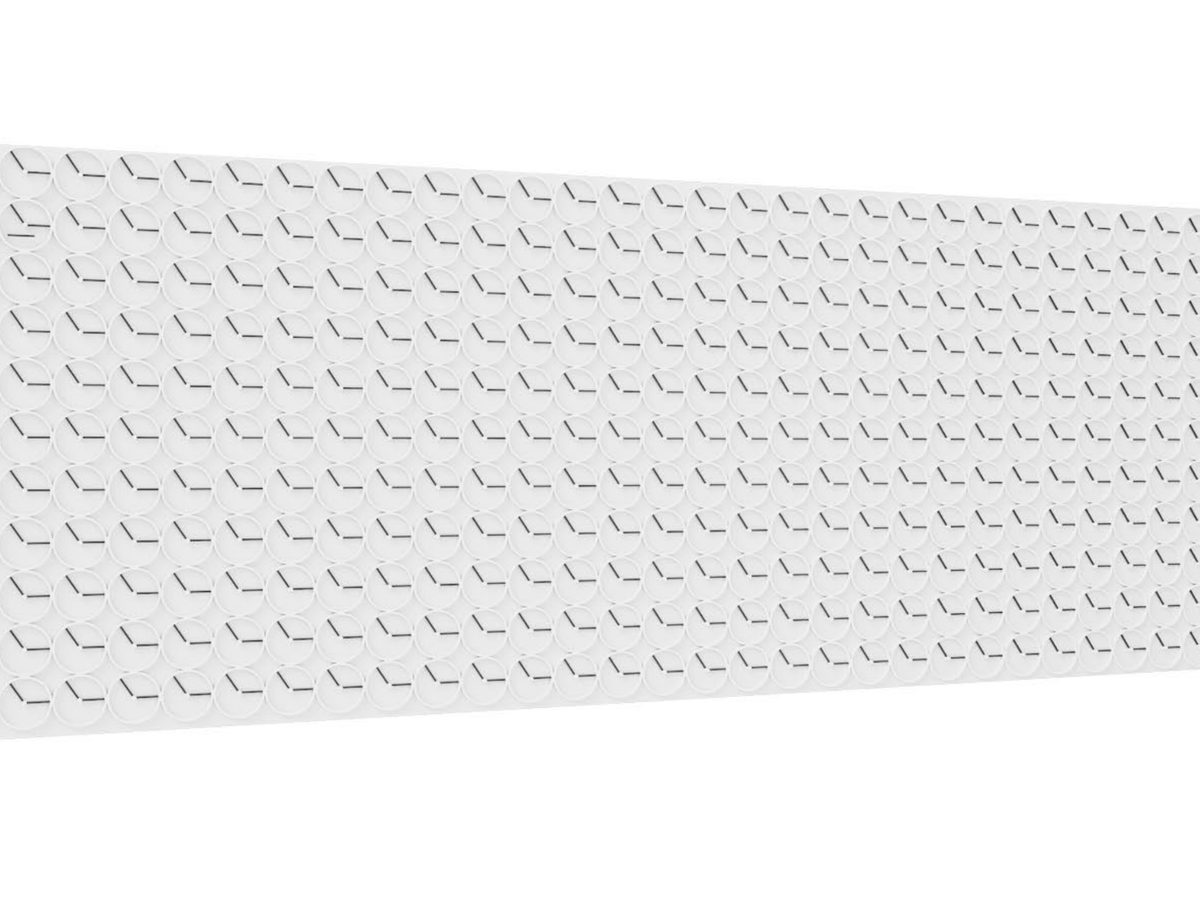
A seven-metre movement wall showing four escapements at full scale.

Reads as scattered rods until seen from one marked point.

A walk-in sculpture of a surface with only one side.
Attach a theme outline, a floor plan, or nothing at all — a photo of the space is enough to start. Quotations are issued against a real exhibit list, not per-square-metre guesses.
Scan to add us