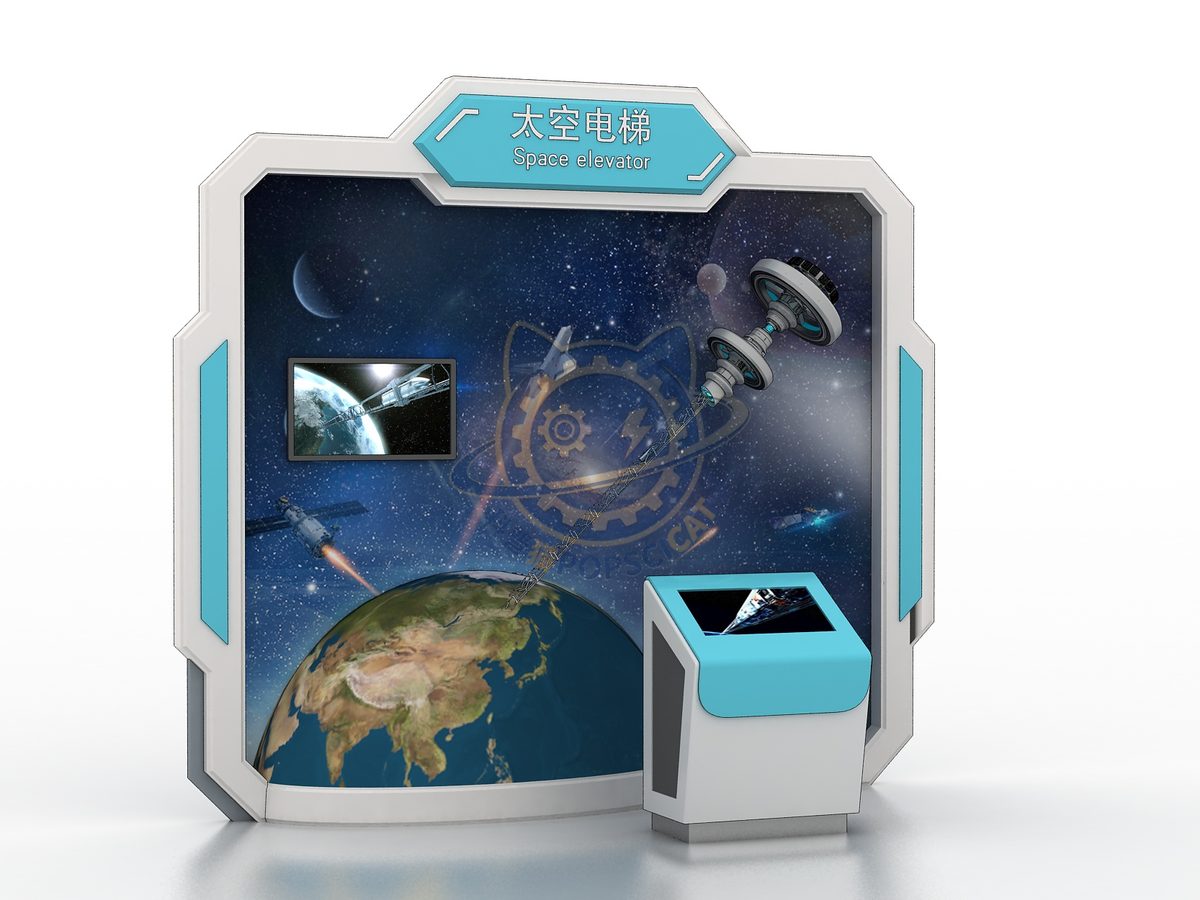
Space Elevator

A counterweighted ribbon climbs from ground to orbit at model scale.

Space Elevator — Aerospace & Astronomy exhibit for science museums
Studio rendering
CategoryAerospace & Astronomy
Standard size3200 x 1300 x 2900 mm
SupplySingle unit or batch · OEM to your drawing
Lead timeStandard 4–8 weeks after deposit (confirmed per contract)
Warranty1 year, structure and control
DocumentsSpecification sheet · control diagram · spare-part list

A standard catalogue model: the dimensions, control package and finish are fixed, which is what keeps the price and the lead time predictable. Size, colour and interface language can be adapted without a new design cycle.

Ask about this model → Email us

Standard models from this range are also listed in our online store, priced in USD — see the price yourself ↗
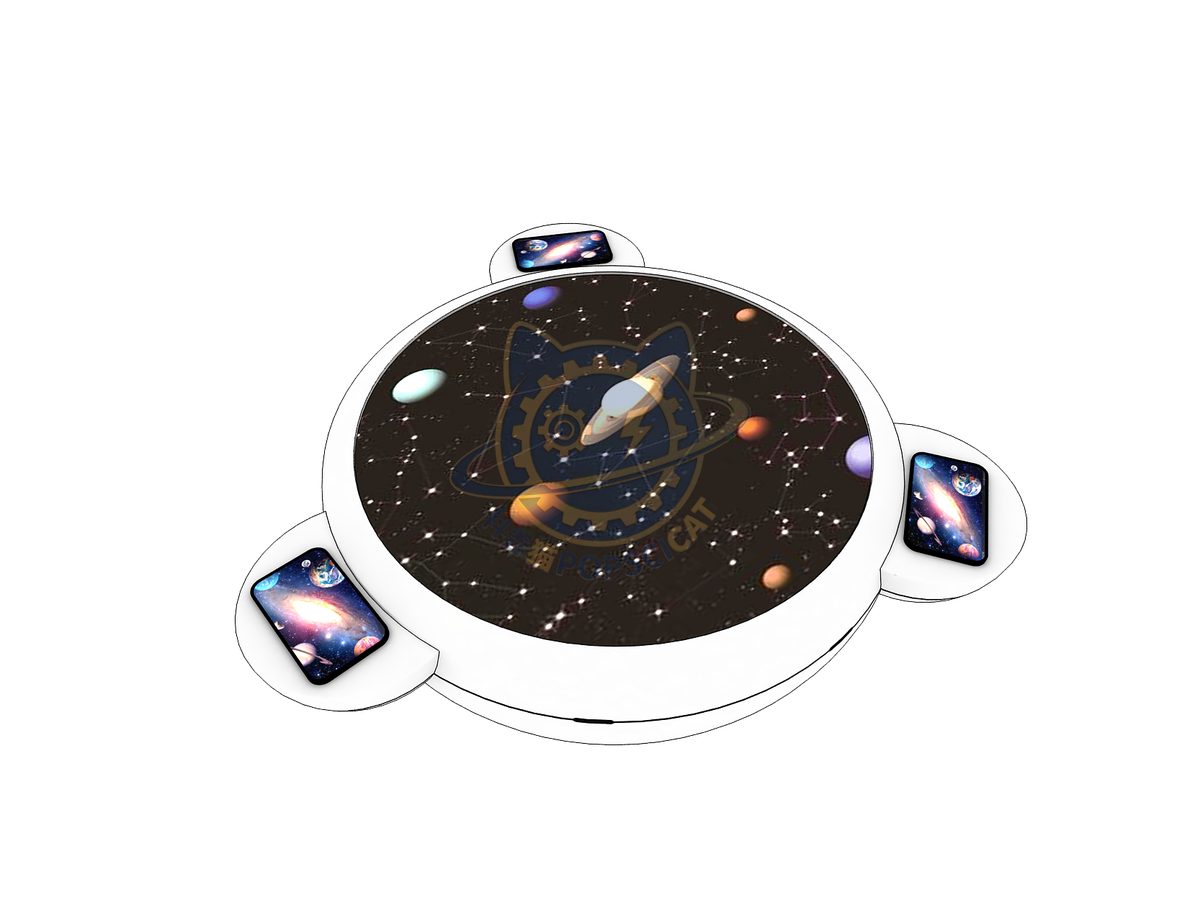
01 / Overview

A space elevator is a vertical lift that connects the Earth's surface with space. The principle is to use the Earth's rotation and centrifugal force to suspend the space station in the air at a certain height on the Earth's surface through cables made of high-strength materials. Where did the concept of space elevators come from? Why choose this form? The concept of space elevator first appeared in 1895, proposed by the "father of space" Russian scientist Konstantin Tsiolkovsky. Its bottom is located above the ground or stratosphere, and its top extends directly to outer space, hence it is also known as the "ladder". The reason for choosing this form is mainly to reduce energy consumption, significantly lower transportation and human exploration costs in deep space. How can the space elevator ensure synchronization with the Earth's rotation?

02 / How visitors use it

The unit is designed for unsupervised public use: controls are recessed or shielded, moving parts are enclosed, and the interface is operable by a child of about six with no instruction. Where a screen is used, the language can be switched without changing the hardware, and the content can be replaced on site.

03 / The science behind it

Space elevators require strong material technology and manufacturing capabilities as support, and the investment is also extremely large. The biggest problem is that the cable must be strong enough, and carbon nanotubes are an alternative material, but humans first need to produce carbon nanotubes that are long enough. If the space elevator comes into being, it will bring tremendous changes to the world. In addition to making space tourism accessible, it can also transport materials at low cost on Earth and in space. What problems can space elevators solve? Reduce costs! According to NASA, it costs $10000 to send a pound (453 grams) payload into orbit. How to reduce costs? Physicist Bradley Edwards proposed a solution: a space elevator. Nowadays, launching rockets is still called "carrying out space missions". With the space elevator, going to space is "transportation", and going to space has become a common thing, unaffected by weather conditions. Compared to rockets, space elevators are safer. In the future, if humans.

04 / Built for a public floor

Every unit leaves the factory after a running test: mechanisms cycled, electronics burned in, edges dressed, fixings torqued and marked. Wear parts — bearings, sliders, lamps, belts, touch panels — are modular and listed on the spare-part sheet, so a venue technician can replace them without returning the exhibit. Crating is plywood with foam blocking; the loading plan and packing list travel with the shipment.

Same category

More in Aerospace & Astronomy

Other models from the Aerospace & Astronomy line, all held to the same specification and the same control package.

Start a project

Send us your exhibit list.
We will come back with a price.

Attach a theme outline, a floor plan, or nothing at all — a photo of the space is enough to start. Quotations are issued against a real exhibit list, not per-square-metre guesses.

WeChat QR code — scan to message us Scan to add us
on WeChat