In the late summer of 1666, Newton proposed the law of universal gravitation by observing an apple falling.
| Category | Aerospace & Astronomy |
|---|---|
| Standard size | Custom size |
| Supply | Single unit or batch · OEM to your drawing |
| Lead time | Standard 4–8 weeks after deposit (confirmed per contract) |
| Warranty | 1 year, structure and control |
| Documents | Specification sheet · control diagram · spare-part list |
A standard catalogue model: the dimensions, control package and finish are fixed, which is what keeps the price and the lead time predictable. Size, colour and interface language can be adapted without a new design cycle.
Standard models from this range are also listed in our online store, priced in USD — see the price yourself ↗
In the late summer of 1666, Newton proposed the law of universal gravitation by observing an apple falling. The key to 'universal gravitation' lies in 'all things', the most common being the gravitational force of the Earth on all objects on Earth, which ensures that when we jump up, we will land on the ground instead of floating into the air. The small ball rolling forward in the exhibit exhibits an elliptical motion trajectory under the combined action of Earth's gravity and inclined plane, which coincides with the planetary revolution trajectory described by Kepler's first law.
The unit is designed for unsupervised public use: controls are recessed or shielded, moving parts are enclosed, and the interface is operable by a child of about six with no instruction. Where a screen is used, the language can be switched without changing the hardware, and the content can be replaced on site.
The inconspicuous daily phenomenon of an apple landing caught Newton's attention. He pondered: Why do apples land instead of flying into the sky? Through continuous thinking, the existence of gravity was discovered, opening up a new direction of exploration in human physics. Newton proposed that there exists a force of mutual attraction between any two particles in the direction of their connecting lines. The magnitude of this gravitational force is proportional to the product of their masses and inversely proportional to the square of their distance, regardless of the chemical composition of the two objects and the type of medium between them. Expressed by the formula: F=G * (m1 * m2)/r ², where F is the gravitational force between two objects, G is the constant of universal gravitation, m1 and m2 are the masses of the two objects, and r is the distance between the centroids of the two objects.
Every unit leaves the factory after a running test: mechanisms cycled, electronics burned in, edges dressed, fixings torqued and marked. Wear parts — bearings, sliders, lamps, belts, touch panels — are modular and listed on the spare-part sheet, so a venue technician can replace them without returning the exhibit. Crating is plywood with foam blocking; the loading plan and packing list travel with the shipment.
Other models from the Aerospace & Astronomy line, all held to the same specification and the same control package.

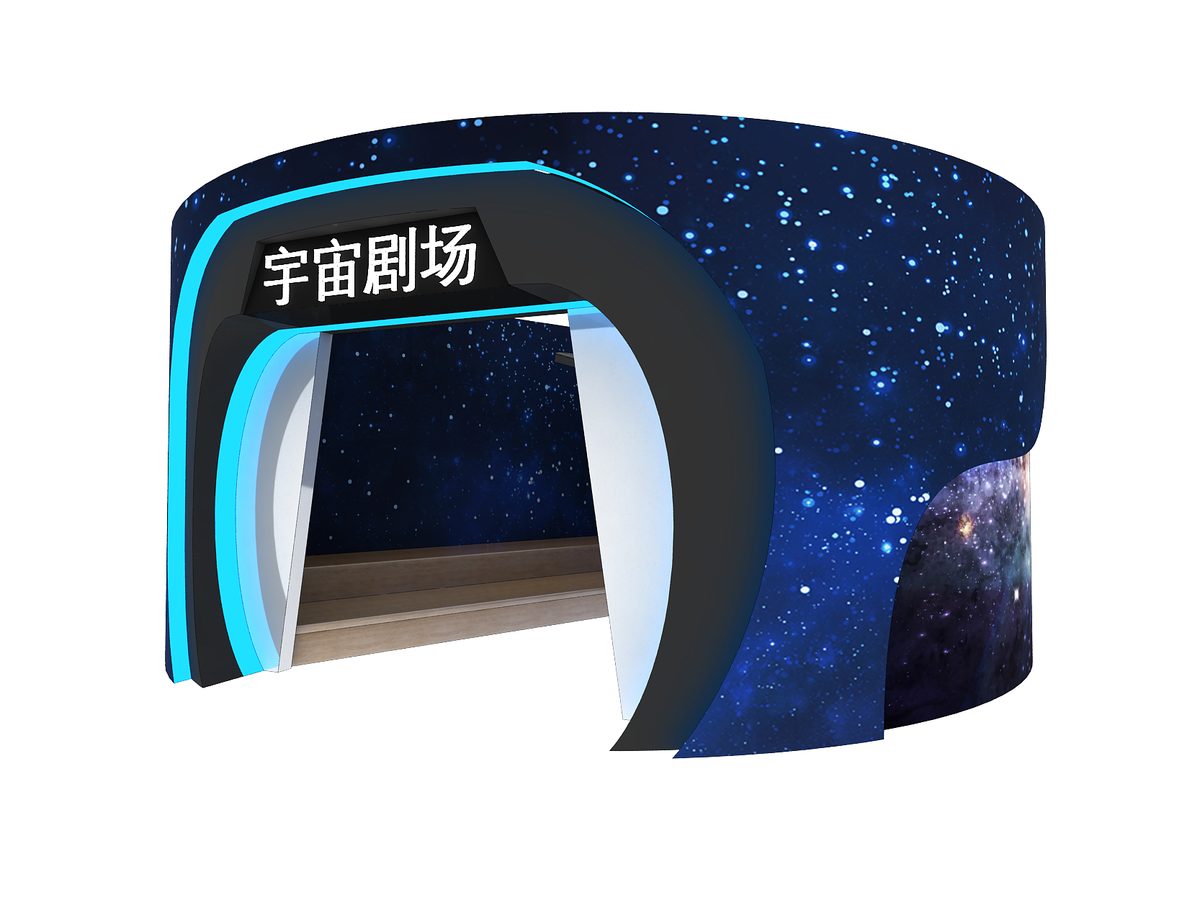
A curved screen and twelve seats for a six-minute flight.

Move a planet across the band and watch liquid water survive or boil.

A comet model whose tail always points away from the light source.

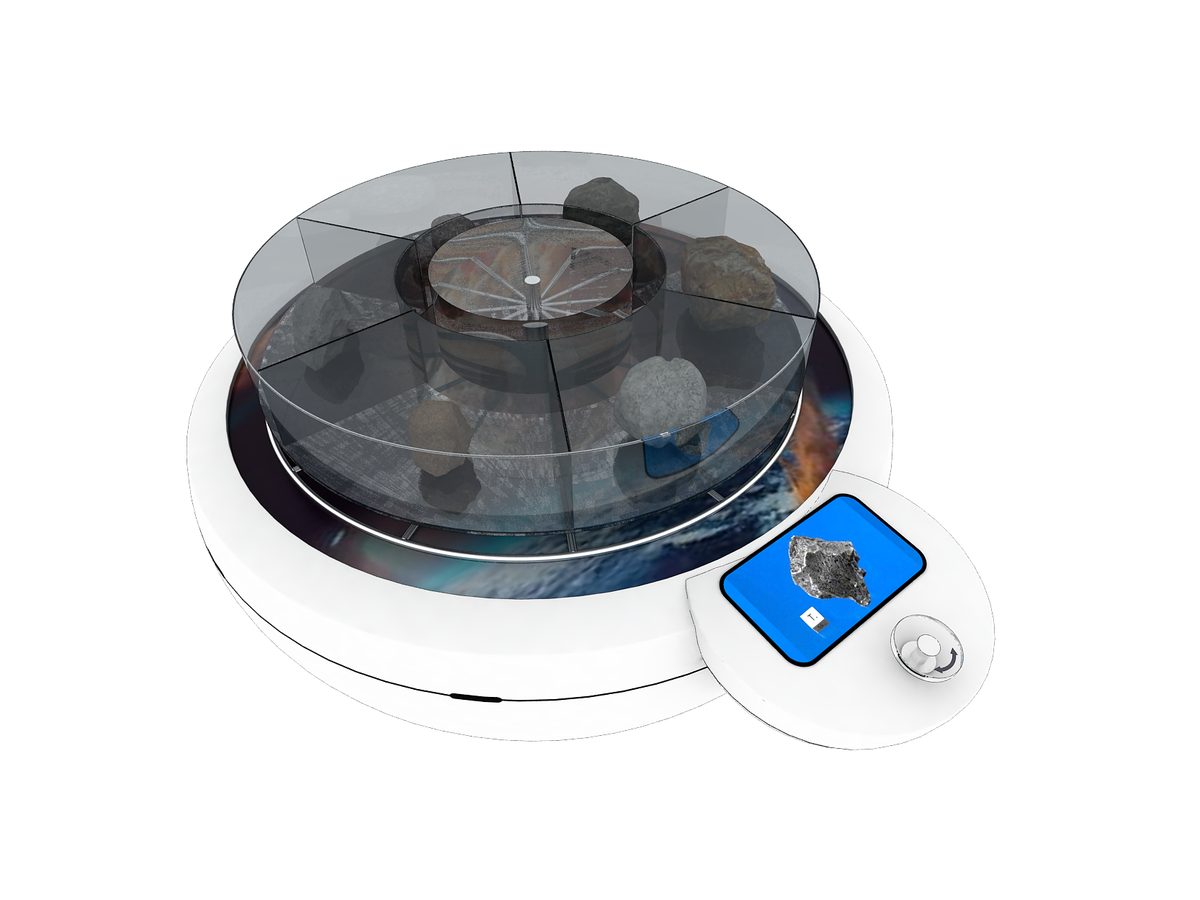
Real meteorite samples beside a simulated entry trail.
Attach a theme outline, a floor plan, or nothing at all — a photo of the space is enough to start. Quotations are issued against a real exhibit list, not per-square-metre guesses.
Scan to add us