Home/Exhibits/City & Society/Distributed power system

Distributed power system

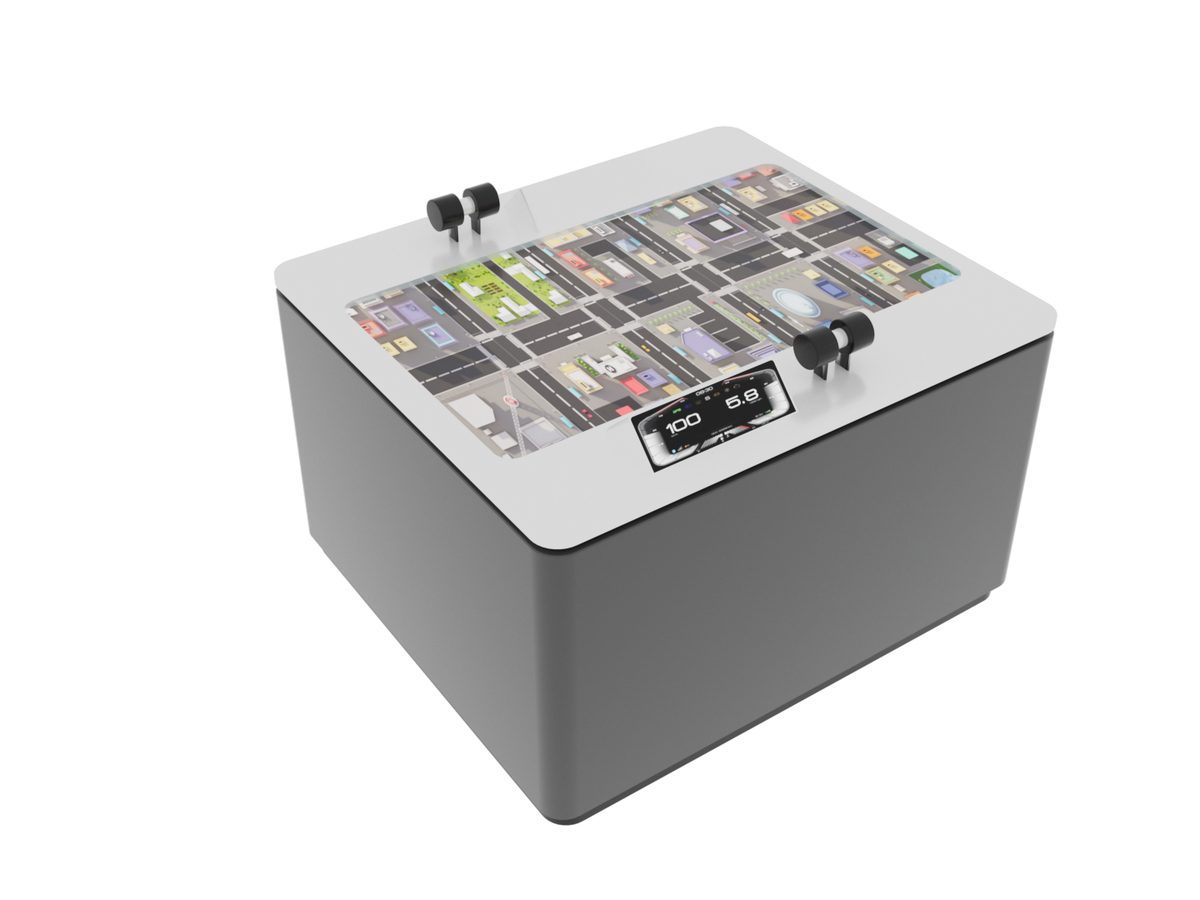
The exhibit will create an electromechanical interactive booth, which simulates the power system of the three…

Distributed power system — City & Society exhibit for science museums
Studio rendering
CategoryCity & Society
Standard sizeCustom size
SupplySingle unit or batch · OEM to your drawing
Lead timeStandard 4–8 weeks after deposit (confirmed per contract)
Warranty1 year, structure and control
DocumentsSpecification sheet · control diagram · spare-part list

A standard catalogue model: the dimensions, control package and finish are fixed, which is what keeps the price and the lead time predictable. Size, colour and interface language can be adapted without a new design cycle.
Ask about this model → Email us
01 / Overview

The exhibit will create an electromechanical interactive booth, which simulates the power system of the three carriages in front of the booth by rotating the wheels corresponding to each carriage. The more wheels are started, the faster the speed of the high-speed train will be, and the characteristics of the dispersed power system of the high-speed train will be explained on the display screen. The interior of the carriage demonstrates the power working status of the carriage through changes in lighting; There is a track scene turntable under the carriage, which drives the outside scene of the train to move clockwise continuously, simulating the scene of roadside scenery reversing when the carriage is running at high speed. The more the handwheel is turned, the faster the turntable rotates; A fan device simulating high-speed airflow is installed in front of the track. The more the handwheel rotates, the stronger the wind gradually increases, and the scarf of the little person on the car body also flutters. The exhibit aims to provide visitors with an interactive experience to understand the characteristics of the distributed power system of high-speed trains and demonstrate how it provides power and acceleration during operation. visitors continuously rotates the handwheel to observe the feedback of the scene effect, and enhances the understanding of electricity through intuitive mechanical operation and dynamic demonstration.

02 / How visitors use it

The unit is designed for unsupervised public use: controls are recessed or shielded, moving parts are enclosed, and the interface is operable by a child of about six with no instruction. Where a screen is used, the language can be switched without changing the hardware, and the content can be replaced on site.

03 / The science behind it

Traditional trains are often pulled by a single locomotive, while high-speed trains use power distribution, with traction motors installed in multiple carriages to allow more wheels to work together. Generally speaking, the more axles involved in traction, the stronger the starting and acceleration performance. Why does' dispersed power 'run faster, more steadily, and safer? Imagine a train as a trolley: one person pushing it is "concentrated", while multiple people pushing it together is "dispersed". The high-speed train allows more wheelsets to participate in driving, therefore: 1 Greater traction: faster starting and stronger acceleration; two More even force distribution: less pulling and pulling between carriages, smoother operation; three Higher redundancy: When a few power units are abnormal, they can still maintain a certain traction capacity.

04 / Built for a public floor

Every unit leaves the factory after a running test: mechanisms cycled, electronics burned in, edges dressed, fixings torqued and marked. Wear parts — bearings, sliders, lamps, belts, touch panels — are modular and listed on the spare-part sheet, so a venue technician can replace them without returning the exhibit. Crating is plywood with foam blocking; the loading plan and packing list travel with the shipment.

Same category

More in City & Society

Other models from the City & Society line, all held to the same specification and the same control package.

Start a project

Send us your exhibit list.
We will come back with a price.

Attach a theme outline, a floor plan, or nothing at all — a photo of the space is enough to start. Quotations are issued against a real exhibit list, not per-square-metre guesses.

WeChat QR code — scan to message us Scan to add us
on WeChat