Home/Exhibits/Digital & AI/Traceability - Fenach Mirror

Traceability - Fenach Mirror

In 1832, Belgian Joseph Prato and Austrian Simon von Stauffenfel almost simultaneously created the "Fenach Mirror",…

Traceability - Fenach Mirror — Digital & AI exhibit for science museums
Reference image
CategoryDigital & AI
Standard sizeCustom size
SupplySingle unit or batch · OEM to your drawing
Lead timeStandard 4–8 weeks after deposit (confirmed per contract)
Warranty1 year, structure and control
DocumentsSpecification sheet · control diagram · spare-part list

A standard catalogue model: the dimensions, control package and finish are fixed, which is what keeps the price and the lead time predictable. Size, colour and interface language can be adapted without a new design cycle.

Ask about this model → Email us
01 / Overview

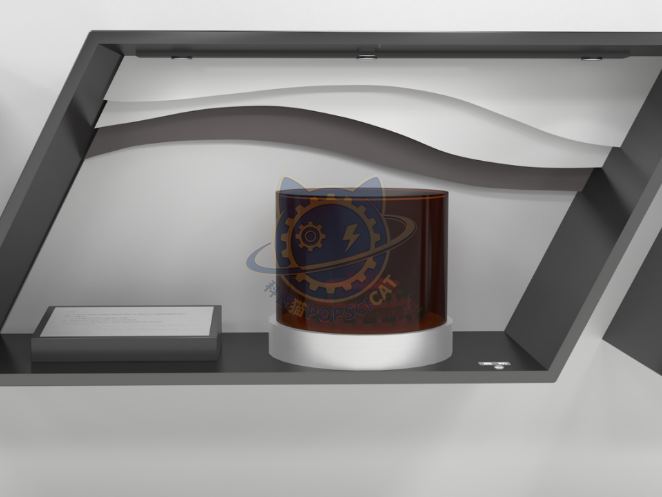
In 1832, Belgian Joseph Prato and Austrian Simon von Stauffenfel almost simultaneously created the "Fenach Mirror", which can be regarded as a pioneer of silent film. It consists of two disks divided into 16 sectors, each sector depicting a sequence of dance movements, with radial cracks left at the edges. When two disks rotate coaxially, visitors can see the coherent dance animation reflected by the mirror through the crack. The invention of the Fenach mirror laid the foundation for the development of early film technology.

02 / How visitors use it

The unit is designed for unsupervised public use: controls are recessed or shielded, moving parts are enclosed, and the interface is operable by a child of about six with no instruction. Where a screen is used, the language can be switched without changing the hardware, and the content can be replaced on site.

03 / The science behind it

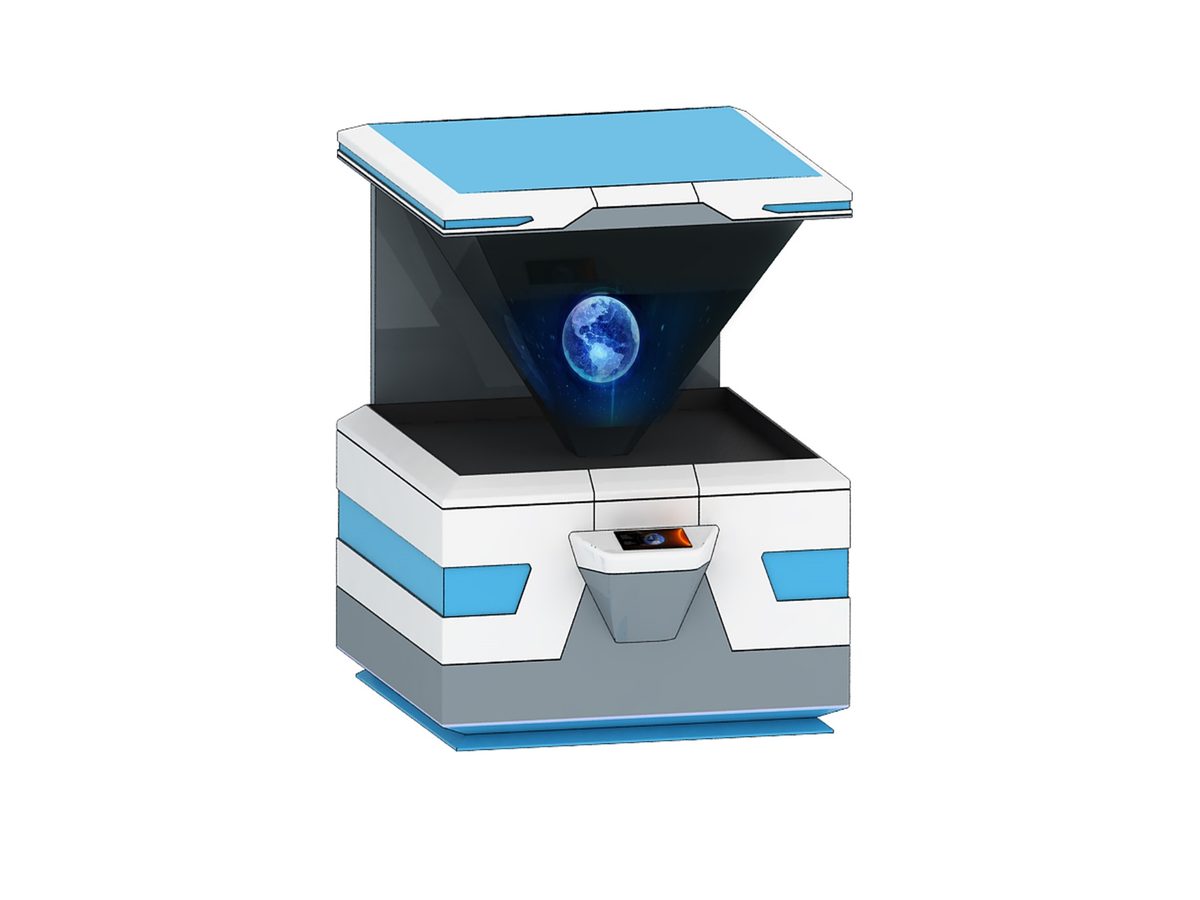
The Fenach mirror was invented in 1832 by Belgian Joseph Prato and Austrian Simon von Stauffenfel, and can play continuous animation. It is a prototype of early silent films. One of the variants of the Fenach mirror is a disc vertically mounted on a handle. A series of images are drawn around the center on the disc, corresponding to the frames of the animation, with a series of slits around the edges of the images. The user rotates the disc and observes the reflection of the disc in the mirror through the moving slit. In this way, when the user sees images appearing consecutively, due to visual persistence, they achieve a continuous playback effect. Another variant has two discs, one with a slit and the other with an image, so that the animation can be seen without the reflection of a mirror. Unlike Western mirrors and subsequent inventions, the Fenach mirror can only be used by one person at a time. The Fibonacci mirror only existed for two years before being replaced by other technologies. The Fibonacci mirror is based on the phenomenon of visual retention, although this phenomenon was studied by Greek mathematician Euclid and.
04 / Built for a public floor

Every unit leaves the factory after a running test: mechanisms cycled, electronics burned in, edges dressed, fixings torqued and marked. Wear parts — bearings, sliders, lamps, belts, touch panels — are modular and listed on the spare-part sheet, so a venue technician can replace them without returning the exhibit. Crating is plywood with foam blocking; the loading plan and packing list travel with the shipment.

Same category

More in Digital & AI

Other models from the Digital & AI line, all held to the same specification and the same control package.

Start a project

Send us your exhibit list.
We will come back with a price.

Attach a theme outline, a floor plan, or nothing at all — a photo of the space is enough to start. Quotations are issued against a real exhibit list, not per-square-metre guesses.

WeChat QR code — scan to message us Scan to add us
on WeChat