The sundial was an instrument used in ancient China to measure the shadow of the sun and determine the time.
| Category | Frontier Technology |
|---|---|
| Standard size | Custom size |
| Supply | Single unit or batch · OEM to your drawing |
| Lead time | Standard 4–8 weeks after deposit (confirmed per contract) |
| Warranty | 1 year, structure and control |
| Documents | Specification sheet · control diagram · spare-part list |
A standard catalogue model: the dimensions, control package and finish are fixed, which is what keeps the price and the lead time predictable. Size, colour and interface language can be adapted without a new design cycle.
Standard models from this range are also listed in our online store, priced in USD — see the price yourself ↗
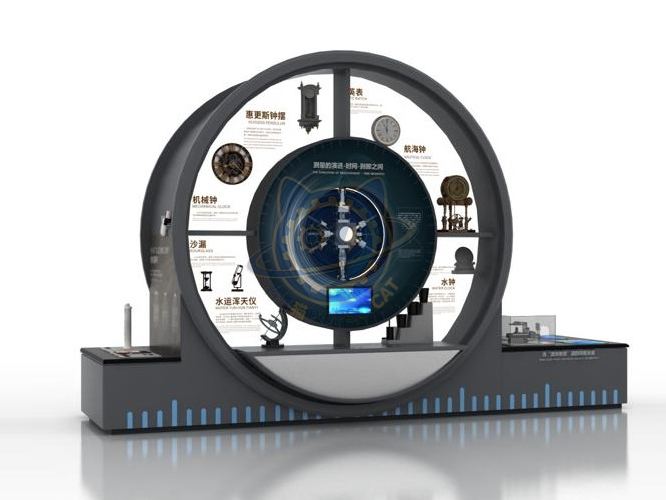
The sundial was an instrument used in ancient China to measure the shadow of the sun and determine the time. Water clock is an instrument used in ancient times to measure time by the amount of water droplets. Hourglass, also known as "sand clock", is usually composed of two connected sand pools. Water transportation celestial globe, celestial demonstration instrument, and time measurement instrument. A mechanical clock is a timer that uses a mechanical device to report or measure time. A quartz clock is an accurate clock based on the voltage characteristics of a quartz crystal placed in an electronic oscillator. The first quartz clock was made by American scientist Morrison in 1927. Electronic clocks are clocks powered by electricity, rather than mechanical clocks powered by suspended weights or mainsprings. A navigation clock, also known as a nautical astronomical clock, is a high-precision timer used to observe the altitude of celestial bodies on ocean going ships. It can determine the position of the ship through astronomical navigation. Atomic clocks use atomic resonance frequency standards to calculate and maintain the accuracy of time. They are.
The unit is designed for unsupervised public use: controls are recessed or shielded, moving parts are enclosed, and the interface is operable by a child of about six with no instruction. Where a screen is used, the language can be switched without changing the hardware, and the content can be replaced on site.
1. Time: The units of time include seconds (s), milliseconds (ms), microseconds (μ s), etc. Measurement tools include stopwatches, timers, and high-precision atomic clocks. two The ancients have long been using the shadow of the sun to measure time, and sundials appeared at least 3500 years ago. Later, people used the law of material balance to invent timing tools such as water clocks, hourglass, and incense clocks. About 400 years ago, the discovery of the principle of isochronism in a pendulum brought about the pendulum clock. The development of mechanization has also given birth to mechanical clocks, greatly improving timing accuracy. In modern times, in order to meet the higher requirements of human beings for time accuracy, more advanced timing tools such as quartz clocks and atomic clocks have emerged one after another. three The most accurate instrument for measuring time is the atomic clock. When an atom transitions from one energy level to another, it releases electromagnetic waves with highly stable characteristic frequencies, which can be used for high-precision timing.
Every unit leaves the factory after a running test: mechanisms cycled, electronics burned in, edges dressed, fixings torqued and marked. Wear parts — bearings, sliders, lamps, belts, touch panels — are modular and listed on the spare-part sheet, so a venue technician can replace them without returning the exhibit. Crating is plywood with foam blocking; the loading plan and packing list travel with the shipment.
Other models from the Frontier Technology line, all held to the same specification and the same control package.

Build a span from interchangeable parts and load it until it fails.

Shape-memory alloy, aerogel and carbon fibre under the visitor's hand.

Build a lattice from magnetic balls and see why a crystal cleaves.

Four arms perform a synchronised routine behind a glass wall.
Attach a theme outline, a floor plan, or nothing at all — a photo of the space is enough to start. Quotations are issued against a real exhibit list, not per-square-metre guesses.
Scan to add us