The Standard Model is a scientific theory that reveals the fundamental composition of the universe, consisting of 17…
| Category | Frontier Technology |
|---|---|
| Standard size | Custom size |
| Supply | Single unit or batch · OEM to your drawing |
| Lead time | Standard 4–8 weeks after deposit (confirmed per contract) |
| Warranty | 1 year, structure and control |
| Documents | Specification sheet · control diagram · spare-part list |
A standard catalogue model: the dimensions, control package and finish are fixed, which is what keeps the price and the lead time predictable. Size, colour and interface language can be adapted without a new design cycle.
Standard models from this range are also listed in our online store, priced in USD — see the price yourself ↗
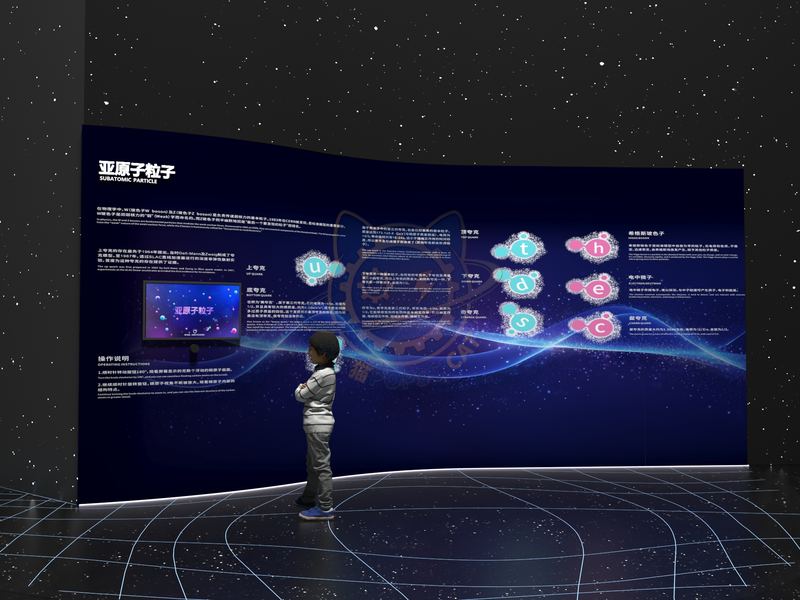
The Standard Model is a scientific theory that reveals the fundamental composition of the universe, consisting of 17 elementary particles, divided into matter particles (the basis of matter) and propagating particles (the medium for transmitting natural forces), as well as the Higgs boson that gives mass. Material particles: divided into three generations, each containing 2 types of quarks, 1 type of charged lepton, and 1 type of neutrino, totaling 12 types. Propagation particles: including gluons that transmit strong forces, photons that transmit electromagnetic forces, and W and Z bosons that transmit weak forces, there are a total of four types. The Higgs boson: endows other particles with mass through the Higgs field and is the source of matter's weight. Material particles: the cornerstone of the universe. The first generation of quarks was discovered in 1968 (indirectly confirmed by deep inelastic scattering experiments at the Stanford Linear Accelerator Center) with a mass of approximately 2.3 MeV/c ² and a charge of+. The combination of up quarks and down quarks forms protons and neutrons, such as matter.
The unit is designed for unsupervised public use: controls are recessed or shielded, moving parts are enclosed, and the interface is operable by a child of about six with no instruction. Where a screen is used, the language can be switched without changing the hardware, and the content can be replaced on site.
Subatomic particles constitute the microscopic world of atoms, in which electrons carry negative charges and spin lightly around the nucleus, occupying the vast majority of atomic space; The atomic nucleus contains larger mass protons with positive charges and electrically neutral neutrons, which together form the dense core of the nucleus. The interactions and characteristics of these particles determine the chemical properties and physical behavior of atoms. Due to collisions generated in cosmic ray reactions or particle accelerator experiments, over 200 subatomic particles have been detected, most of which are highly unstable and exist for less than one millionth of a second. The theoretical and experimental research of particle physics, the study of subatomic particles and their properties, has provided scientists with a clearer understanding of the nature of matter and energy, as well as the origin of the universe.
Every unit leaves the factory after a running test: mechanisms cycled, electronics burned in, edges dressed, fixings torqued and marked. Wear parts — bearings, sliders, lamps, belts, touch panels — are modular and listed on the spare-part sheet, so a venue technician can replace them without returning the exhibit. Crating is plywood with foam blocking; the loading plan and packing list travel with the shipment.
Other models from the Frontier Technology line, all held to the same specification and the same control package.

Build a span from interchangeable parts and load it until it fails.

Shape-memory alloy, aerogel and carbon fibre under the visitor's hand.

Build a lattice from magnetic balls and see why a crystal cleaves.

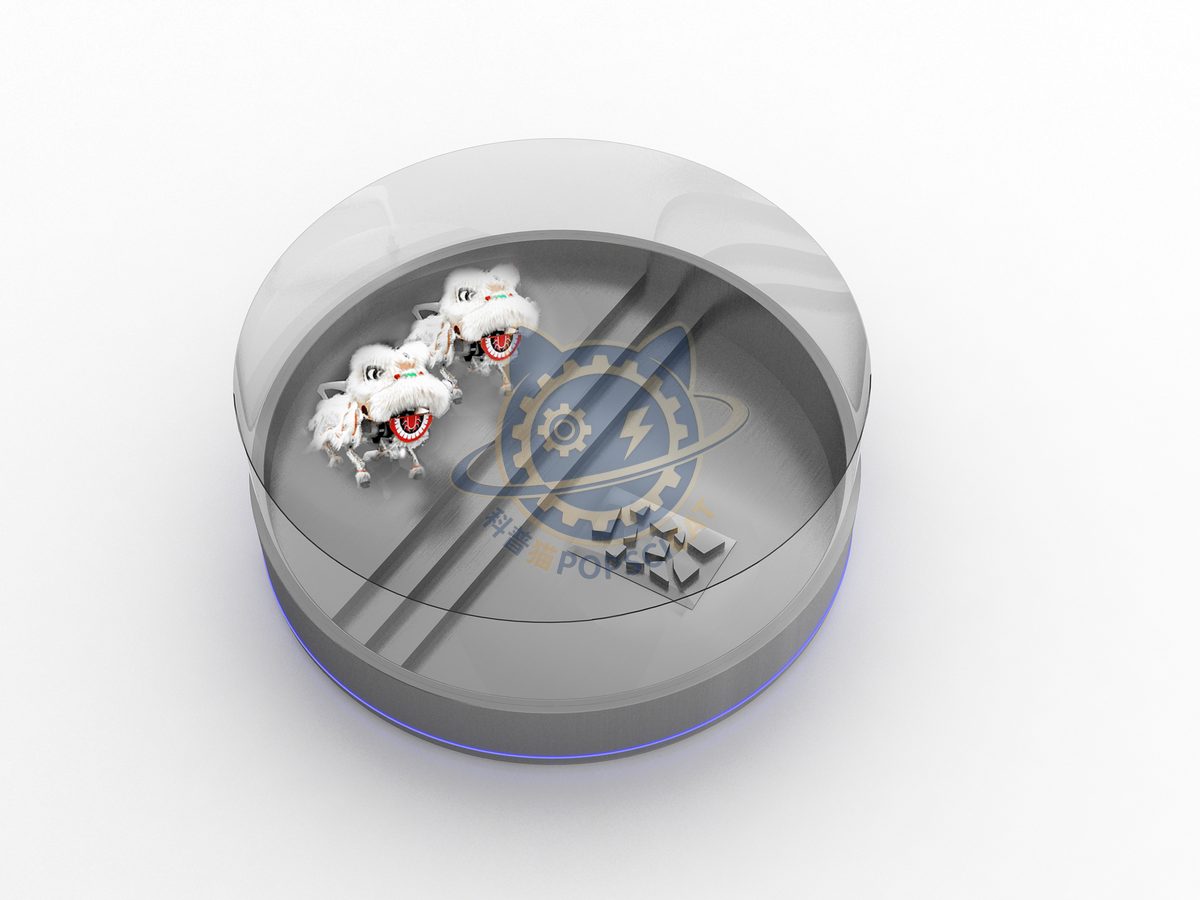
Four arms perform a synchronised routine behind a glass wall.
Attach a theme outline, a floor plan, or nothing at all — a photo of the space is enough to start. Quotations are issued against a real exhibit list, not per-square-metre guesses.
Scan to add us