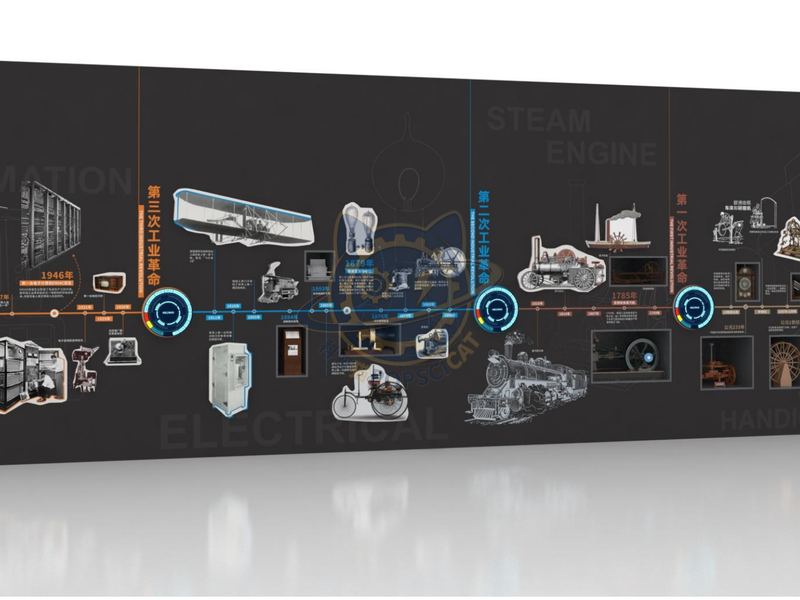
In the handicraft era, craftsmen led the design and emphasized the combination of practicality and artistry.
| Category | Frontier Technology |
|---|---|
| Standard size | Custom size |
| Supply | Single unit or batch · OEM to your drawing |
| Lead time | Standard 4–8 weeks after deposit (confirmed per contract) |
| Warranty | 1 year, structure and control |
| Documents | Specification sheet · control diagram · spare-part list |
A standard catalogue model: the dimensions, control package and finish are fixed, which is what keeps the price and the lead time predictable. Size, colour and interface language can be adapted without a new design cycle.
Standard models from this range are also listed in our online store, priced in USD — see the price yourself ↗
In the handicraft era, craftsmen led the design and emphasized the combination of practicality and artistry. Over 2000 years ago, Xi Zhong invented the first carriage in China during the Xia Dynasty, which was a one or two wheeled carriage. At the end of the Warring States period in Sinan, the working people discovered the guiding power of magnets in the process of production practice and made an instrument called "Sinan" that could determine the direction of the north and south. In 220 BC, Archimedes of ancient Greece invented the Archimedes screw pump, which was used in fields such as ship drainage and agricultural irrigation, and is still widely used today. In the year 31 AD, Du Shi, the governor of Nanyang in the Eastern Han Dynasty, invented the water drainage system, which uses hydraulic impact to drive the blower of the metallurgical furnace, thus facilitating iron smelting and casting. This invention predates the European hydraulic blowing technology by 1100 years. During the Eastern Han Dynasty, China had already produced mature porcelain and became the first country in the world to invent porcelain.
The unit is designed for unsupervised public use: controls are recessed or shielded, moving parts are enclosed, and the interface is operable by a child of about six with no instruction. Where a screen is used, the language can be switched without changing the hardware, and the content can be replaced on site.
The representative products of each period are based on the technological progress and innovative concepts of that time. In the handicraft stage, which is over 2000 BC, during the reign of Emperor Yu of the Xia Dynasty, there was a doctor named Xi Zhong who managed cars and invented the world's first car; In 476 BC, China already had a compass made of natural magnets called Sinan; In 220 BC, Archimedes of Greece created the Archimedean screw pump; In the 1st century AD, Du Shi of the Eastern Han Dynasty invented the water drainage system and applied gear and linkage mechanisms; In 78-139 AD, Zhang Heng of China invented the armillary sphere (water powered celestial globe), which was driven by water leakage and could indicate the time when stars appeared; In the year 235 AD, Ma Jun from China invented a guide car driven by gears; In the Middle Ages, lathes and grinding machines appeared in Europe; After the 13th century, mechanical clocks developed in Europe. Linkage mechanisms, gear mechanisms, and cam mechanisms were already present in ancient machinery.
Every unit leaves the factory after a running test: mechanisms cycled, electronics burned in, edges dressed, fixings torqued and marked. Wear parts — bearings, sliders, lamps, belts, touch panels — are modular and listed on the spare-part sheet, so a venue technician can replace them without returning the exhibit. Crating is plywood with foam blocking; the loading plan and packing list travel with the shipment.
Other models from the Frontier Technology line, all held to the same specification and the same control package.

Build a span from interchangeable parts and load it until it fails.

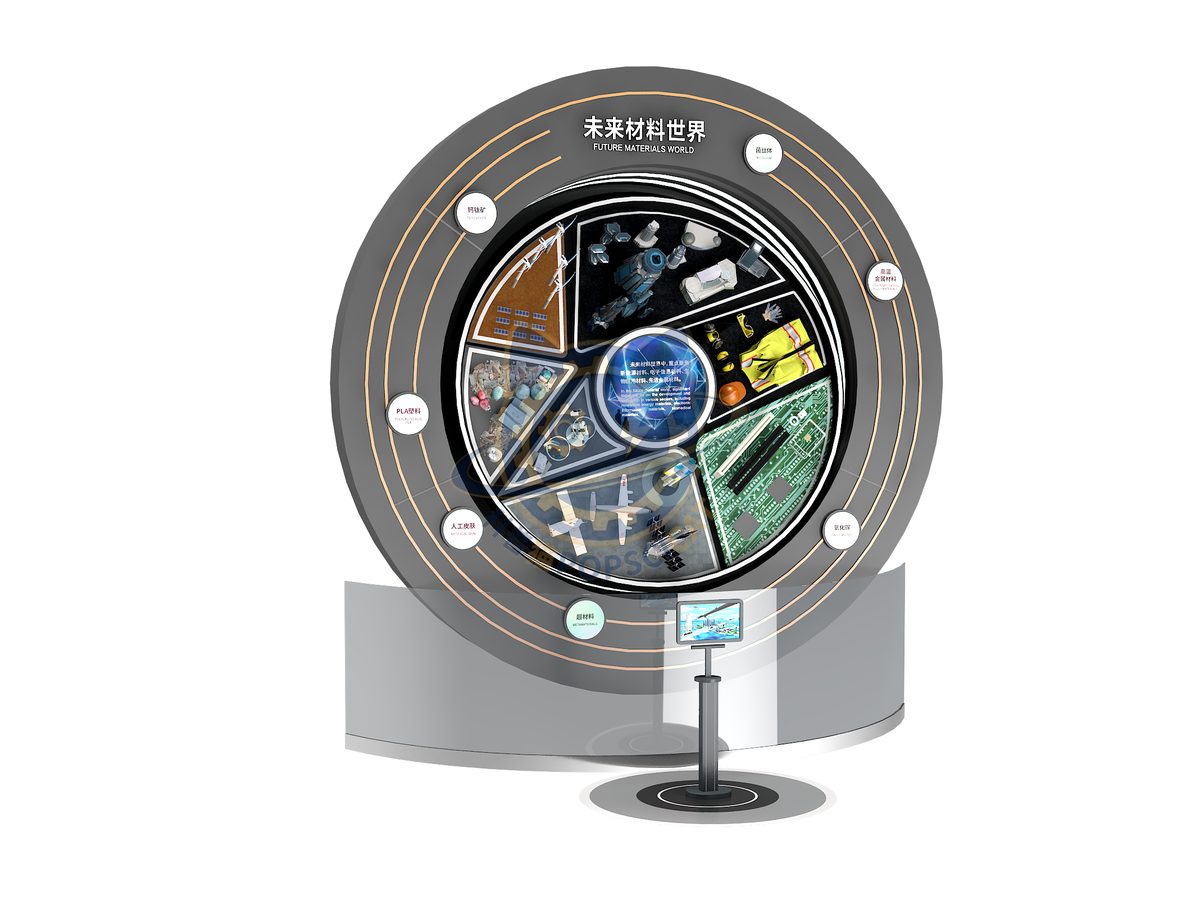
Shape-memory alloy, aerogel and carbon fibre under the visitor's hand.

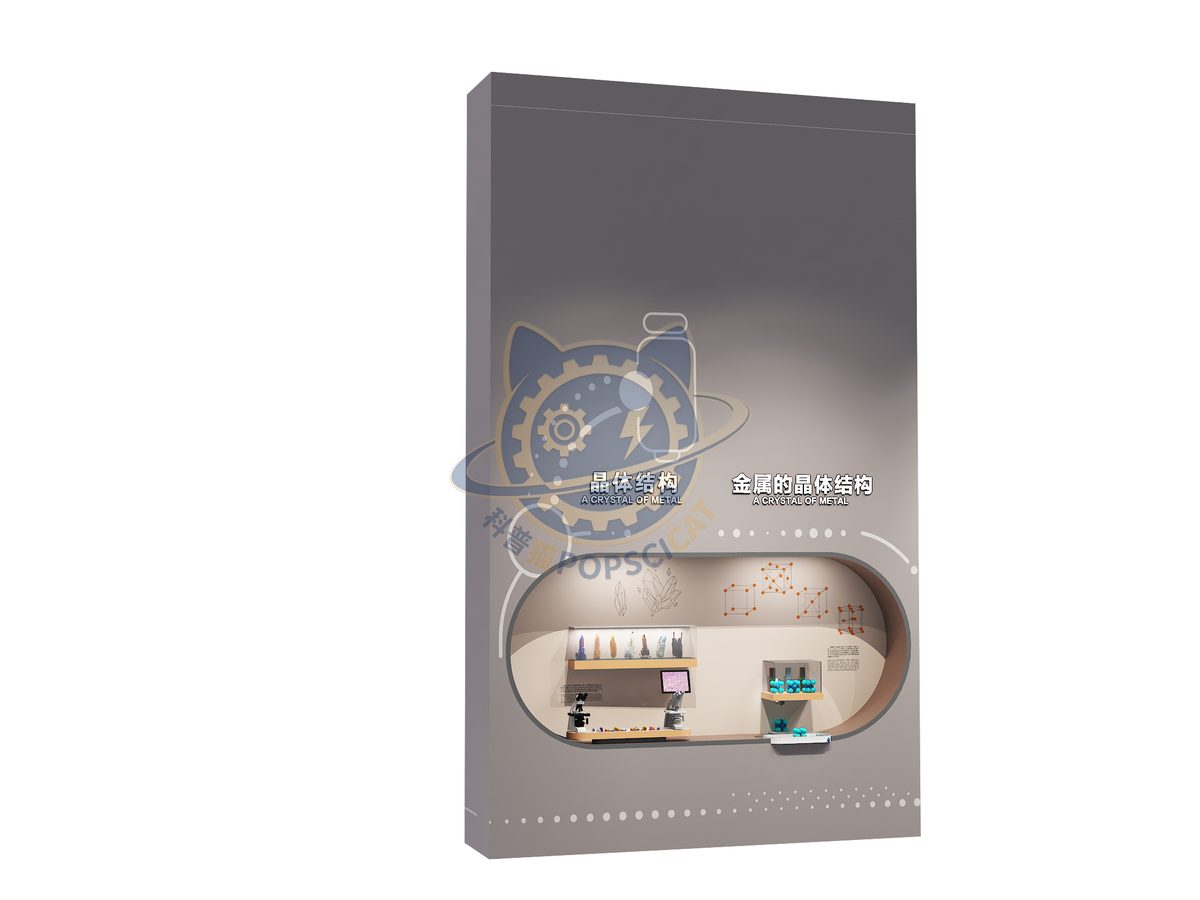
Build a lattice from magnetic balls and see why a crystal cleaves.

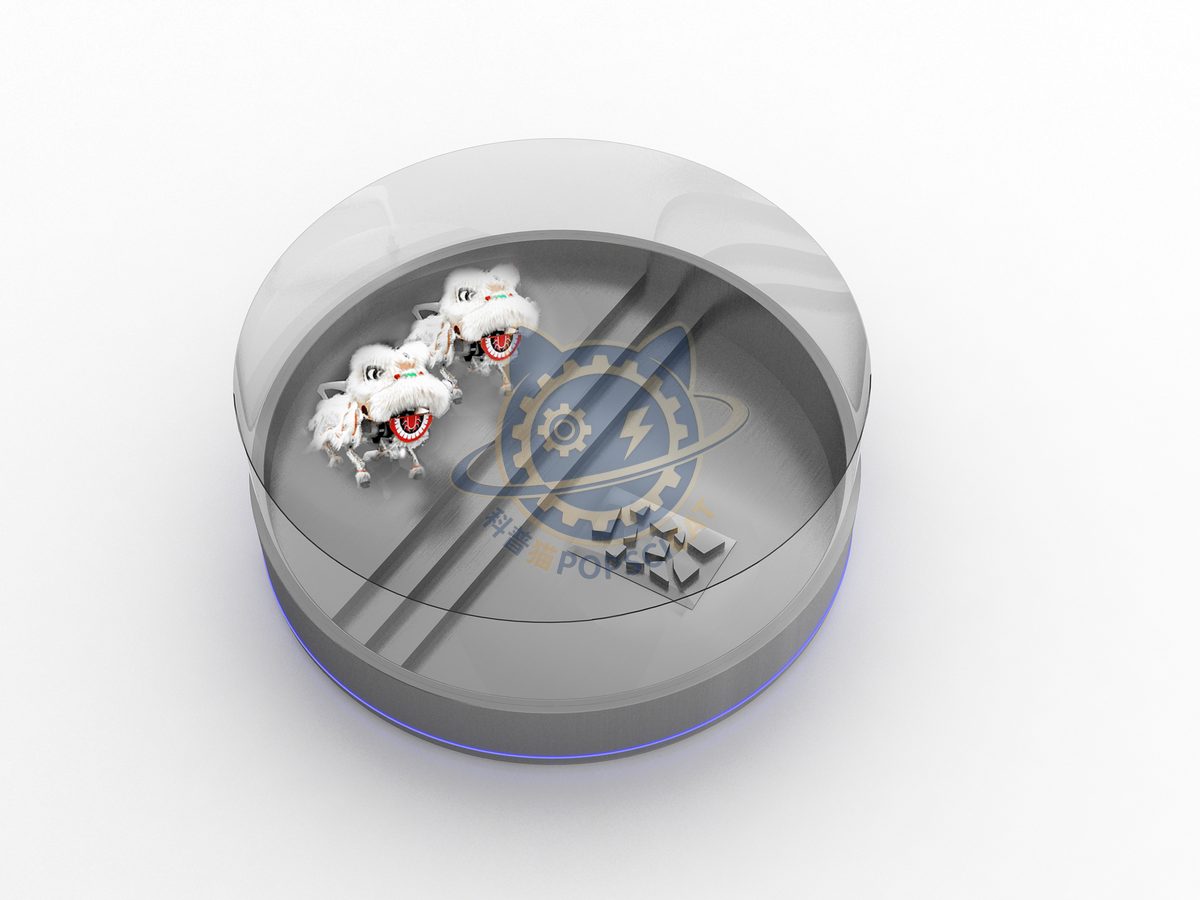
Four arms perform a synchronised routine behind a glass wall.
Attach a theme outline, a floor plan, or nothing at all — a photo of the space is enough to start. Quotations are issued against a real exhibit list, not per-square-metre guesses.
Scan to add us