Home/Exhibits/Frontier Technology/wireless telegraphy

wireless telegraphy

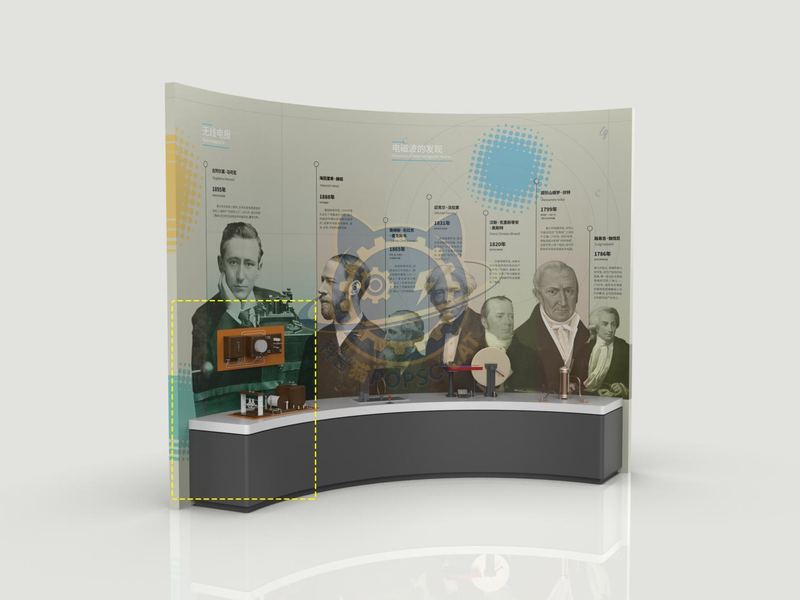
Marconi used spark arresters, induction coils, and electrical keys to create a radio transmitter, modified metal…

wireless telegraphy — Frontier Technology exhibit for science museums
Reference image
CategoryFrontier Technology
Standard sizeCustom size
SupplySingle unit or batch · OEM to your drawing
Lead timeStandard 4–8 weeks after deposit (confirmed per contract)
Warranty1 year, structure and control
DocumentsSpecification sheet · control diagram · spare-part list

A standard catalogue model: the dimensions, control package and finish are fixed, which is what keeps the price and the lead time predictable. Size, colour and interface language can be adapted without a new design cycle.

Ask about this model → Email us

Standard models from this range are also listed in our online store, priced in USD — see the price yourself ↗
01 / Overview

Marconi used spark arresters, induction coils, and electrical keys to create a radio transmitter, modified metal detectors, and added antennas to make a receiver. He installed this transmitting and receiving device on his own rooftop, completing communication for the first time up to 30 meters in length. Wireless telegraphy has been widely used in maritime communications, military command and news dissemination. However, with the development of modern communication technologies such as telephone and Internet, its use has gradually decreased.

02 / How visitors use it

The unit is designed for unsupervised public use: controls are recessed or shielded, moving parts are enclosed, and the interface is operable by a child of about six with no instruction. Where a screen is used, the language can be switched without changing the hardware, and the content can be replaced on site.

03 / The science behind it

In 1894, the year Hertz passed away, Marconi had just turned 20 years old. One day, he accidentally read Hertz's experimental introduction and paper in an electrical journal. Since childhood, he has enjoyed playing with coils and electric bells, so he immersed himself in the study of electromagnetic waves. He thought that since Hertz could detect electromagnetic waves from a few meters away, as long as there were sensitive detectors, electromagnetic waves could also be detected from farther places. After multiple failures, he finally took the gratifying first step. He installed a device for emitting radio waves upstairs in his home, and placed a detector downstairs, which was connected to an electric bell. As soon as he connected the power upstairs, the electric bell downstairs rang. In the summer of 1895, Marconi improved the spark type transmitter and metal powder detector of the radio device by installing antennas on both the receiver and transmitter, successfully conducting experiments on radio wave transmission signals. In the autumn of the same year, Marconi transferred his experiments from indoors to outdoors, focusing on communication.

04 / Built for a public floor

Every unit leaves the factory after a running test: mechanisms cycled, electronics burned in, edges dressed, fixings torqued and marked. Wear parts — bearings, sliders, lamps, belts, touch panels — are modular and listed on the spare-part sheet, so a venue technician can replace them without returning the exhibit. Crating is plywood with foam blocking; the loading plan and packing list travel with the shipment.

Same category

More in Frontier Technology

Other models from the Frontier Technology line, all held to the same specification and the same control package.

Start a project

Send us your exhibit list.
We will come back with a price.

Attach a theme outline, a floor plan, or nothing at all — a photo of the space is enough to start. Quotations are issued against a real exhibit list, not per-square-metre guesses.

WeChat QR code — scan to message us Scan to add us
on WeChat