Home/Exhibits/Basic Science/Doppler effect

Doppler effect

Understand the principle and application of the Doppler effect through the uniform motion of the sound source device.

Doppler effect — Basic Science exhibit for science museums
Studio rendering
CategoryBasic Science
InteractionInteractive multimedia installation
Standard sizeCustom size
SupplySingle unit or batch · OEM to your drawing
Lead timeStandard 4–8 weeks after deposit (confirmed per contract)
Warranty1 year, structure and control
DocumentsSpecification sheet · control diagram · spare-part list

A standard catalogue model: the dimensions, control package and finish are fixed, which is what keeps the price and the lead time predictable. Size, colour and interface language can be adapted without a new design cycle.

Ask about this model → Email us

Standard models from this range are also listed in our online store, priced in USD — see the price yourself ↗
01 / Overview

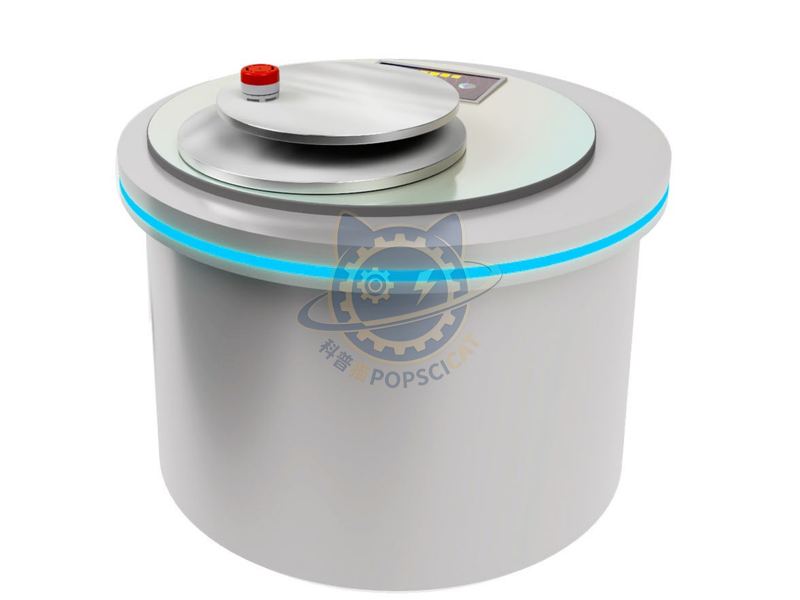
Understand the principle and application of the Doppler effect through the uniform motion of the sound source device. The exhibit features a buzzer fixed at the end of a rotating rod and moving in a uniform circular motion through a sound source device. The observer stands on one side and listens to the sound of the buzzer. Due to the relative motion of the buzzer with respect to the observer, the Doppler effect causes the observer to hear the buzzing sound fluctuating. After the visitor presses two start buttons, the control box will move at a constant speed and make a sound. As the control box rotates, the sound heard by the visitor changes. When the control box moves away, the tone will gradually decrease. As the control box gradually approaches, the tone will increase again. In fact, during this process, the sound emitted by the control box itself remains consistent, and the reason for the difference in pitch is the Doppler effect. Target audience: Adolescents aged 6-15 years old. Display format: Electromechanical interactive device operation instructions (audience body).

02 / How visitors use it

Interaction type: Interactive multimedia installation. The unit is designed for unsupervised public use: controls are recessed or shielded, moving parts are enclosed, and the interface is operable by a child of about six with no instruction. Where a screen is used, the language can be switched without changing the hardware, and the content can be replaced on site.

03 / The science behind it

The Doppler effect is named in honor of Austrian physicist and mathematician Christian John Doppler, who first proposed this theory in 1842. The main content is that the wavelength of object radiation changes due to the relative motion between the wave source and the observer. In front of the moving wave source, the wave is compressed, the wavelength becomes shorter, and the frequency becomes higher; When behind a moving wave source, the opposite effect will occur. The wavelength becomes longer and the frequency becomes lower; The higher the speed of the wave source, the greater the effect it produces. Based on the degree of wave red (or blue) shift, the speed of the wave source moving in the observation direction can be calculated. Reference materials.

04 / Built for a public floor

Every unit leaves the factory after a running test: mechanisms cycled, electronics burned in, edges dressed, fixings torqued and marked. Wear parts — bearings, sliders, lamps, belts, touch panels — are modular and listed on the spare-part sheet, so a venue technician can replace them without returning the exhibit. Crating is plywood with foam blocking; the loading plan and packing list travel with the shipment.

Same category

More in Basic Science

Other models from the Basic Science line, all held to the same specification and the same control package.

Start a project

Send us your exhibit list.
We will come back with a price.

Attach a theme outline, a floor plan, or nothing at all — a photo of the space is enough to start. Quotations are issued against a real exhibit list, not per-square-metre guesses.

WeChat QR code — scan to message us Scan to add us
on WeChat