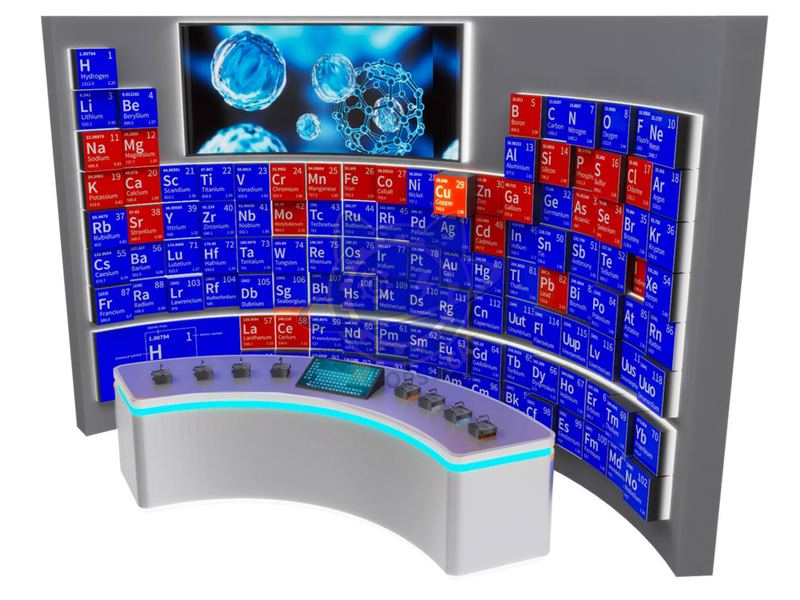
Understand the periodic law of chemical elements through multimedia interaction.
| Category | Basic Science |
|---|---|
| Interaction | Interactive multimedia installation |
| Standard size | Custom size |
| Supply | Single unit or batch · OEM to your drawing |
| Lead time | Standard 4–8 weeks after deposit (confirmed per contract) |
| Warranty | 1 year, structure and control |
| Documents | Specification sheet · control diagram · spare-part list |
A standard catalogue model: the dimensions, control package and finish are fixed, which is what keeps the price and the lead time predictable. Size, colour and interface language can be adapted without a new design cycle.
Standard models from this range are also listed in our online store, priced in USD — see the price yourself ↗
Understand the periodic law of chemical elements through multimedia interaction. The exhibit consists mainly of touch screens, multimedia lightboxes, periodic wall elements, and physical or model elements. Operate the touch screen, select the element you want to know, and the corresponding light box will light up and play related videos. At the same time, you can also observe the physical objects in the display cabinet to understand in what form different elements exist in nature. Physical display of different material blocks of the same volume: tungsten, molybdenum, copper, nickel, iron, chromium, manganese, titanium, aluminum, etc. Visitors can compare the quality differences formed by different densities by picking up the physical objects. Target audience: Adolescents aged 6-15. Interactive multimedia device operation instructions (audience experience) 1 Observe the periodic table of elements on the wall and the physical objects corresponding to each element in each grid inside the wall; 2. Operate the touch screen, select the element you want to know, and watch the multimedia playback of the corresponding lightbox.
Interaction type: Interactive multimedia installation. The unit is designed for unsupervised public use: controls are recessed or shielded, moving parts are enclosed, and the interface is operable by a child of about six with no instruction. Where a screen is used, the language can be switched without changing the hardware, and the content can be replaced on site.
1. The periodic table of elements was created by Russian scientist Mendeleev in 1869, which sorts elements with similar characteristics into the same group based on their atomic weights from small to large. Due to its ability to accurately predict the characteristics of various elements and their relationships, the periodic table is widely used in chemistry and other scientific fields as a useful framework for analyzing chemical behavior. 2. Common elements include hydrogen, oxygen, nitrogen, and carbon. As of 2019, a total of 118 elements have been discovered, of which 94 exist on Earth. The atomic nuclei of elements with atomic numbers ≥ 83 (bismuth and its derivatives) are unstable and undergo decay. The 43rd and 61st elements (technetium and promethium) do not have stable isotopes and undergo decay. The heaviest existing element in nature is plutonium 94. Reference materials.
Every unit leaves the factory after a running test: mechanisms cycled, electronics burned in, edges dressed, fixings torqued and marked. Wear parts — bearings, sliders, lamps, belts, touch panels — are modular and listed on the spare-part sheet, so a venue technician can replace them without returning the exhibit. Crating is plywood with foam blocking; the loading plan and packing list travel with the shipment.
Other models from the Basic Science line, all held to the same specification and the same control package.

Rotate two polarising filters and watch colours appear and vanish.

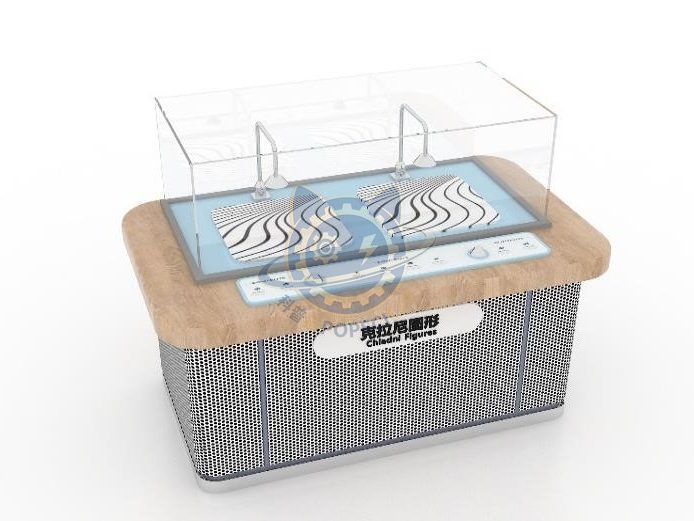
Sand on a driven plate jumps into nodal figures as the frequency changes.

Coloured discs drain to grey as the spin speed passes the eye's limit.

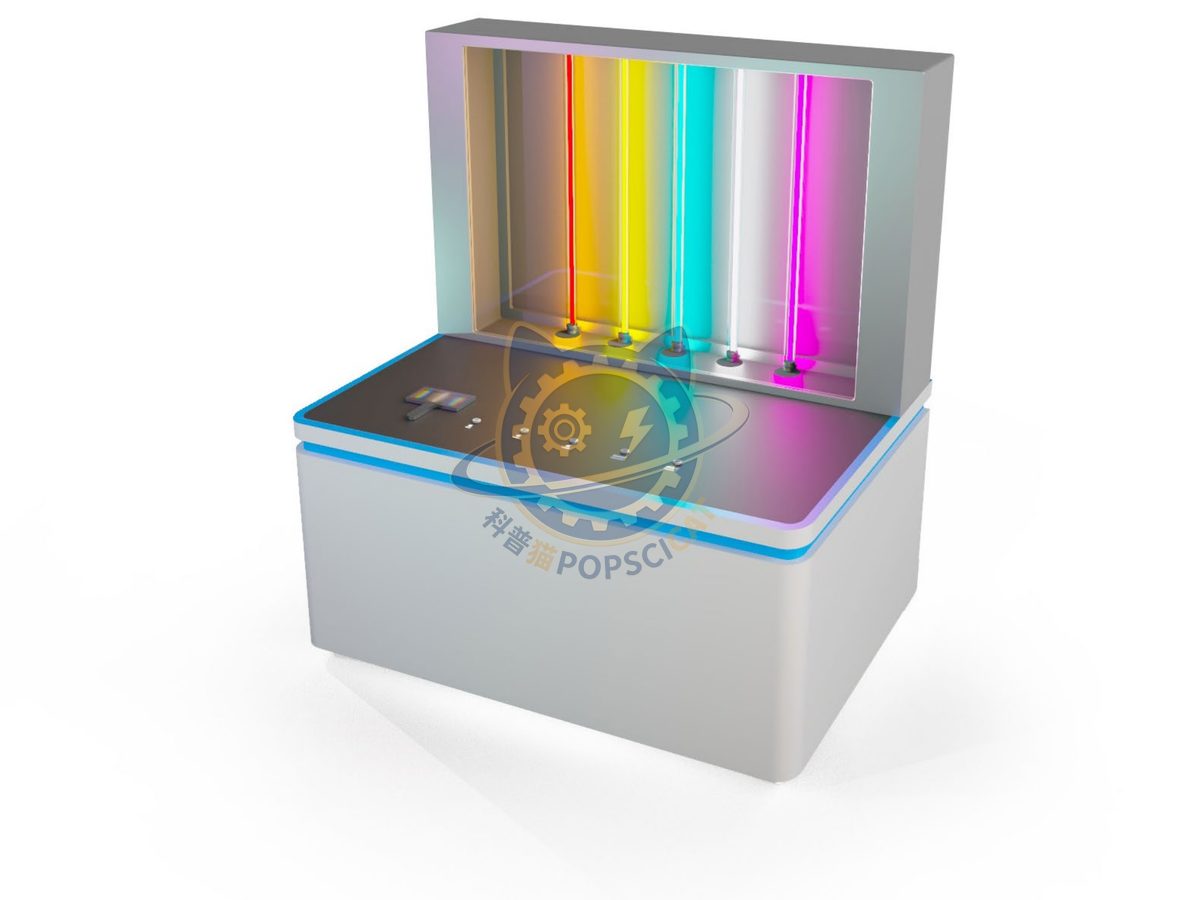
Gas discharge tubes and a slit spectroscope show emission lines directly.
Attach a theme outline, a floor plan, or nothing at all — a photo of the space is enough to start. Quotations are issued against a real exhibit list, not per-square-metre guesses.
Scan to add us