The exhibit will create a high-speed rail scene sand table, with a disaster information transmission visualization…
| Category | City & Society |
|---|---|
| Standard size | Custom size |
| Supply | Single unit or batch · OEM to your drawing |
| Lead time | Standard 4–8 weeks after deposit (confirmed per contract) |
| Warranty | 1 year, structure and control |
| Documents | Specification sheet · control diagram · spare-part list |
A standard catalogue model: the dimensions, control package and finish are fixed, which is what keeps the price and the lead time predictable. Size, colour and interface language can be adapted without a new design cycle.
Standard models from this range are also listed in our online store, priced in USD — see the price yourself ↗
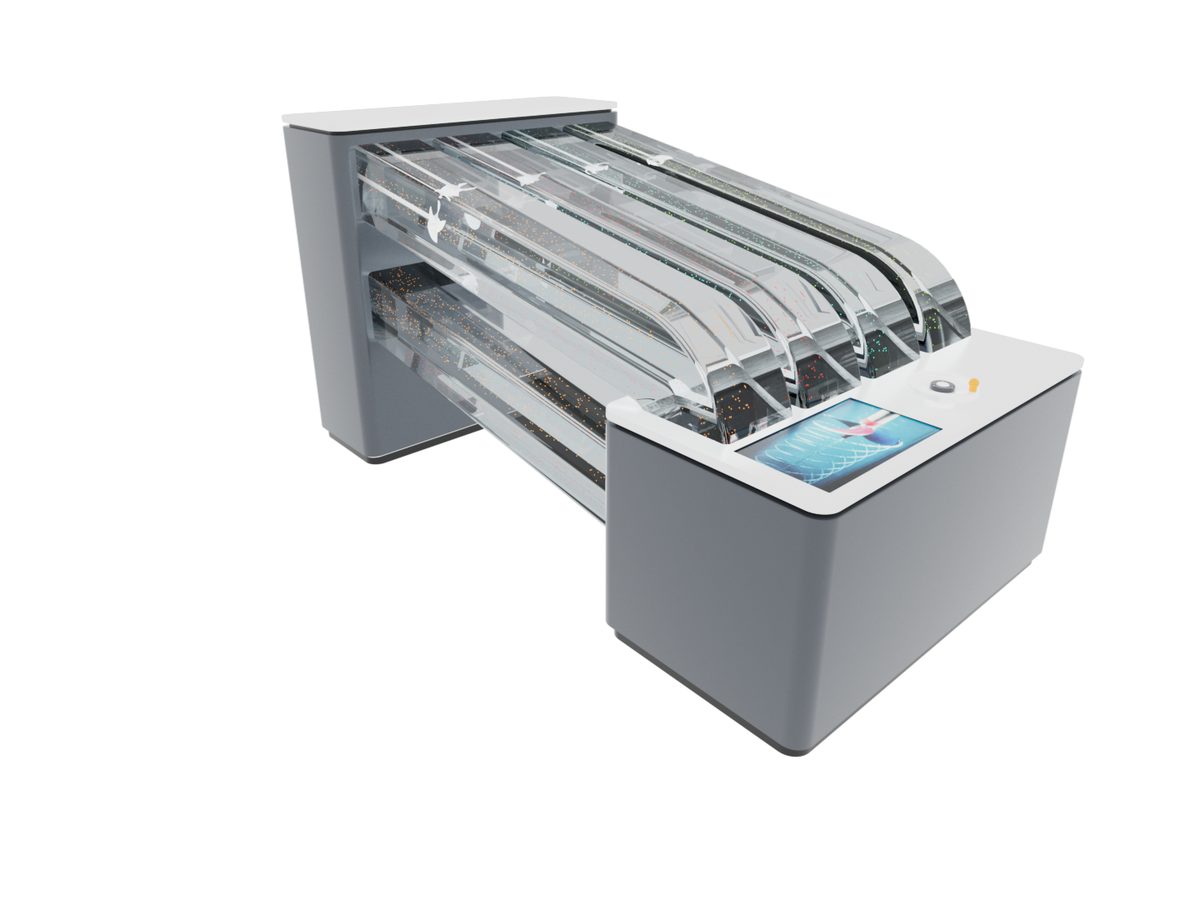
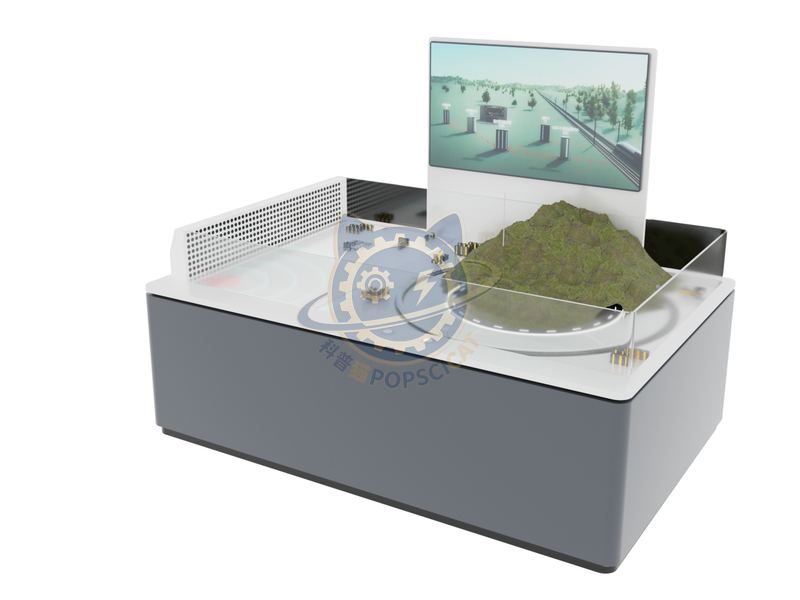
The exhibit will create a high-speed rail scene sand table, with a disaster information transmission visualization device on the left and a scene restoration sand table on the right. It will demonstrate the emergency warning plan for high-speed rail in the event of earthquakes and strong winds. After pressing the earthquake occurrence button, the blue light in the lower left corner will display the steps for transmitting earthquake information. The sand table will demonstrate the process of earthquake information transmission. When the sand table on the right high-speed railway starts to vibrate, the high-speed railway has already applied emergency brakes to prevent accidents such as train derailment caused by disasters. When the strong wind disaster button is pressed, the blue light in the lower left corner will display the wind level information, and the level will gradually increase. The fan on the sand table will simulate high-speed airflow, and the high-speed railway will start braking until the strong wind of level 8 begins to blow. At this point, the high-speed railway has stopped steadily to prevent serious accidents caused by strong wind disasters. The exhibit aims to showcase China's high-speed rail emergency warning and response plans in the face of natural disasters through the interpretation of disaster scenarios through high-speed rail scenario sand tables. Assist visitors through specific simulation demonstrations.
The unit is designed for unsupervised public use: controls are recessed or shielded, moving parts are enclosed, and the interface is operable by a child of about six with no instruction. Where a screen is used, the language can be switched without changing the hardware, and the content can be replaced on site.
The high-speed train disaster monitoring and early warning system integrates various on-site monitoring equipment, including anemometers, rain gauges, snow depth gauges, and seismometers. These devices monitor key environmental parameters in real-time, and the system performs data analysis on the parameters to assess potential hazards and predict impacts, promptly sending alerts to the operations management center and trains. At the same time, the system is also equipped with foreign object intrusion monitoring equipment, consisting of sensors and trackside controllers, specifically designed to monitor foreign objects on railway lines that may affect train safety. These comprehensive monitoring methods have improved the safety performance of high-speed trains in the face of extreme weather and natural disasters, enhanced their ability to respond to foreign object intrusion, helped reduce accidents and delays, and ensured the stable operation of the high-speed train system.
Every unit leaves the factory after a running test: mechanisms cycled, electronics burned in, edges dressed, fixings torqued and marked. Wear parts — bearings, sliders, lamps, belts, touch panels — are modular and listed on the spare-part sheet, so a venue technician can replace them without returning the exhibit. Crating is plywood with foam blocking; the loading plan and packing list travel with the shipment.
Other models from the City & Society line, all held to the same specification and the same control package.

Blade pitch adjusted by hand with thrust read on a live gauge.

Time four signals so a bus crosses the city without stopping.

Load a hull until it floats and then until it does not.

Road-side sensing, lane markings and vehicle communication in one model.
Attach a theme outline, a floor plan, or nothing at all — a photo of the space is enough to start. Quotations are issued against a real exhibit list, not per-square-metre guesses.
Scan to add us