Home/Exhibits/Digital & AI/Scan the brain

Scan the brain

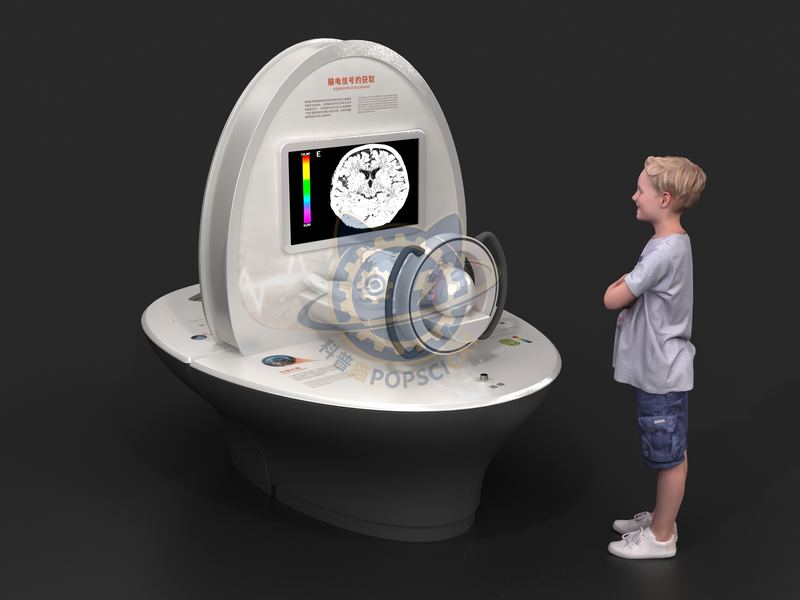
CT scanning uses X-rays to pass through the body, and different tissues absorb X-rays differently, generating…

Scan the brain — Digital & AI exhibit for science museums
Reference image
CategoryDigital & AI
Standard sizeCustom size
SupplySingle unit or batch · OEM to your drawing
Lead timeStandard 4–8 weeks after deposit (confirmed per contract)
Warranty1 year, structure and control
DocumentsSpecification sheet · control diagram · spare-part list

A standard catalogue model: the dimensions, control package and finish are fixed, which is what keeps the price and the lead time predictable. Size, colour and interface language can be adapted without a new design cycle.

Ask about this model → Email us

Standard models from this range are also listed in our online store, priced in USD — see the price yourself ↗
01 / Overview

CT scanning uses X-rays to pass through the body, and different tissues absorb X-rays differently, generating detailed internal images. By measuring these absorption differences and processing the data with a computer, doctors can view the internal structure of the body, diagnose diseases, or evaluate injuries. CT scans can provide clearer images than regular X-rays and are commonly used to examine issues such as fractures and tumors.

02 / How visitors use it

The unit is designed for unsupervised public use: controls are recessed or shielded, moving parts are enclosed, and the interface is operable by a child of about six with no instruction. Where a screen is used, the language can be switched without changing the hardware, and the content can be replaced on site.

03 / The science behind it

The scientific principle of brain CT scanning interactive technology is based on the penetration ability of X-rays and computer image processing technology. When X-rays pass through the human body, different tissues and organs have different absorption abilities for X-rays, so images can be generated by measuring the absorption of X-rays. Computer image processing technology can convert these measurement data into three-dimensional images, enabling doctors to diagnose diseases more accurately.

04 / Built for a public floor

Every unit leaves the factory after a running test: mechanisms cycled, electronics burned in, edges dressed, fixings torqued and marked. Wear parts — bearings, sliders, lamps, belts, touch panels — are modular and listed on the spare-part sheet, so a venue technician can replace them without returning the exhibit. Crating is plywood with foam blocking; the loading plan and packing list travel with the shipment.

Same category

More in Digital & AI

Other models from the Digital & AI line, all held to the same specification and the same control package.

Start a project

Send us your exhibit list.
We will come back with a price.

Attach a theme outline, a floor plan, or nothing at all — a photo of the space is enough to start. Quotations are issued against a real exhibit list, not per-square-metre guesses.

WeChat QR code — scan to message us Scan to add us
on WeChat