In January, plum blossoms emit fragrance in the snow.
| Category | Children's Discovery |
|---|---|
| Interaction | Open-ended, hands-on play |
| Standard size | Built to your floor plan |
| Power | 100–240 V AC, 50/60 Hz, single phase — universal input; no step-down transformer or motor re-tap |
| Supply | Single unit or batch · OEM to your drawing |
| Lead time | Standard 3–6 weeks after deposit (confirmed per contract) |
| Warranty | 1 year, structure and control |
| Documents | Specification sheet · control diagram · spare-part list |
A standard catalogue model: the dimensions, control package and finish are fixed, which is what keeps the price and the lead time predictable. Size, colour and interface language can be adapted without a new design cycle.
Standard models from this range are also listed in our online store, priced in USD — see the price yourself ↗
In January, plum blossoms emit fragrance in the snow. In February, apricot blossoms extend over the walls. In March, peach blossoms bloom red for miles. In April, roses lean against low walls. In May, Chinese roses are in full bloom. In June, lotus flowers fill the ponds. In July, hollyhocks don colorful garments. In August, lilies exude fragrance. In September, chrysanthemums compete to bloom. In October, peonies are in full splendor. In November, camellias cover the hills. In December, daffodils are wrapped in plain attire. The large circle in front of you is called the "Flower Clock". The Flower Clock has 12 markings, each representing one of the 12 months. Let's try moving the hand to different months and see what the video player will show! The flowers of different plants not only bloom at different times of the year, but also at different times of the day. Morning glories open with morning dew, welcoming the slowly rising sun. The purslane blooms at noon when the light is brightest and the temperature is highest. The marvel of Peru blooms in the evening as the sun sets in the west, so it is also known as the "dinner flower." The epiphyllum, on the other hand, doesn't bloom until around 10 p.m., and is in full bloom at midnight. Why do different plants bloom at different times? This is because the ancestors of various flowers gradually developed this trait over a long period of time as they adapted to their living environment in nature, surviving and reproducing. According to research, the time at which plants bloom is often closely related to the external temperature, humidity, and light. It is generally believed that flowers that bloom in the morning prefer gradually increasing light, while flowers that bloom at night prefer gradually decreasing light. In addition, the time of flowering is also related to the pollination method of the flower. Some flowers need insects to pollinate them in order to produce seeds, and their flowering time often coincides with the time when insects are active. It is built for unsupervised public use: surfaces are robust and wipe-clean, there are no loose parts, and the interface works without instruction, so a child of about six can operate it on a busy floor.
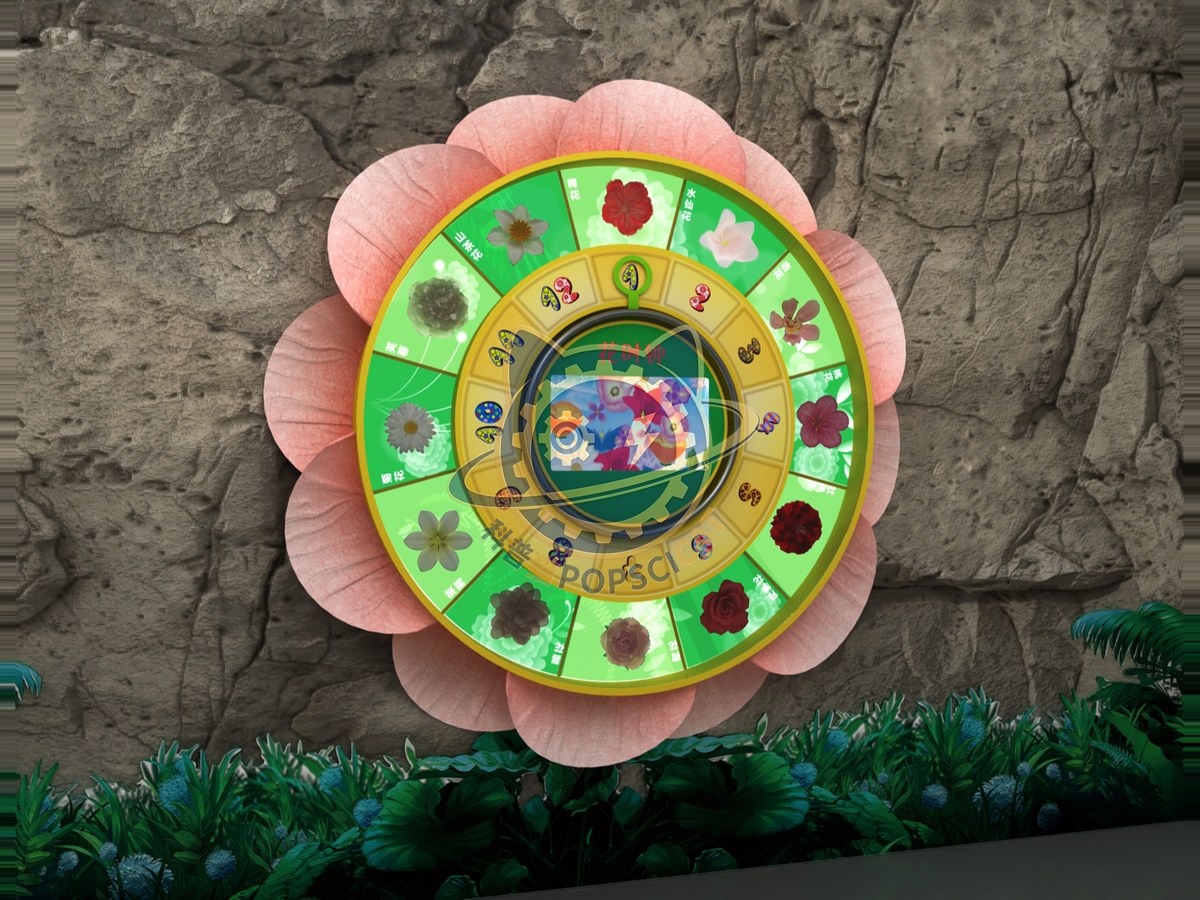
Interaction type: Open-ended, hands-on play. The unit is designed for unsupervised public use: controls are recessed or shielded, moving parts are enclosed, and the interface is operable by a child of about six with no instruction. Where a screen is used, the language can be switched without changing the hardware, and the content can be replaced on site.
Every unit leaves the factory after a running test: mechanisms cycled, electronics burned in, edges dressed, fixings torqued and marked. Wear parts — bearings, sliders, lamps, belts, touch panels — are modular and listed on the spare-part sheet, so a venue technician can replace them without returning the exhibit. Crating is plywood with foam blocking; the loading plan and packing list travel with the shipment.
Other models from the Children's Discovery line, all held to the same specification and the same control package.

A wheel that lifts balls and returns them by gravity.

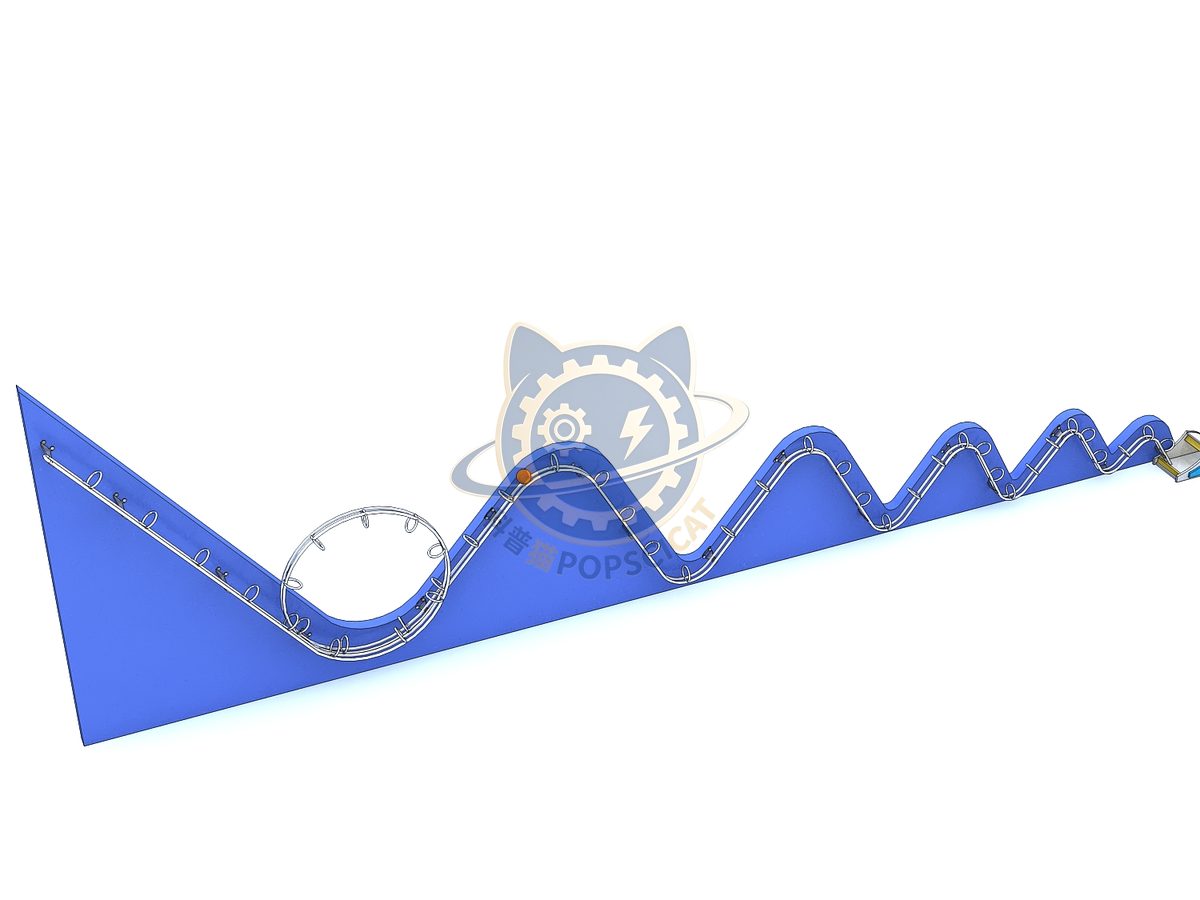
A steel track for steel balls with a hand-cranked lift hill.

A padded tunnel with peepholes and a sound at the far end.

A soft-edged climbing frame with a slide and a lookout deck.
Attach a theme outline, a floor plan, or nothing at all — a photo of the space is enough to start. Quotations are issued against a real exhibit list, not per-square-metre guesses.
Prefer to see the floor before you commit? Factory visits and third-party inspections are welcome.