Home/Exhibits/STEM exhibits

STEM exhibits,
built for hands-on learning.

STEM is a procurement label, not a product. What decides whether a hands-on floor still works in year three is the age of the person standing in front of it, how many hours a week it runs, and how much floor the room can give away. We build to those three numbers, and we will tell you when a unit you have asked for does not fit them.

01 / How a STEM floor is decided

Three numbers decide
the exhibit list.

Almost no client asks for "STEM" in the abstract. They ask for a room that will survive a school year, a holiday season and a change of director. These four questions settle most of the specification before a single drawing is made.

a

Age decides the mechanism

A three-year-old needs a result visible within one second and a part that cannot be broken. A twelve-year-old needs a variable to change and a result to compare. The same topic becomes three different exhibits, at three different prices.

b

Duty cycle, not price

A school lab runs a few hundred cycles a week; a holiday science centre runs several thousand. Bearings, sensors, hinges and printed graphics are chosen against that number. It is the single largest difference between two quotes for the "same" exhibit.

c

Every unit needs a standing zone

An exhibit is a node on a walking route, not a piece of furniture. Two visitors at the panel and two waiting behind them occupy more floor than the machine itself — so we quote the footprint including the queue.

d

What the teacher will ask for

If a unit cannot be tied to a lesson — force, light, circuits, ecology, code — it becomes a toy that is used once and then walked past. We say so before the order rather than after delivery.

02 / Learning environments

Six kinds of STEM floor,
one set of benches.

These are the groupings we actually quote. Most projects take three or four of the six and leave the rest; almost none take all of them at once, because a floor with everything on it teaches nothing in particular.

Hands-on physics and mechanics exhibits on a museum floor
01 / 06

Hands-on physics & mechanics

Levers, pulleys, air, momentum, vibration. The exhibits that need no explanation because the result happens in front of the visitor. Usually the largest block on a school floor, since one bench can carry three different lessons.

Light, sound and perception exhibits
02 / 06

Light, sound & perception

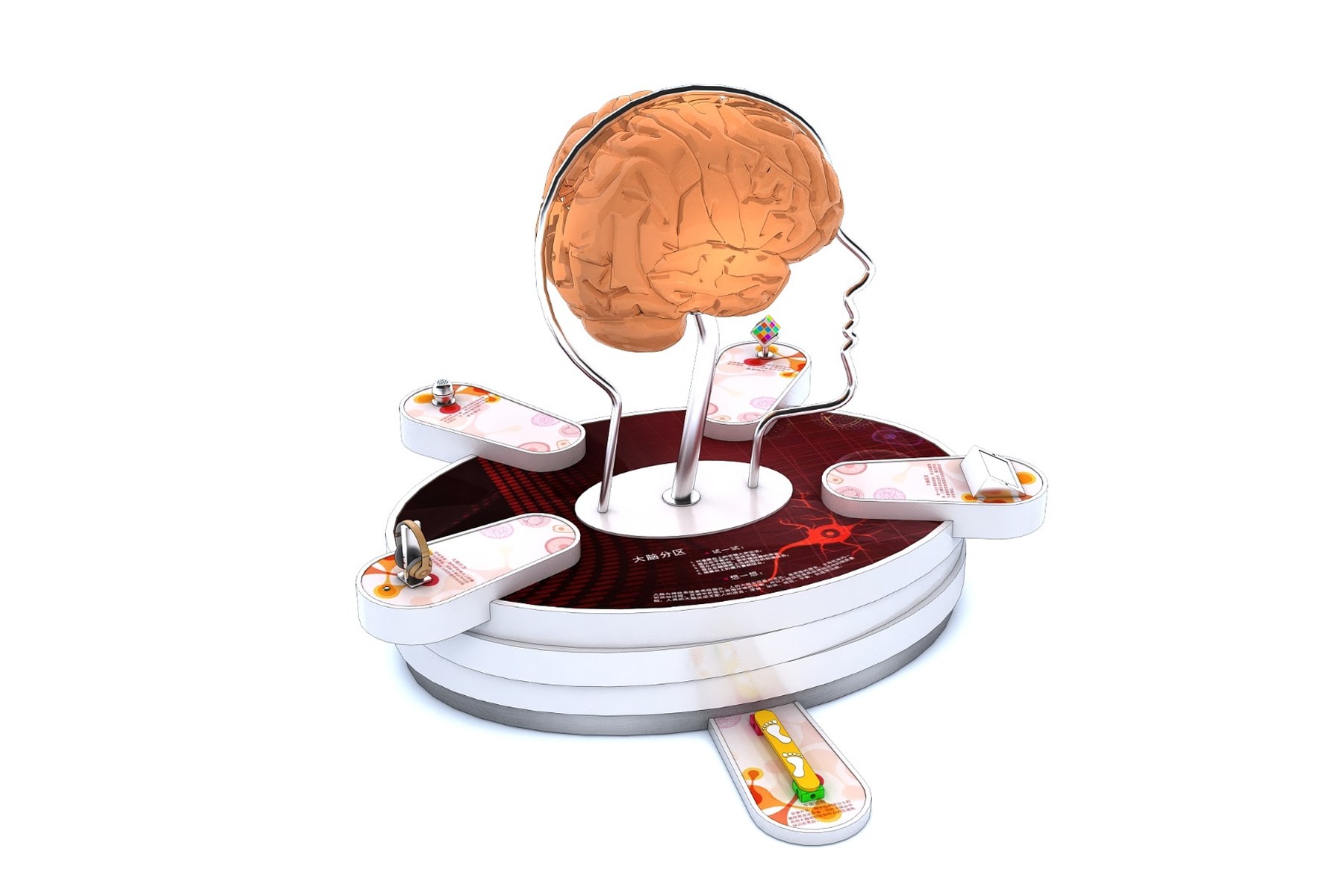
Mirrors, lenses, colour, echoes, hearing and balance. Quiet to run, cheap to maintain, and unusually good at holding an adult for as long as a child — which matters on a family floor where the parent decides when to leave.

Robotics and coding exhibits for STEM learning
03 / 06

Robotics, coding & AI

Robot arms, chess players, sorting lines and block-based coding stations. The usual failure here is a screen with a queue in front of it, so we keep a physical object inside the loop: the unit still does something visible when the software is being updated.

Earth science and water exhibits
04 / 06

Earth, water & climate

Typhoons, earthquakes, fossils, water tables and the water cycle. Heavy, wet and consistently the most popular block in the room. The engineering is almost entirely about drainage, splash containment and what happens when forty children arrive at the same table.

Space and astronomy exhibits for science centres
05 / 06

Space & astronomy

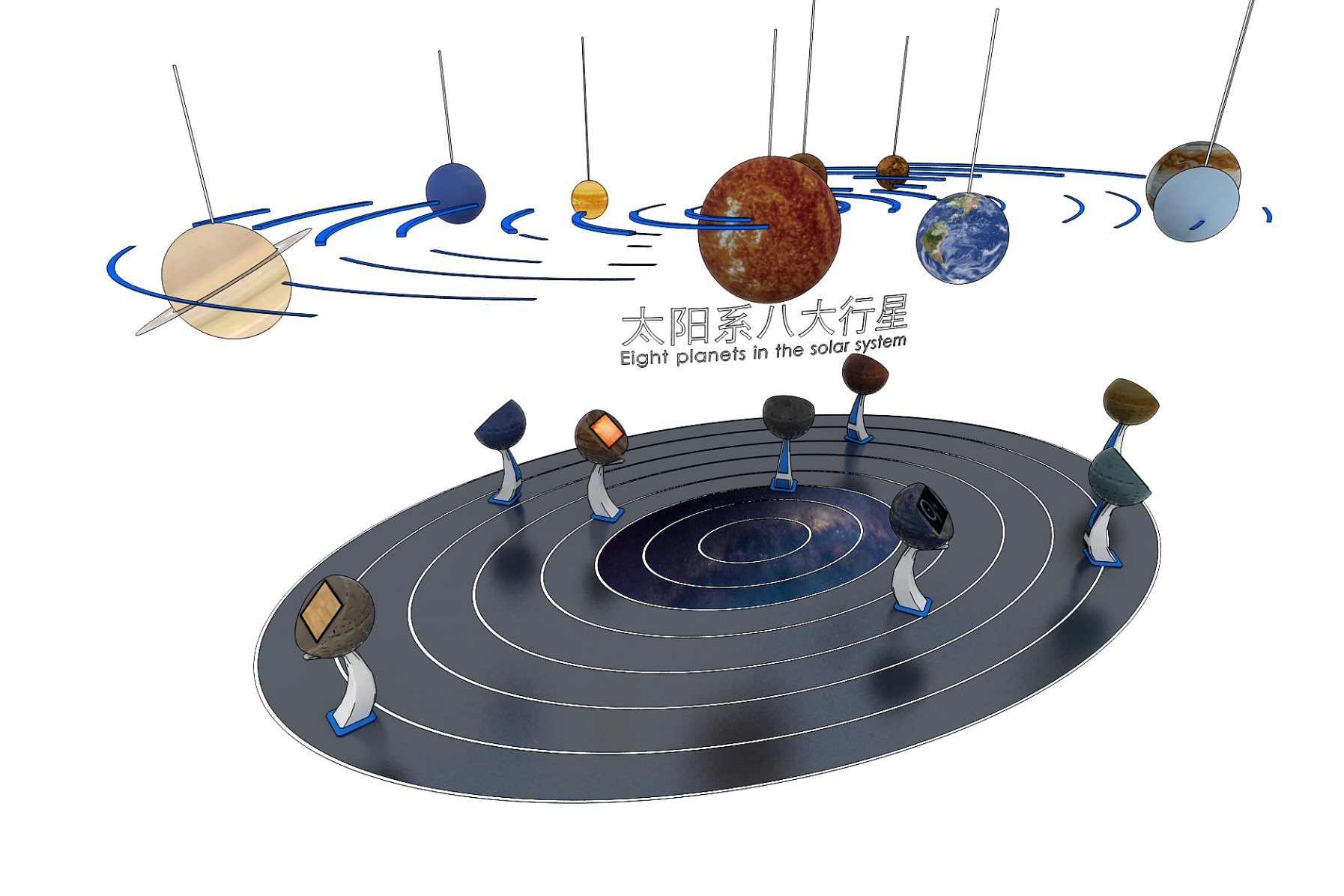
Orbits, scale, spectra and gravity — designed to stand beside a dome rather than inside it. Most of our astronomy units are mechanical or optical, so the gallery keeps teaching on the day the projector is down.

Early-years hands-on discovery play equipment
06 / 06

Early-years discovery play

Ball runs, bubbles, soft play and cause-and-effect panels for ages three to six. Judged from sixty centimetres up: no sharp returns at toddler height, no gap a small shoe can enter, and nothing that has to be read to be understood.

03 / Engineering design

Engineering is a loop.
The room should have one.

The "E" in STEM is the part most fit-outs lose. A finished exhibit shows a principle; an engineering task makes the visitor build, test, fail and change something. Both belong on the floor, and they need different furniture.

Engineering design challenge exhibits
Design-and-build stations: a task, a set of parts, a place to test and a way to compare results.

Build-and-test units such as a bridge challenge, a paper-airplane launcher or a climbing route only work if the room supports the whole loop. That means a bench to build on, a rig to test against, and something that records the attempt — a score, a height, a weight held, a time.

We build the recording into the furniture. Parameters are adjustable by staff, so the same station can be set for a seven-year-old in the morning and a fourteen-year-old in the afternoon without a technician, and the difficulty can be raised each term instead of buying a new exhibit.

Where a room has no supervisor, we specify tasks that are self-checking: the tower either holds the load or it does not. Nothing needs marking, and nothing needs a screen to tell the visitor they have failed.

Bridge Building Challenge

A span, a set of members and a load to carry. The result is a number the next visitor tries to beat.

Design Paper Airplane

Fold, launch, measure. The cheapest engineering loop we make, and the one most often worn out first.

Climbing Challenge

A route that can be reset, so a class can return to the same wall with a different problem.

Chess Robot

For older groups: a machine that plays back, so the lesson is about the algorithm rather than the win.

04 / Age bands

The same topic,
four different exhibits.

Age is the most common cause of a floor that looks right and gets ignored. The table below is how we translate one subject — say, force — into four units that a visitor will actually use at four ages.

3–6Cause and effect with no reading. One moving part, a result inside a second, the action panel at 700–900 mm. Everything else is adult-height explanation.
7–10One variable to change and a visible result. Built for two people, because most of this age group arrives in pairs and will not use a single-user station.
11–14Measure, record, compare. Challenges with a score or a counter, so the second attempt is different from the first.
14+Data, modelling and longer build tasks. The exhibit becomes an instrument; the explanation moves to a screen or a printed panel that can be replaced without touching the mechanism.
Mixed-age hallsTwo heights on one unit: a low action panel for the child and a high explanation panel for the adult standing behind them. This is the default for family destinations rather than a compromise.
05 / Scale

A classroom, a room,
a whole floor.

We plan in themes rather than square metres, because a theme has a begin and an end and a floor area does not. Three sizes cover almost every enquiry we receive.

a

One teaching room

One theme, 12–20 units, sized to a single classroom of roughly 50–70 m². Everything ships as self-contained benches so the room can still be cleared for exams or parents' evening.

b

A community centre

Three or four themes, 40–60 units, in 150–300 m². Usually the first stage of something larger, so we leave the layout able to take a fourth theme without moving the first three.

c

A full STEM gallery

Eight to ten themes, 120–200 units. Our largest reference is MMSC in East Java — nine subject themes and more than 200 interactive units, installed and commissioned on site.

06 / Built for term time

Designed to be repaired
by the people who run it.

A STEM floor does not fail because the idea was wrong. It fails because a handle wore through in month eight and nobody could get the panel open. Three decisions prevent most of that.

a

Wear parts are modules

Handles, bearings, sensors and printed panels carry a part number and come out with one tool. They are listed in the manual, not hidden in an assembly.

b

Panels open without dismantling

Access is decided at design stage. A technician should reach the control cabinet without moving the exhibit or clearing the room around it.

c

A spare kit ships with the order

Consumables and one of each critical module, so a school can fix a fault in a day rather than waiting for a shipment and a visa.

d

One build, any voltage

100–240 V AC, 50/60 Hz universal input as standard, with 380–480 V three-phase for heavy loads. The same unit runs in a Jakarta classroom and a European gallery.

NOTE

Everything on this page is built in our own workshop — steel, sheet metal, acrylic, timber, paint, electronics and assembly under one roof. That is why we can quote a wear part and a new theme from the same drawing set. If you want to see the floor before you commit, the machine list is here, and we will walk you through it on a video call.

07 / Where to go next

Start from the category
closest to your room.

Each category page carries its full model list with sizes, and every model has its own page. If you already have a layout or a bill of quantities, send it — we will mark what we make, what we would change and what we would leave out.

Start a project

Send us your exhibit list.
We will come back with a price.

Attach a theme outline, a floor plan, or nothing at all — a photo of the space is enough to start. Quotations are issued against a real exhibit list, not per-square-metre guesses.

Prefer to see the floor before you commit? Factory visits and third-party inspections are welcome.

WhatsApp QR code — scan to chat with Shanghai Inertia
WhatsAppScan to chat
WeChat QR code — scan to message us
WeChatScan to add us