Home/Exhibits/Children's Discovery/Musical Instrument Expert

Musical Instrument Expert

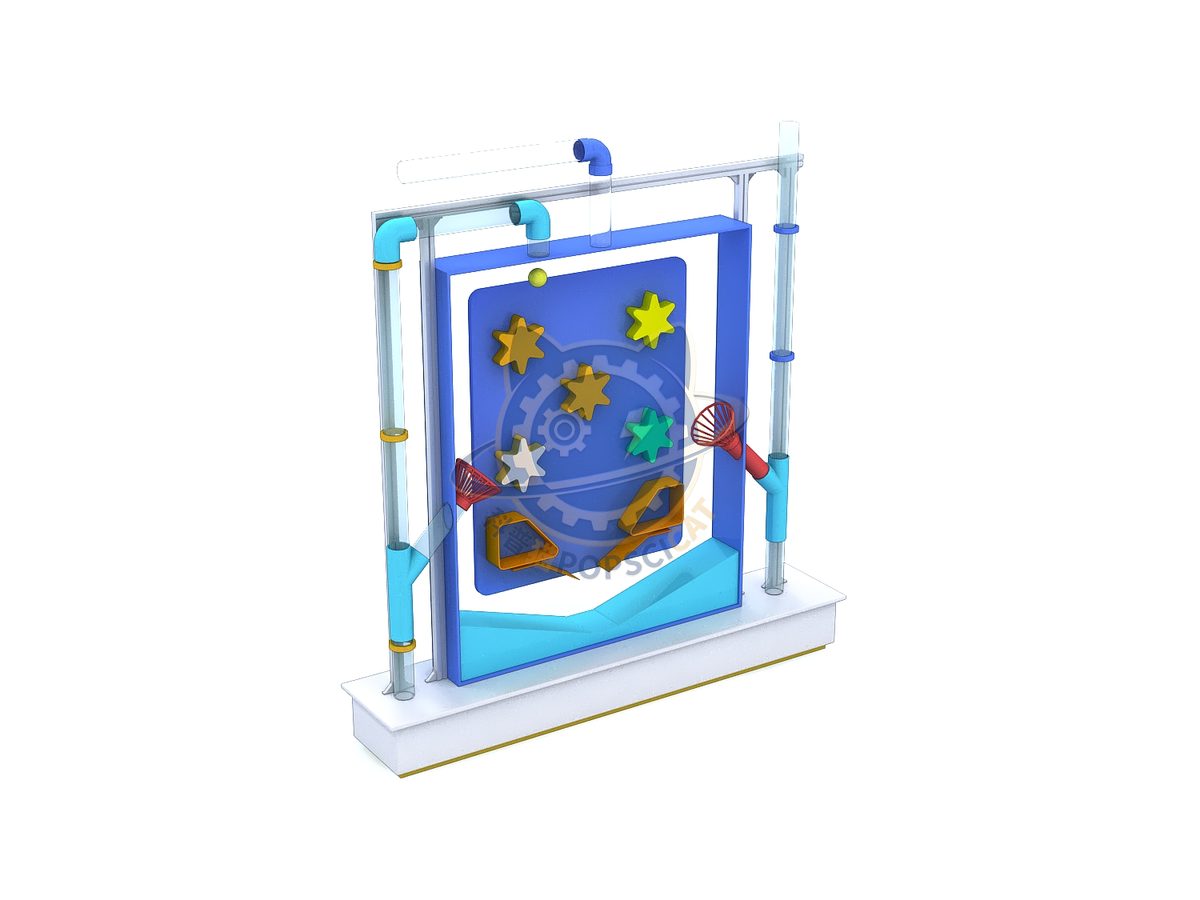
Take a look at the instruments on the Storm Column.

Musical Instrument Expert — Children's Discovery exhibit for science museums
Studio rendering
CategoryChildren's Discovery
InteractionOpen-ended, hands-on play
Standard sizeBuilt to your floor plan
Power100–240 V AC, 50/60 Hz, single phase — universal input; no step-down transformer or motor re-tap
SupplySingle unit or batch · OEM to your drawing
Lead timeStandard 3–6 weeks after deposit (confirmed per contract)
Warranty1 year, structure and control
DocumentsSpecification sheet · control diagram · spare-part list

A standard catalogue model: the dimensions, control package and finish are fixed, which is what keeps the price and the lead time predictable. Size, colour and interface language can be adapted without a new design cycle.

Ask about this model → Email us

Standard models from this range are also listed in our online store, priced in USD — see the price yourself ↗

01 / Overview

Take a look at the instruments on the Storm Column. Do you recognize them all? Based on the principle of sound production, musical instruments are generally classified into four categories: idiophones, membranophones, aerophones, and chordophones. The gong is an idiophone. An idiophone is an instrument in which the sound is produced directly by the vibration of the instrument itself, without the use of strings, air, or membranes. The sound-producing material of an idiophone has a specific shape and is excited to produce sound when in a free state, without any other vibrating medium. Drums, on the other hand, produce sound through the vibration of a taut membrane, so they are classified as membranophones. The harmonica is an aerophone, and its sound is produced by air as the vibrating force. The guitar produces sound from taut, vibrating strings, making it a type of stringed instrument. The electronic keyboard differs from traditional instruments and belongs to the fifth category of electrophones. From an auditory perspective, the reason why each instrument can be distinguished from other instruments is that they have different timbres, which are determined by the overtones produced by each instrument. When we listen to music, the reason we can distinguish each instrument is because of the timbre characteristics of that instrument. The invention of electricity led to the timbre of music becoming increasingly electronic. After "listening," let's "look" at it. "The Abyss" is housed in a sealed cylinder. The bottom of the cylinder is a flat mirror, and the surface of the cylinder is a half-transparent, half-reflective mirror. When the LED lights up, the light reflects back and forth between the two mirrors, forming multiple images. After each reflection, a new image is produced at twice the distance, and so on to infinity, resembling an abyss. Do you have the courage to step into this man-made trap? Standing on it, you can feel as if you were standing on the edge of an abyss or walking on thin ice!. It is built for unsupervised public use: surfaces are robust and wipe-clean, there are no loose parts, and the interface works without instruction, so a child of about six can operate it on a busy floor.

02 / How visitors use it

Interaction type: Open-ended, hands-on play. The unit is designed for unsupervised public use: controls are recessed or shielded, moving parts are enclosed, and the interface is operable by a child of about six with no instruction. Where a screen is used, the language can be switched without changing the hardware, and the content can be replaced on site.

03 / Built for a public floor

Every unit leaves the factory after a running test: mechanisms cycled, electronics burned in, edges dressed, fixings torqued and marked. Wear parts — bearings, sliders, lamps, belts, touch panels — are modular and listed on the spare-part sheet, so a venue technician can replace them without returning the exhibit. Crating is plywood with foam blocking; the loading plan and packing list travel with the shipment.

Same category

More in Children's Discovery

Other models from the Children's Discovery line, all held to the same specification and the same control package.

Start a project

Send us your exhibit list.
We will come back with a price.

Attach a theme outline, a floor plan, or nothing at all — a photo of the space is enough to start. Quotations are issued against a real exhibit list, not per-square-metre guesses.

Prefer to see the floor before you commit? Factory visits and third-party inspections are welcome.

WhatsApp QR code — scan to chat with Shanghai Inertia
WhatsAppScan to chat
WeChat QR code — scan to message us
WeChatScan to add us