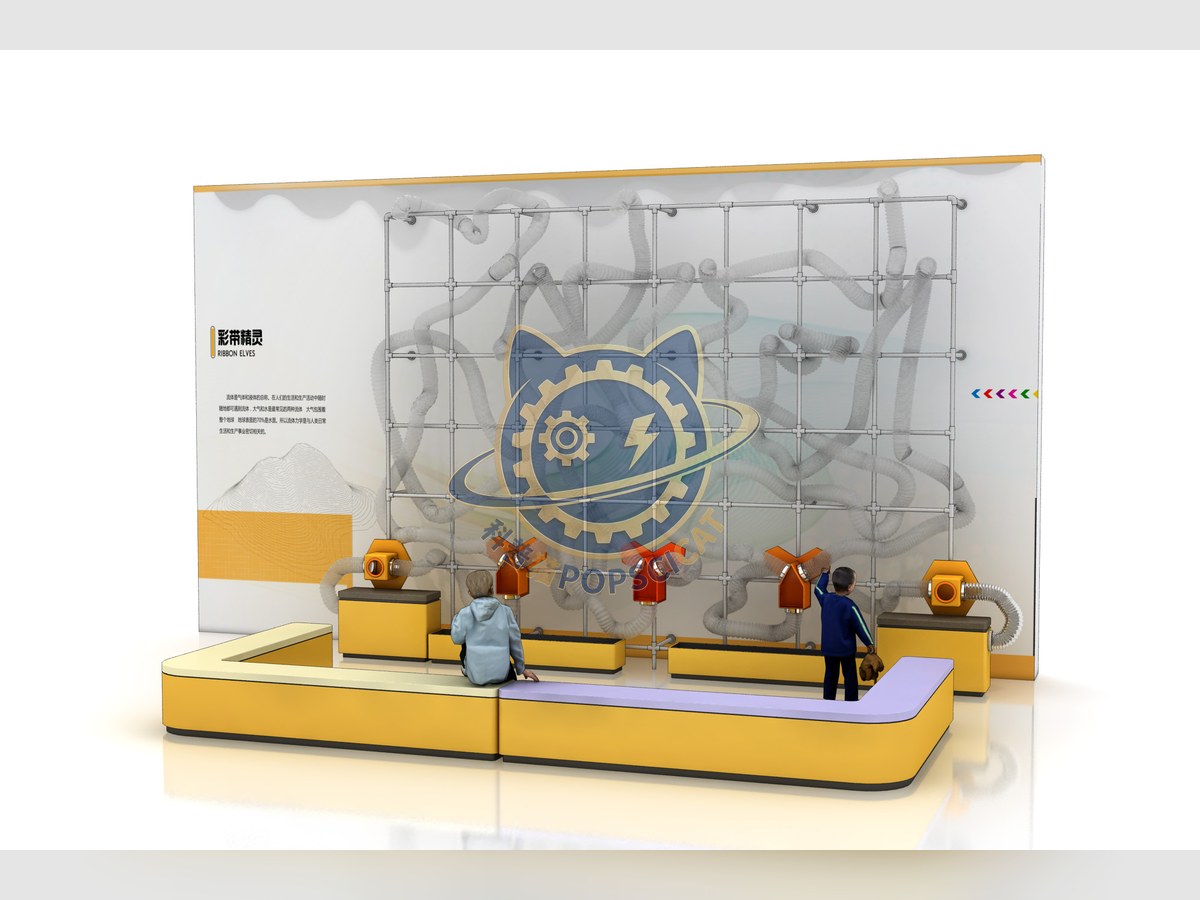
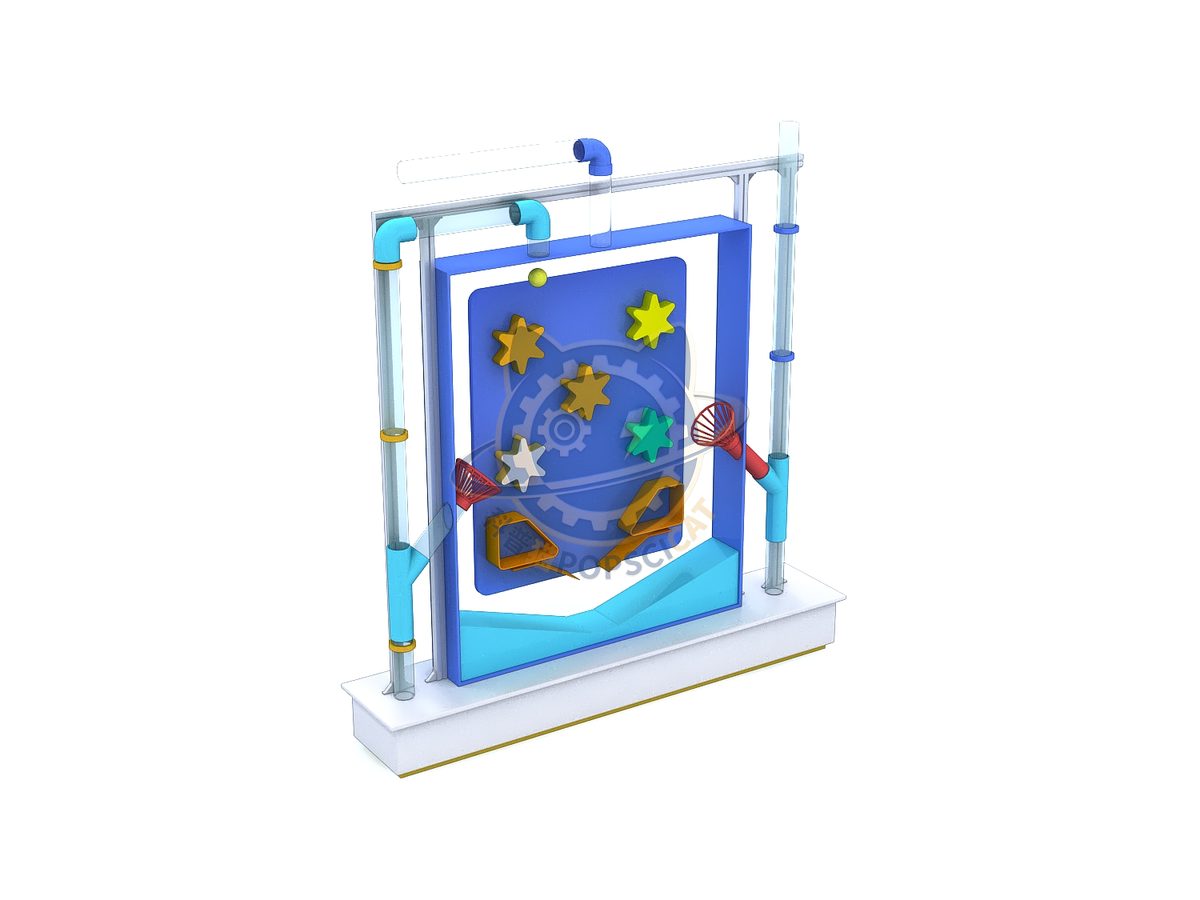
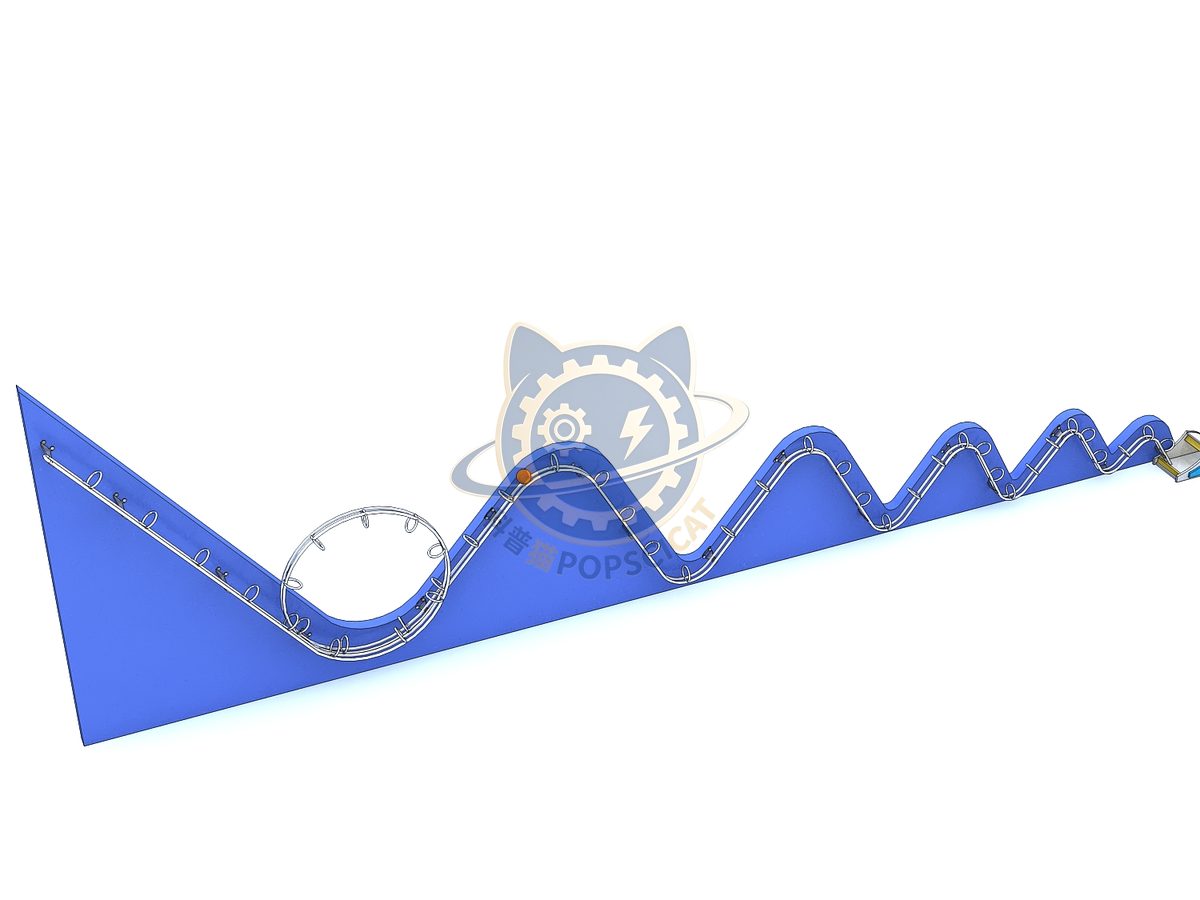
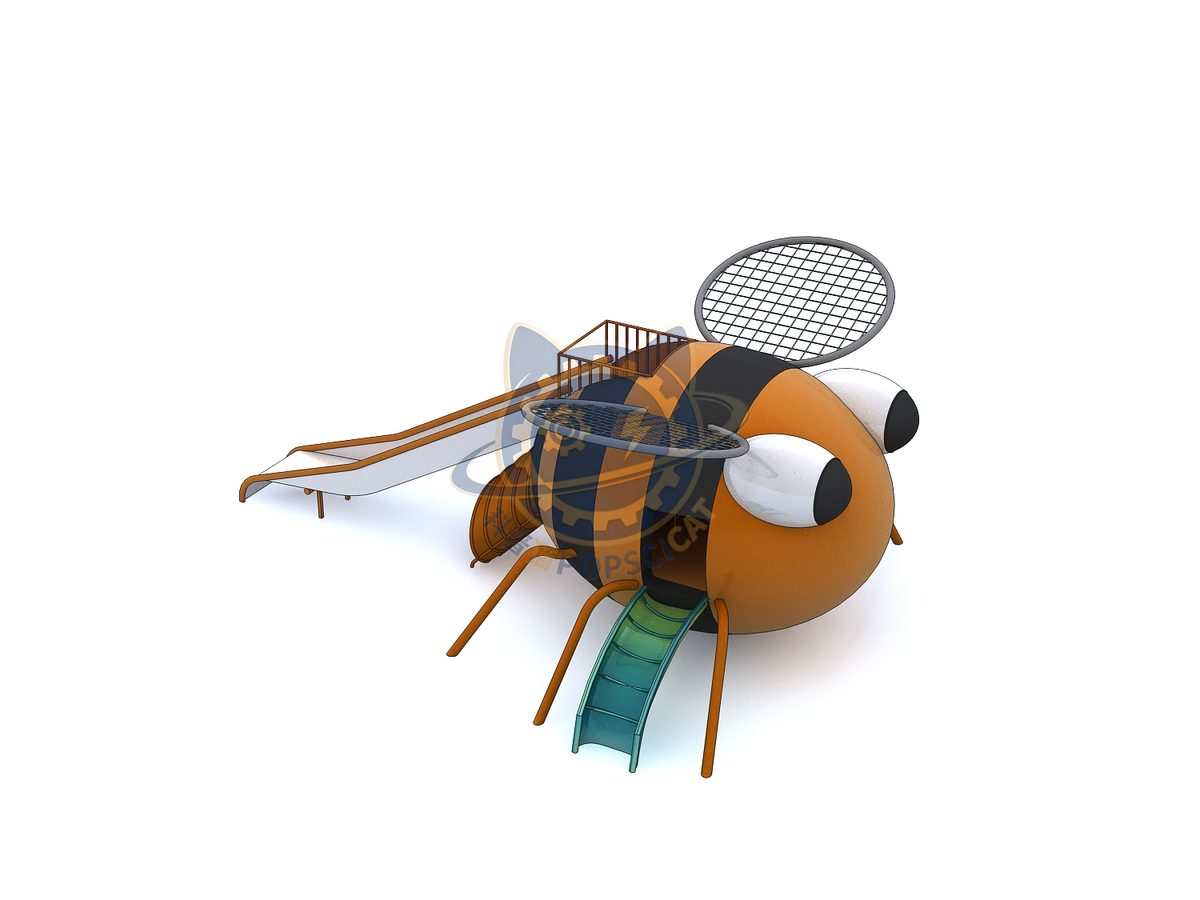
I. Purpose of the Exhibit The exhibit uses interactive participation to educate visitors about the Bernoulli principle. II. Scientific Principle Airflow refers to the upward and downward movement of air. Air moving upward is called an updraft, and air moving downward is called a downdraft. Upward air currents are further classified into various types, such as dynamic air currents, thermal air currents, and mountain waves. "Air current" is a technical term used in meteorology, while "wind" is a term we use in everyday life. In reality, whether air moves horizontally or vertically, it can be referred to as an air current. However, we cannot feel the vertical movement of air; we can only feel horizontal air currents. Therefore, what we commonly refer to as "wind" in everyday life can only mean horizontal air currents. Daniel Bernoulli proposed the "Bernoulli Principle" in 1726. This was the fundamental principle used in hydraulics before the establishment of the continuum theory equations in fluid mechanics. Its essence is the conservation of mechanical energy in fluids. That is: kinetic energy + gravitational potential energy + pressure potential energy = constant. Its most famous corollary is: When flow occurs at the same height, the higher the flow velocity, the lower the pressure. Bernoulli's principle is often expressed as p + 1/2ρv2 + ρgh = C, and this equation is known as the Bernoulli equation. In the equation, p is the pressure at a point in the fluid, v is the velocity of the fluid at that point, ρ is the density of the fluid, g is the acceleration due to gravity, h is the height of that point, and C is a constant. It can also be expressed as p1 + 1/2ρv12 + ρgh1 = p2 + 1/2ρv22 + ρgh2. It should be noted that since the Bernoulli equation is derived from the conservation of mechanical energy, it is only applicable to ideal fluids with negligible viscosity and that are incompressible. Pneumatic conveying, also known as air conveying, utilizes the energy of airflow to transport particulate materials along the direction of airflow within enclosed pipes. It is a specific application of fluidization technology. Pneumatic conveying systems have a simple structure and are easy to operate. They can convey materials horizontally, vertically, or at an inclined angle. During the conveying process, physical operations such as heating, cooling, drying, and airflow classification, or certain chemical operations, can also be performed simultaneously. III. Function Description (Technical Solution) By placing lightweight objects into different pipe inlets and observing their movement within the pipes, students can gain an understanding of Bernoulli's principle. IV. Operating Instructions Press the "Start" button, place the lightweight object at the pipe inlet and release it; observe the movement of the lightweight object inside the pipe. 5. Overall 3D color renderings of the exhibits (the attached drawings are in CAD 2010 format and 3D MAX 2012 format). It is built for unsupervised public use: surfaces are robust and wipe-clean, there are no loose parts, and the interface works without instruction, so a child of about six can operate it on a busy floor.