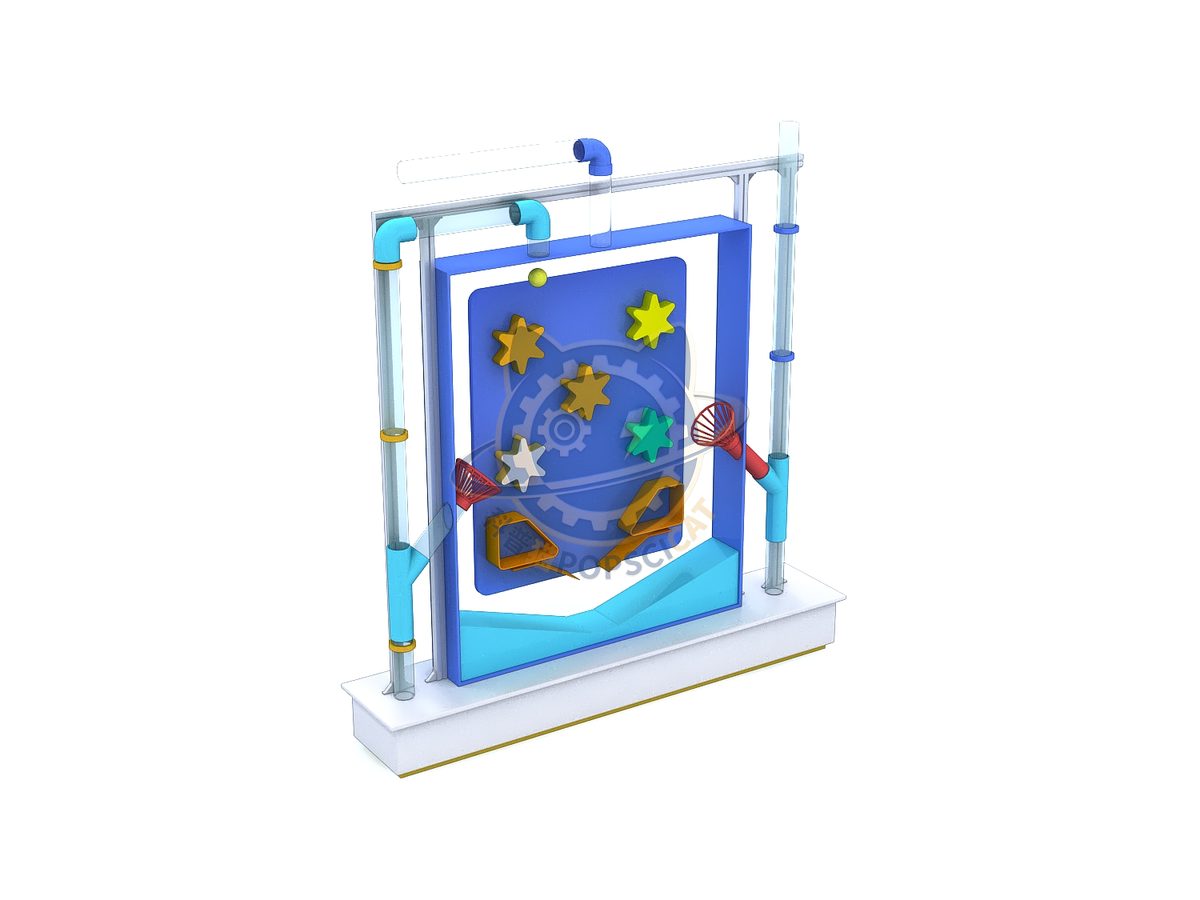
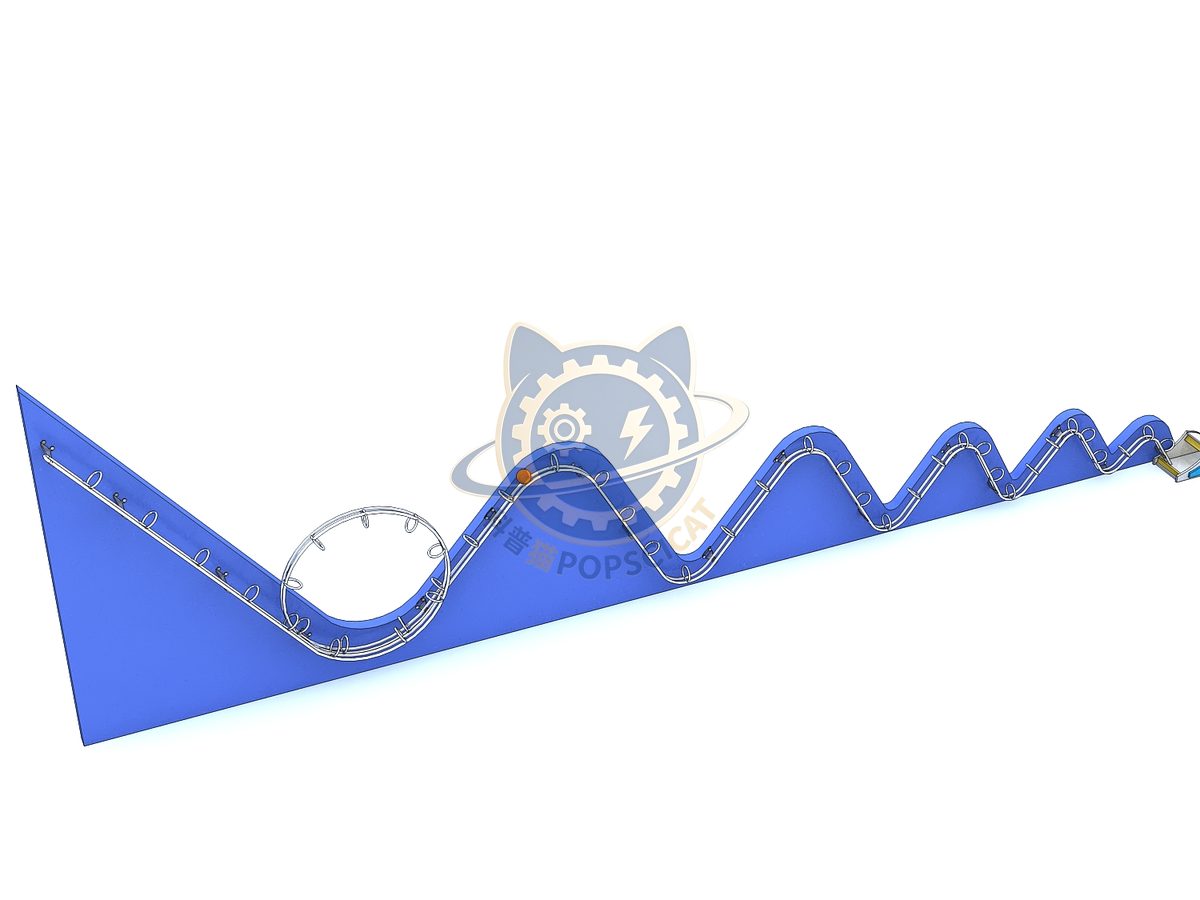
The product of the moment of inertia and the angular velocity of a rotating object is called its angular momentum.
| Category | Children's Discovery |
|---|---|
| Interaction | Open-ended, hands-on play |
| Standard size | Built to your floor plan |
| Power | 100–240 V AC, 50/60 Hz, single phase — universal input; no step-down transformer or motor re-tap |
| Supply | Single unit or batch · OEM to your drawing |
| Lead time | Standard 3–6 weeks after deposit (confirmed per contract) |
| Warranty | 1 year, structure and control |
| Documents | Specification sheet · control diagram · spare-part list |
A standard catalogue model: the dimensions, control package and finish are fixed, which is what keeps the price and the lead time predictable. Size, colour and interface language can be adapted without a new design cycle.
Standard models from this range are also listed in our online store, priced in USD — see the price yourself ↗
The product of the moment of inertia and the angular velocity of a rotating object is called its angular momentum. The role of moment of inertia in rotational dynamics is equivalent to that of mass in linear dynamics, and can be understood as the inertia of an object with respect to rotational motion. Angular momentum is also equal to the product of the linear velocity of an object around an axis and its perpendicular distance from the axis. Angular momentum is a vector. The law of conservation of angular momentum is an important law in physics and the natural world, reflecting the general law of motion of particles and systems of particles around a point or an axis. The law of conservation of angular momentum states that when the net external torque is zero, angular momentum is conserved, and the area swept by the line connecting the object to the center point per unit time remains constant. In celestial motion, this is manifested as Kepler's second law. According to the conservation of angular momentum, the smaller the radius of rotation, the faster the rotational speed; the larger the radius of rotation, the slower the rotational speed. The water in a container forms a vortex due to the conservation of angular momentum. When water in a container flows, it undergoes a rotational motion that is invisible to the naked eye, thus possessing a certain amount of angular momentum. As the amount of water in the container gradually decreases, the angular velocity increases to maintain the water's original angular momentum. This slowly forms a vortex, and the direction of the vortex is the same as the water's initial angular momentum. The law of conservation of angular momentum has wide applications in many fields, such as physics and engineering. For example, when a skater pulls their arms in, the skater's spin speed increases. The law of conservation of angular momentum can also be used to explain why neutron stars have very high rotation rates, among other things. It is built for unsupervised public use: surfaces are robust and wipe-clean, there are no loose parts, and the interface works without instruction, so a child of about six can operate it on a busy floor.
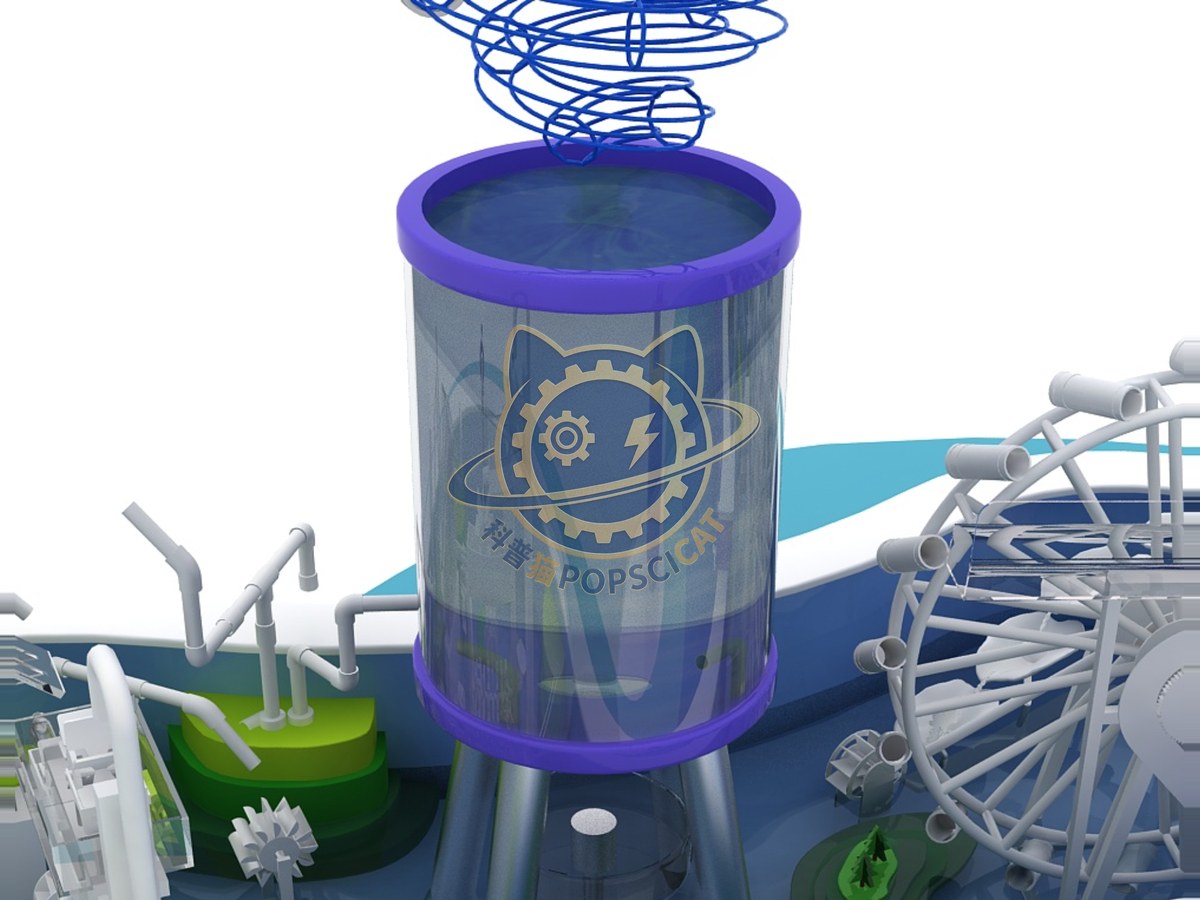
Interaction type: Open-ended, hands-on play. The unit is designed for unsupervised public use: controls are recessed or shielded, moving parts are enclosed, and the interface is operable by a child of about six with no instruction. Where a screen is used, the language can be switched without changing the hardware, and the content can be replaced on site.
Every unit leaves the factory after a running test: mechanisms cycled, electronics burned in, edges dressed, fixings torqued and marked. Wear parts — bearings, sliders, lamps, belts, touch panels — are modular and listed on the spare-part sheet, so a venue technician can replace them without returning the exhibit. Crating is plywood with foam blocking; the loading plan and packing list travel with the shipment.
Other models from the Children's Discovery line, all held to the same specification and the same control package.

A wheel that lifts balls and returns them by gravity.

A steel track for steel balls with a hand-cranked lift hill.

A padded tunnel with peepholes and a sound at the far end.

A soft-edged climbing frame with a slide and a lookout deck.
Attach a theme outline, a floor plan, or nothing at all — a photo of the space is enough to start. Quotations are issued against a real exhibit list, not per-square-metre guesses.
Prefer to see the floor before you commit? Factory visits and third-party inspections are welcome.