Home/Exhibits/Earth & Ecology/From Cyclone Formation to Typhoon

From Cyclone Formation to Typhoon

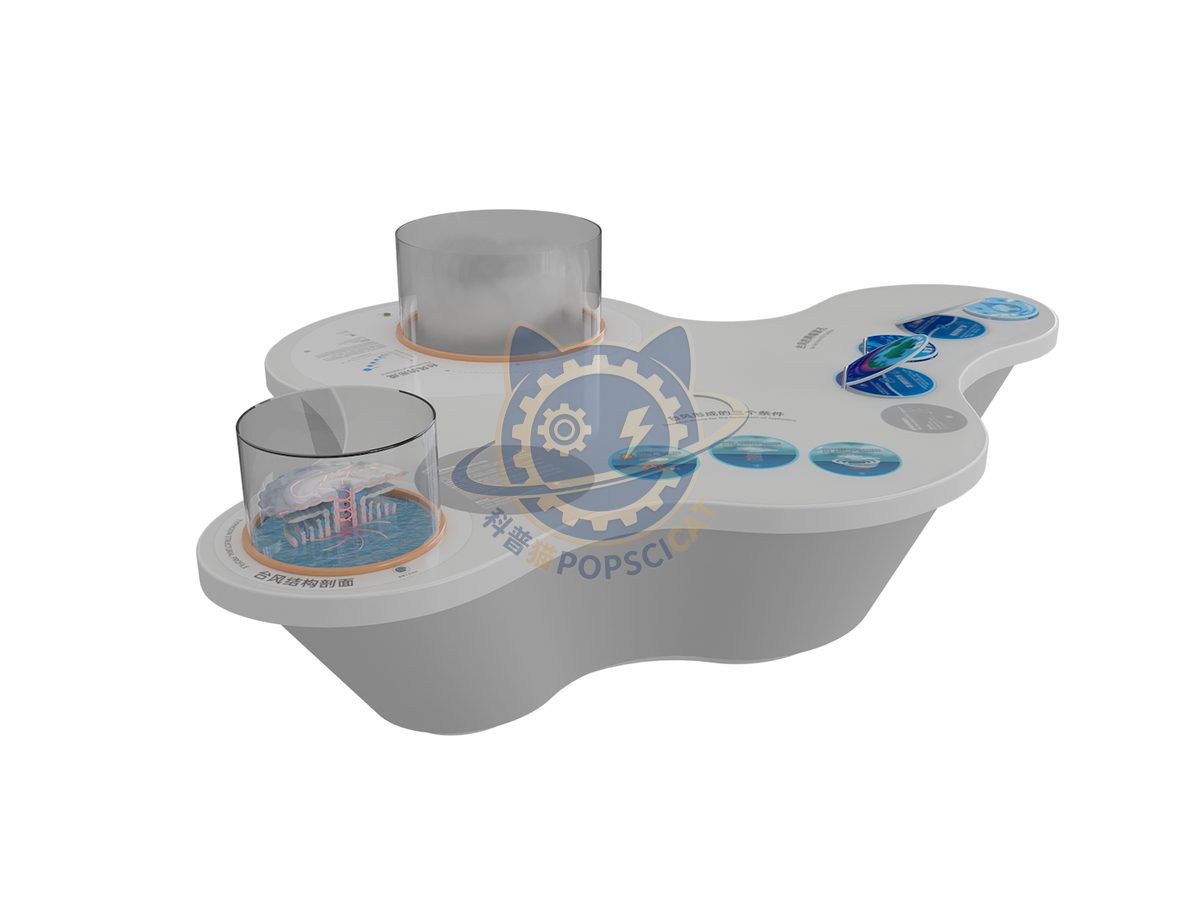
The exhibit consists of a typhoon vortex experimental device, a 21.

From Cyclone Formation to Typhoon — Earth & Ecology exhibit for science museums
Studio rendering
CategoryEarth & Ecology
InteractionHands-on, visitor-operated exhibit
Standard sizeBuilt to your floor plan
Power100–240 V AC, 50/60 Hz, single phase — universal input; no step-down transformer or motor re-tap
SupplySingle unit or batch · OEM to your drawing
Lead timeStandard 3–6 weeks after deposit (confirmed per contract)
Warranty1 year, structure and control
DocumentsSpecification sheet · control diagram · spare-part list

A standard catalogue model: the dimensions, control package and finish are fixed, which is what keeps the price and the lead time predictable. Size, colour and interface language can be adapted without a new design cycle.

Ask about this model → Email us

Standard models from this range are also listed in our online store, priced in USD — see the price yourself ↗
01 / Overview

The exhibit consists of a typhoon vortex experimental device, a 21.5-inch touchscreen, and a display stand. During the interaction, participants can select "Simulate Typhoon Formation" or "Learn About Typhoons" via the touchscreen. When "Simulate Typhoon Formation" is selected, participants can adjust the seawater temperature and vertical wind shear intensity via the touchscreen to form a vortex cyclone in the typhoon vortex experimental apparatus. Subsequently, the water mist device in the vortex experimental apparatus is activated to spray water mist, which, in conjunction with the vortex airflow, simulates the formation of a typhoon. When "Learn About Typhoons" is selected, the touchscreen provides information on the formation of typhoons, typhoon categories, the dual nature of typhoons, the role of typhoons in the water cycle, the dangers of typhoons, and other related knowledge. It is built for unsupervised public use: surfaces are robust and wipe-clean, there are no loose parts, and the interface works without instruction, so a child of about six can operate it on a busy floor.

02 / How visitors use it

Interaction type: Hands-on, visitor-operated exhibit. The unit is designed for unsupervised public use: controls are recessed or shielded, moving parts are enclosed, and the interface is operable by a child of about six with no instruction. Where a screen is used, the language can be switched without changing the hardware, and the content can be replaced on site.

03 / The science behind it

Through electromechanical interaction and multiple media, the exhibit demonstrates the principles behind typhoon formation, providing visitors with knowledge about typhoons.

04 / Built for a public floor

Every unit leaves the factory after a running test: mechanisms cycled, electronics burned in, edges dressed, fixings torqued and marked. Wear parts — bearings, sliders, lamps, belts, touch panels — are modular and listed on the spare-part sheet, so a venue technician can replace them without returning the exhibit. Crating is plywood with foam blocking; the loading plan and packing list travel with the shipment.

Same category

More in Earth & Ecology

Other models from the Earth & Ecology line, all held to the same specification and the same control package.

Start a project

Send us your exhibit list.
We will come back with a price.

Attach a theme outline, a floor plan, or nothing at all — a photo of the space is enough to start. Quotations are issued against a real exhibit list, not per-square-metre guesses.

Prefer to see the floor before you commit? Factory visits and third-party inspections are welcome.

WhatsApp QR code — scan to chat with Shanghai Inertia
WhatsAppScan to chat
WeChat QR code — scan to message us
WeChatScan to add us