Columbia supercontinent stage: approximately 1.
| Category | Earth & Ecology |
|---|---|
| Interaction | Hands-on, visitor-operated exhibit |
| Standard size | Built to your floor plan |
| Power | 100–240 V AC, 50/60 Hz, single phase — universal input; no step-down transformer or motor re-tap |
| Supply | Single unit or batch · OEM to your drawing |
| Lead time | Standard 3–6 weeks after deposit (confirmed per contract) |
| Warranty | 1 year, structure and control |
| Documents | Specification sheet · control diagram · spare-part list |
A standard catalogue model: the dimensions, control package and finish are fixed, which is what keeps the price and the lead time predictable. Size, colour and interface language can be adapted without a new design cycle.
Standard models from this range are also listed in our online store, priced in USD — see the price yourself ↗
Columbia supercontinent stage: approximately 1.8 billion to 1.5 billion years ago. The Columbia supercontinent stretched over 12,900 kilometers from north to south and was 4,800 kilometers wide at its broadest point from east to west. It formed the continent that extends to present-day Scandinavia. Supercontinent - Rodinia: The movement of the Earth's crust and core pushed and pulled plates across the globe, forming a supercontinent - Rodinia, which existed approximately 1.1 billion to 750 million years ago. Gondwana and Laurasia: Supercontinents that existed from the Neoproterozoic to the Early Jurassic (approximately 573 million to 180 million years ago). They were two of the supercontinents that split from Rodinia. Pangaea: Existed approximately 300 to 200 million years ago. During the Permian period (about 290–250 million years ago), Gondwana and Laurasia rejoined to form a new supercontinent — Pangaea. With the arrival of the Mesozoic Era, Pangaea was full of life, and ichthyosaurs and dinosaurs appeared one after another. The northern and southern continents split again: During the Age of Dinosaurs, 190 million years ago, Pangaea began to split into two continents, the northern and the southern, which were still called Gondwana and Laurasia. The Five Continents: The mid-Cretaceous period, 100 million years ago, experienced a major era of marine transgression. Rising sea levels inundated vast areas of land. A series of islands in Europe were smaller than they were during the Jurassic period, and Africa was divided into two parts by the sea. North America was divided into four major parts. Antarctica, the Indian subcontinent, and Australia also separated. The Gondwana and Laurentia continents had now broken apart. At the end of the Cretaceous Period, the sea receded, and the European continent also began to form. Australia and Antarctica were once again joined together, and the Indian subcontinent continued to move northward, beginning to approach the Asian continent. Overall, the sea level was still higher than it is today, and central North America was still an inland sea. At this point, the early forms of the major continental plates had already emerged. It is built for unsupervised public use: surfaces are robust and wipe-clean, there are no loose parts, and the interface works without instruction, so a child of about six can operate it on a busy floor.
Interaction type: Hands-on, visitor-operated exhibit. The unit is designed for unsupervised public use: controls are recessed or shielded, moving parts are enclosed, and the interface is operable by a child of about six with no instruction. Where a screen is used, the language can be switched without changing the hardware, and the content can be replaced on site.
The exhibit is presented in the form of a dynamic video on an 85-inch display screen, showcasing the history of continental drift. Visitors can gain a deeper understanding of the geological changes on the Earth's surface, the occurrence of natural disasters, and the formation of landforms.
Every unit leaves the factory after a running test: mechanisms cycled, electronics burned in, edges dressed, fixings torqued and marked. Wear parts — bearings, sliders, lamps, belts, touch panels — are modular and listed on the spare-part sheet, so a venue technician can replace them without returning the exhibit. Crating is plywood with foam blocking; the loading plan and packing list travel with the shipment.
Other models from the Earth & Ecology line, all held to the same specification and the same control package.

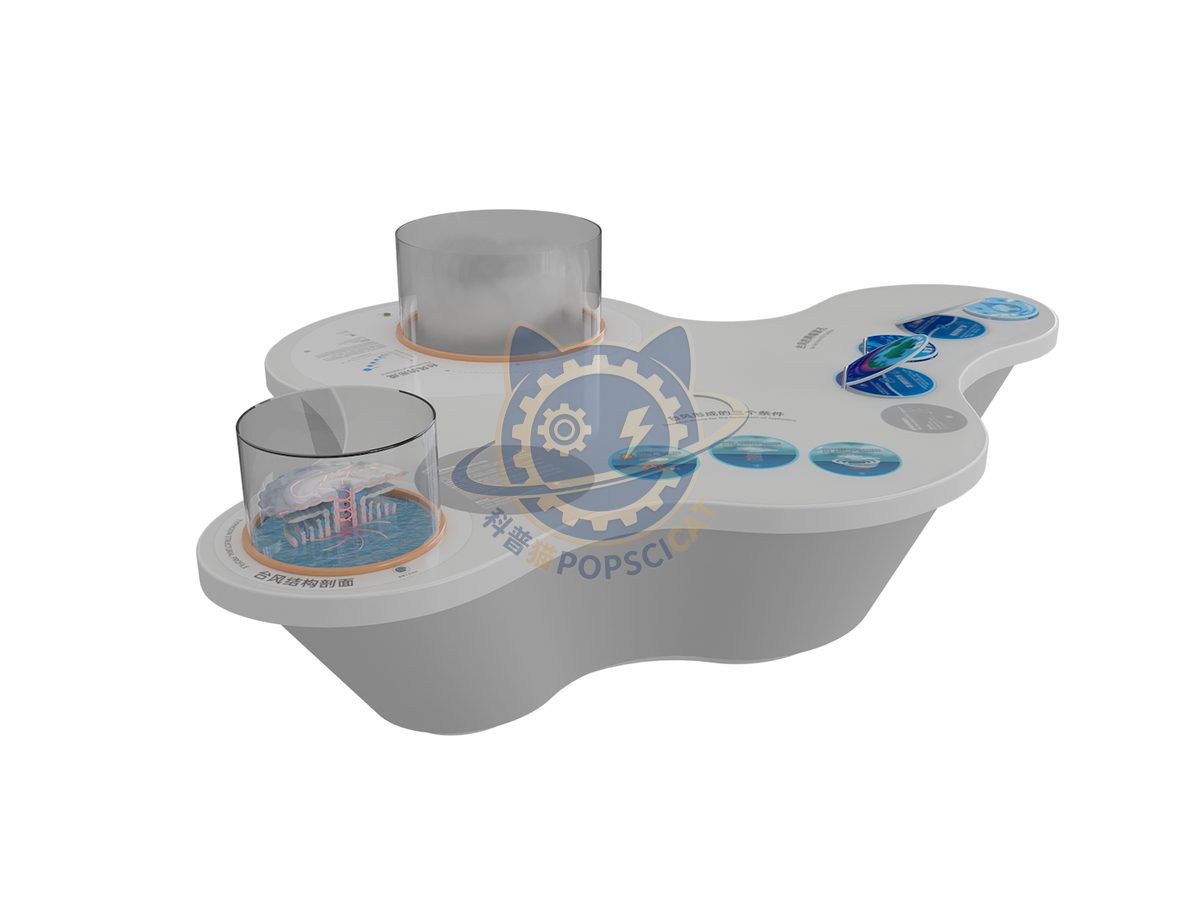
A vertical slice through a storm showing eye, eyewall and spiral bands.

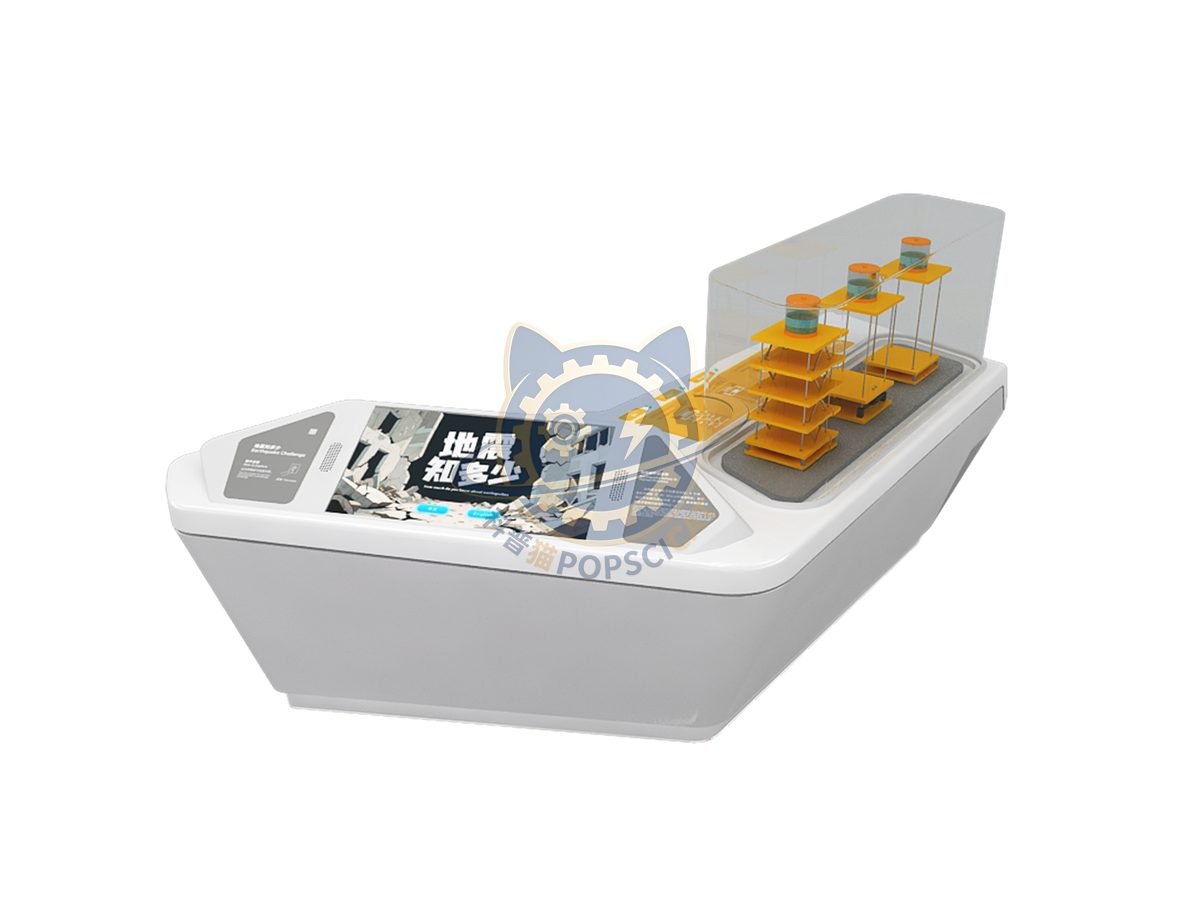
A platform shakes at recorded intensities while a seismograph traces the movement.

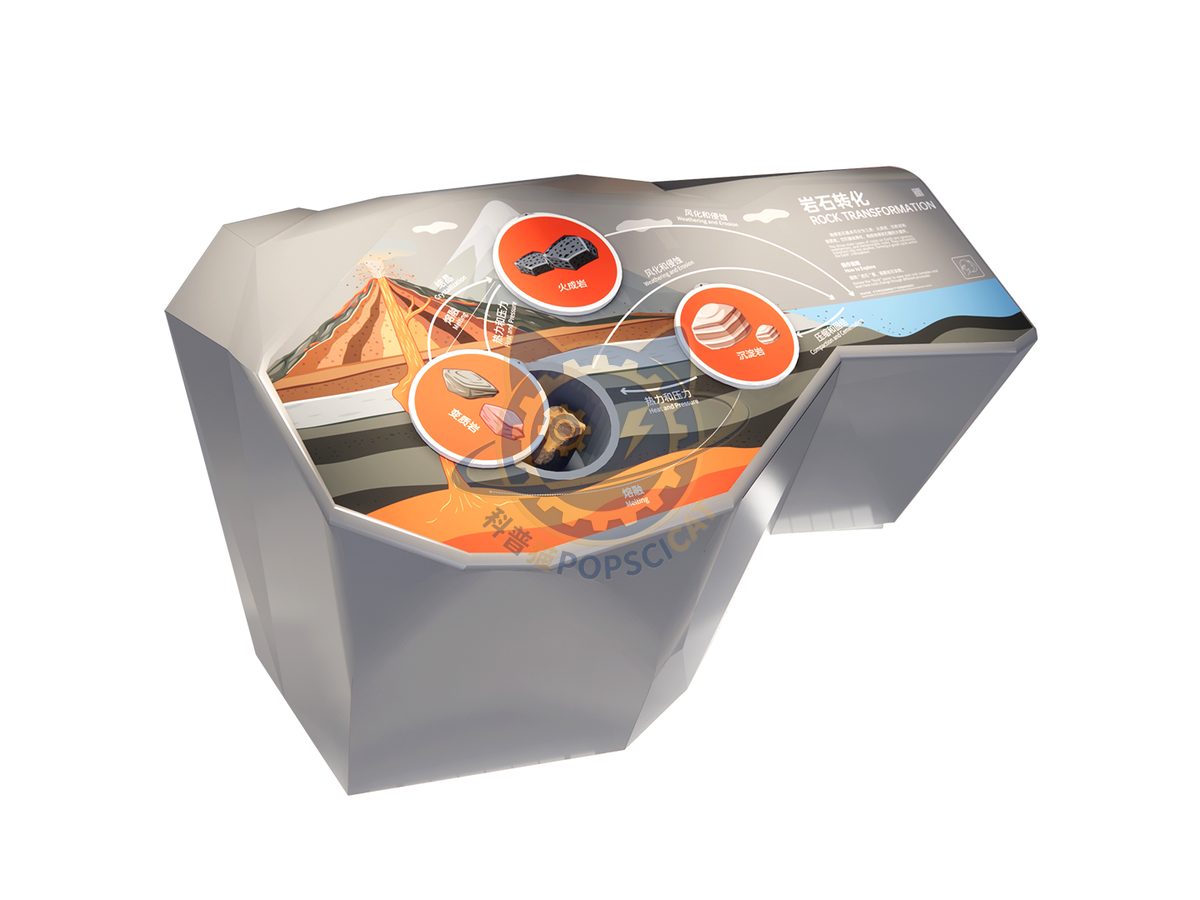
Heat and pressure turn one rock type into another on a turntable.

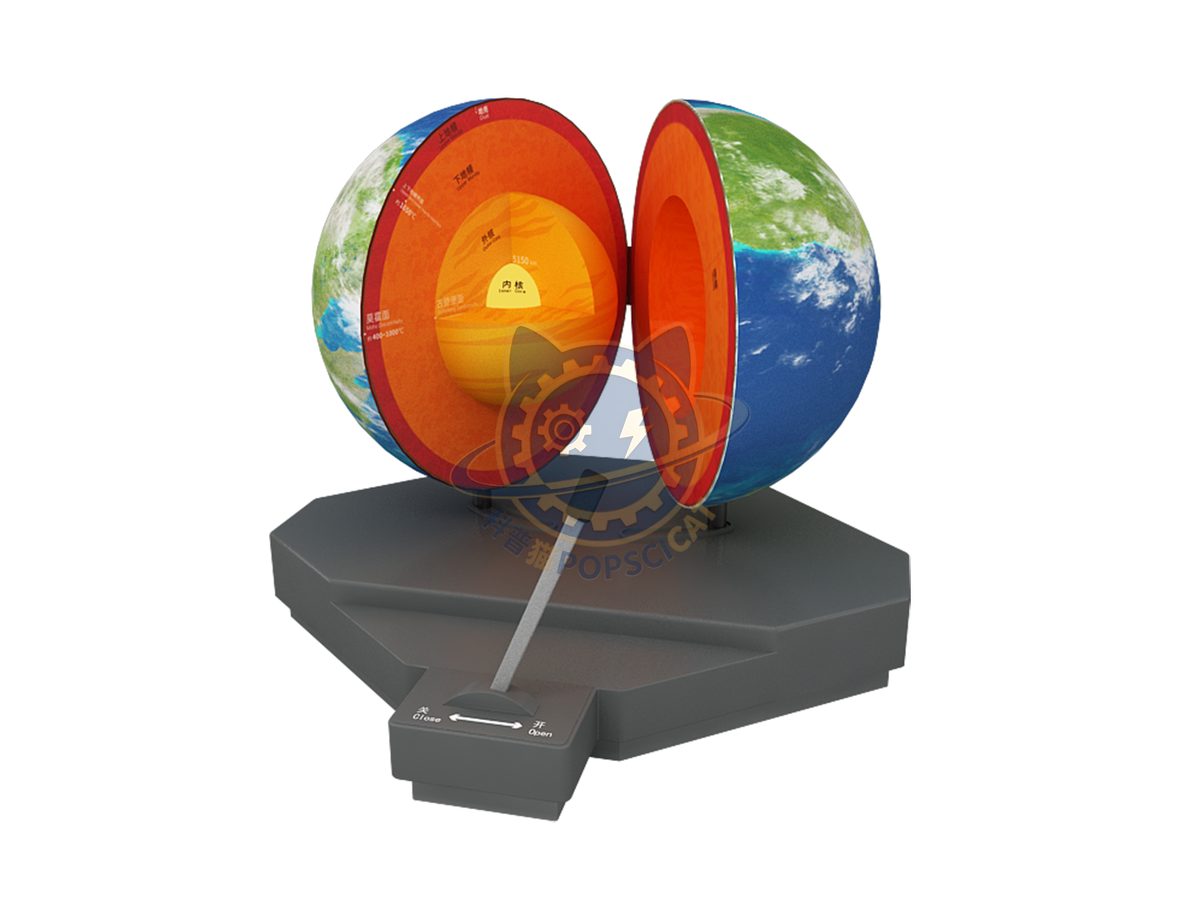
Cut-away globe showing crust, mantle, outer and inner core.
Attach a theme outline, a floor plan, or nothing at all — a photo of the space is enough to start. Quotations are issued against a real exhibit list, not per-square-metre guesses.
Prefer to see the floor before you commit? Factory visits and third-party inspections are welcome.