This article delves into the scientific principles behind these two major natural phenomena and disseminates expanded knowledge about lithospheric…
| Category | Earth & Ecology |
|---|---|
| Interaction | Multimedia and scale-model exhibit |
| Standard size | Built to your floor plan |
| Power | 100–240 V AC, 50/60 Hz, single phase — universal input; no step-down transformer or motor re-tap |
| Supply | Single unit or batch · OEM to your drawing |
| Lead time | Standard 3–6 weeks after deposit (confirmed per contract) |
| Warranty | 1 year, structure and control |
| Documents | Specification sheet · control diagram · spare-part list |
A standard catalogue model: the dimensions, control package and finish are fixed, which is what keeps the price and the lead time predictable. Size, colour and interface language can be adapted without a new design cycle.
Standard models from this range are also listed in our online store, priced in USD — see the price yourself ↗
This article delves into the scientific principles behind these two major natural phenomena and disseminates expanded knowledge about lithospheric movements, including the formation of earthquakes, with the aim of enhancing public understanding of the Earth's internal workings. What is the lithosphere? The lithosphere is a geological term referring to the rigid, rocky layer that forms the Earth's upper part, as opposed to the asthenosphere. It is approximately 60–120 kilometers thick and is a zone of high seismic wave velocity. It encompasses the entire crust and the uppermost part of the upper mantle, consisting of granitic rocks, basaltic rocks, and ultrabasic rocks. Below it are the low-velocity zone for seismic waves, the partially molten layer, and the 100-kilometer-thick asthenosphere. The nature of earthquakes: Earthquakes are essentially the sudden release of energy from within the Earth. When the accumulated stress between tectonic plates exceeds the strength limit of the rocks, the rocks suddenly fracture. The energy released during this fracturing process propagates rapidly in the form of seismic waves, causing the ground to shake. Plate division: 6 major plates: the Eurasian Plate, the Pacific Plate, the American Plate, the African Plate, the Indian Ocean Plate, and the Antarctic Plate. There are three types of plate boundaries: convergent boundaries, divergent boundaries, and transform boundaries. Source: Science China.Science Encyclopedia [National Geographic 101] 01-Earthquakes [Documentary]
Interaction type: Multimedia and scale-model exhibit. The unit is designed for unsupervised public use: controls are recessed or shielded, moving parts are enclosed, and the interface is operable by a child of about six with no instruction. Where a screen is used, the language can be switched without changing the hardware, and the content can be replaced on site.
Composition: Stainless steel rocks, lightweight metal film-coated rocks, ambient projection. Purpose: To create an underground spatial sensation through an intense visual atmosphere, combined with rock formations on the floor and ceiling. Content: Disseminate extended knowledge about lithospheric movements, including the formation of earthquakes.
Every unit leaves the factory after a running test: mechanisms cycled, electronics burned in, edges dressed, fixings torqued and marked. Wear parts — bearings, sliders, lamps, belts, touch panels — are modular and listed on the spare-part sheet, so a venue technician can replace them without returning the exhibit. Crating is plywood with foam blocking; the loading plan and packing list travel with the shipment.
Other models from the Earth & Ecology line, all held to the same specification and the same control package.

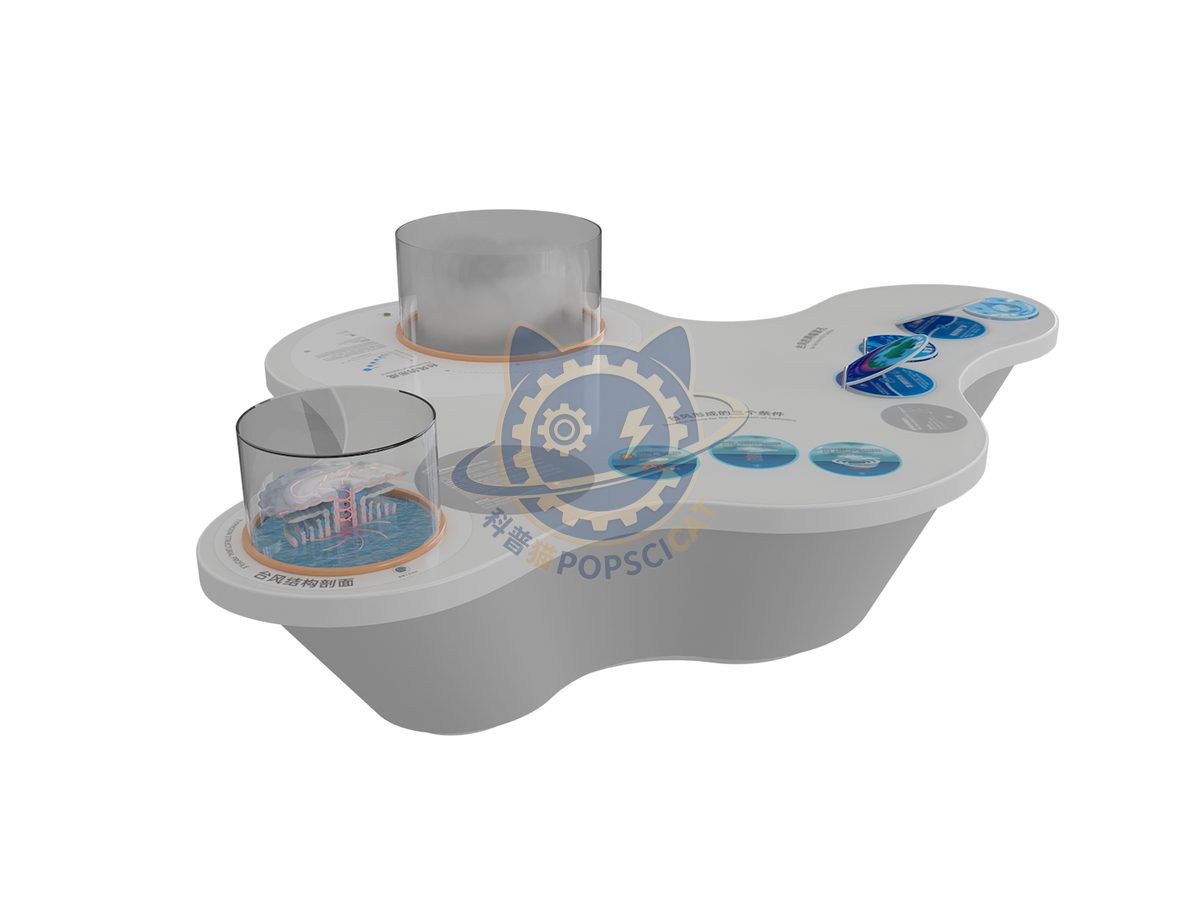
A vertical slice through a storm showing eye, eyewall and spiral bands.

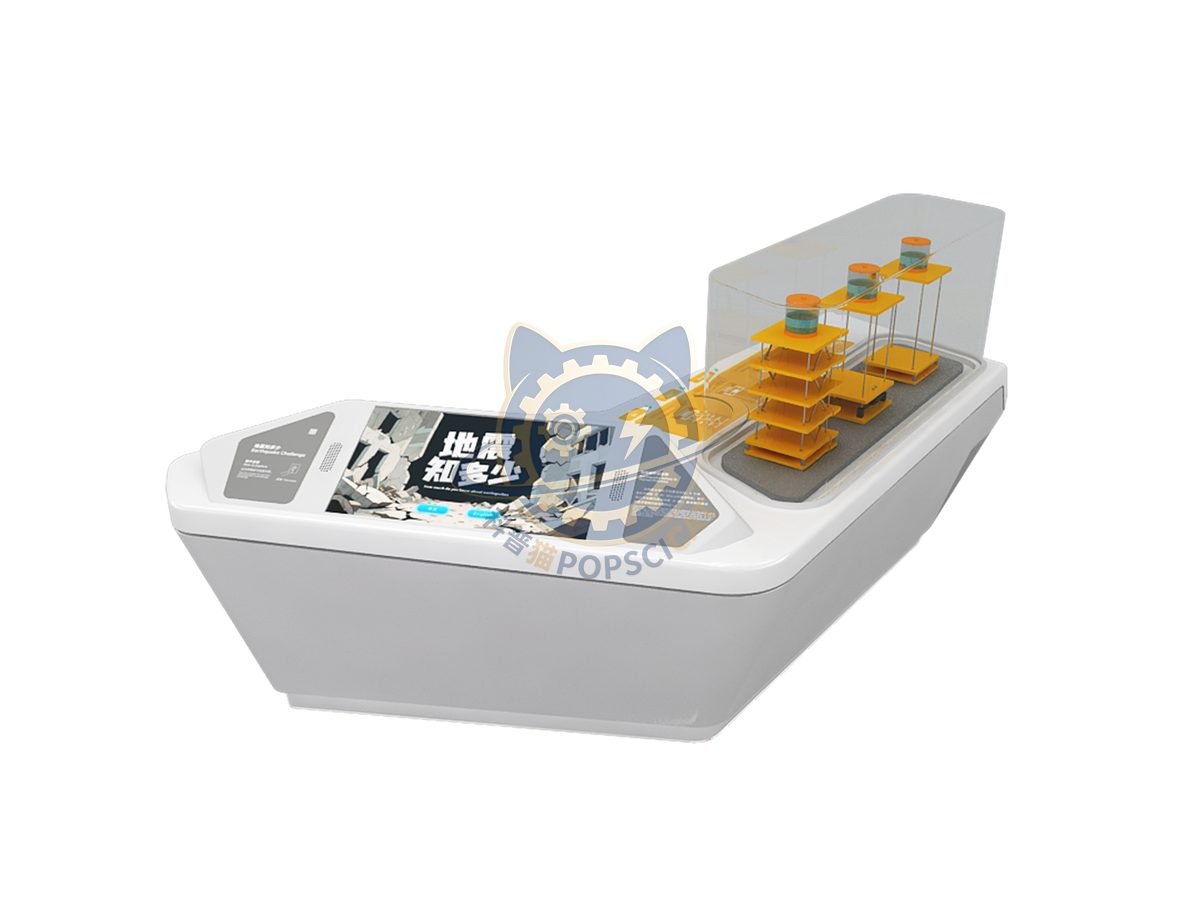
A platform shakes at recorded intensities while a seismograph traces the movement.

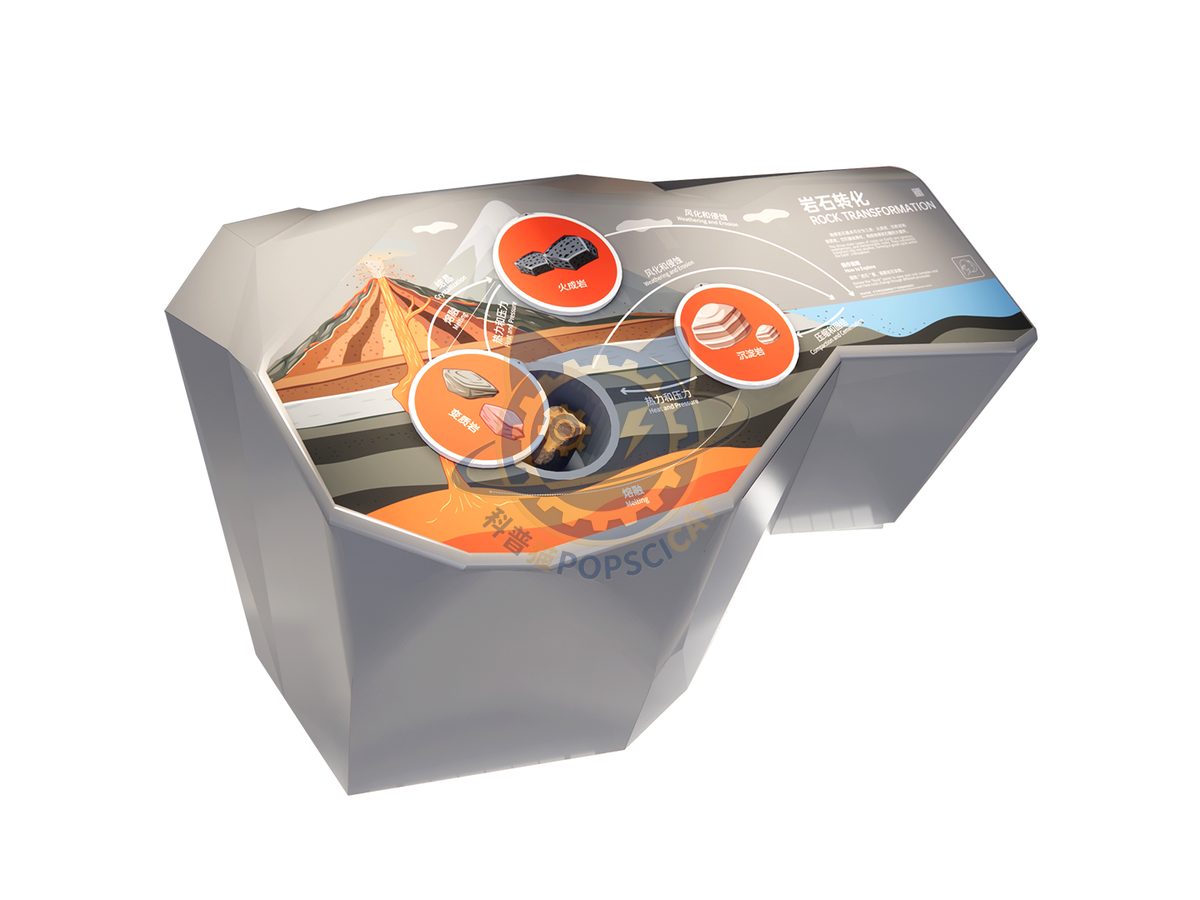
Heat and pressure turn one rock type into another on a turntable.

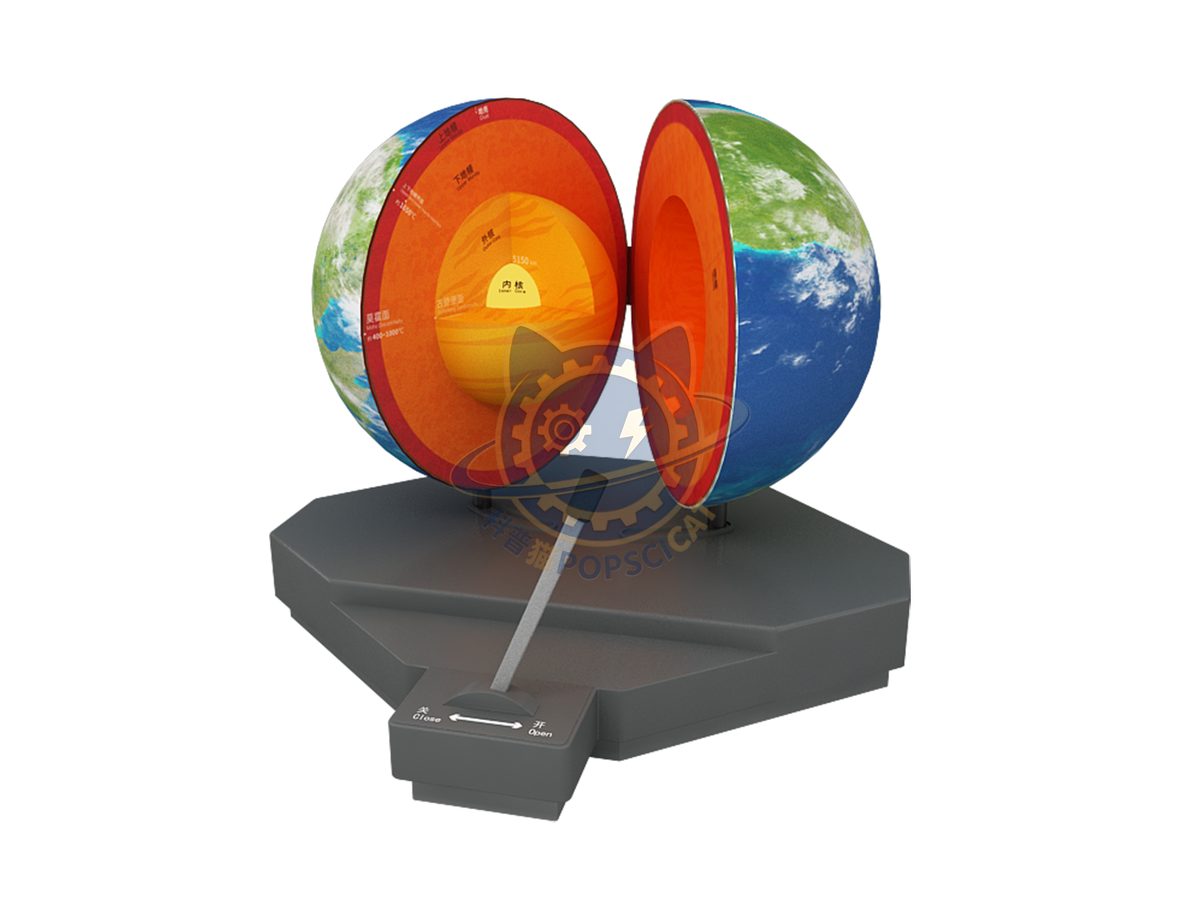
Cut-away globe showing crust, mantle, outer and inner core.
Attach a theme outline, a floor plan, or nothing at all — a photo of the space is enough to start. Quotations are issued against a real exhibit list, not per-square-metre guesses.
Prefer to see the floor before you commit? Factory visits and third-party inspections are welcome.