The glass cylinder of the Marumushi bottle displays various soil types, including: Lateritic soil: Rich in iron oxide and aluminum oxide, it appears…
| Category | Earth & Ecology |
|---|---|
| Interaction | Multimedia and scale-model exhibit |
| Standard size | Built to your floor plan |
| Power | 100–240 V AC, 50/60 Hz, single phase — universal input; no step-down transformer or motor re-tap |
| Supply | Single unit or batch · OEM to your drawing |
| Lead time | Standard 3–6 weeks after deposit (confirmed per contract) |
| Warranty | 1 year, structure and control |
| Documents | Specification sheet · control diagram · spare-part list |
A standard catalogue model: the dimensions, control package and finish are fixed, which is what keeps the price and the lead time predictable. Size, colour and interface language can be adapted without a new design cycle.
Standard models from this range are also listed in our online store, priced in USD — see the price yourself ↗
The glass cylinder of the Marumushi bottle displays various soil types, including: Lateritic soil: Rich in iron oxide and aluminum oxide, it appears red or reddish-brown and is commonly found in subtropical and tropical regions. The soil is loose, has a low bulk density, poor water retention, good aeration, and high fertility, making it suitable for growing crops such as rice, sugarcane, and citrus fruits. Black soil: Rich in organic matter, with a darker color, suitable for agricultural development, and commonly found in warm and humid climates. Yellow soil: Rich in iron oxide, it appears yellow or brownish-yellow and is common in tropical and subtropical regions. Gray soil: Rich in clay, typically gray in color, suitable for forestry and agriculture, and commonly found in temperate regions. Brown soil: Rich in organic matter, light gray in color, commonly found in cold regions. Saline soil: Contains a high salt content and is typically found in arid regions or areas with poor water drainage.
Interaction type: Multimedia and scale-model exhibit. The unit is designed for unsupervised public use: controls are recessed or shielded, moving parts are enclosed, and the interface is operable by a child of about six with no instruction. Where a screen is used, the language can be switched without changing the hardware, and the content can be replaced on site.
This exhibit showcases the pedosphere within Earth's layers, aiming to delve into soil formation, composition, and ecological functions. It provides a comprehensive understanding for ecological education, agriculture and food production, environmental protection, and Earth system science. The content covers the soil formation process and its composition, including the effects of macronutrients and micronutrients on soil texture and fertility, as well as the important role of organic matter in soil. It emphasizes the ecological functions of soil in ecosystems, such as supporting plant growth, regulating water, and cycling nutrients. At the same time, it explores the impact of agricultural activities on soil, including tillage, fertilization, and pesticide use, and highlights the importance of sustainable soil management. Additionally, the crucial role of macro- and micronutrients in soil, as well as the contribution of organic matter to soil structure and biodiversity, are emphasized. The audience will gain a more comprehensive understanding of the indispensable role of soil conservation in sustainable development and environmental health.
Every unit leaves the factory after a running test: mechanisms cycled, electronics burned in, edges dressed, fixings torqued and marked. Wear parts — bearings, sliders, lamps, belts, touch panels — are modular and listed on the spare-part sheet, so a venue technician can replace them without returning the exhibit. Crating is plywood with foam blocking; the loading plan and packing list travel with the shipment.
Other models from the Earth & Ecology line, all held to the same specification and the same control package.

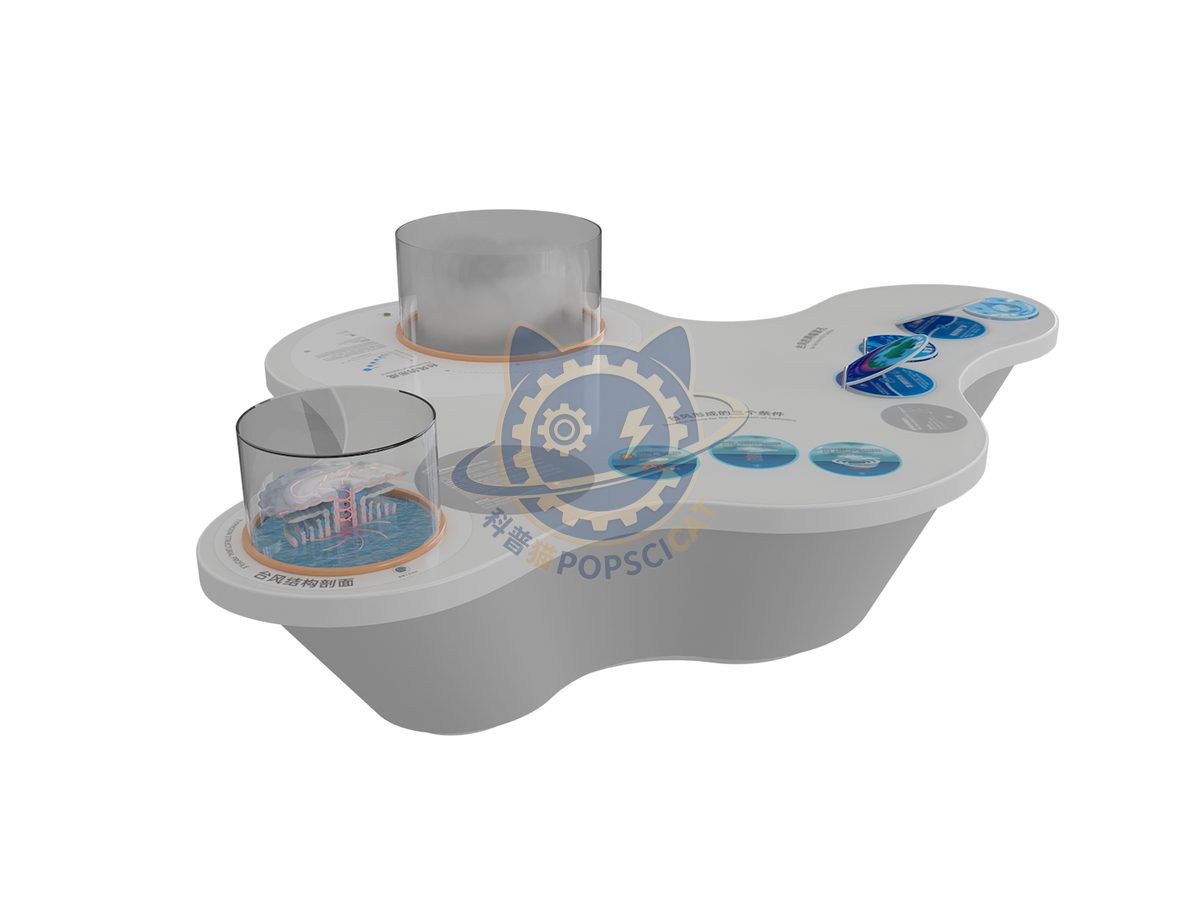
A vertical slice through a storm showing eye, eyewall and spiral bands.

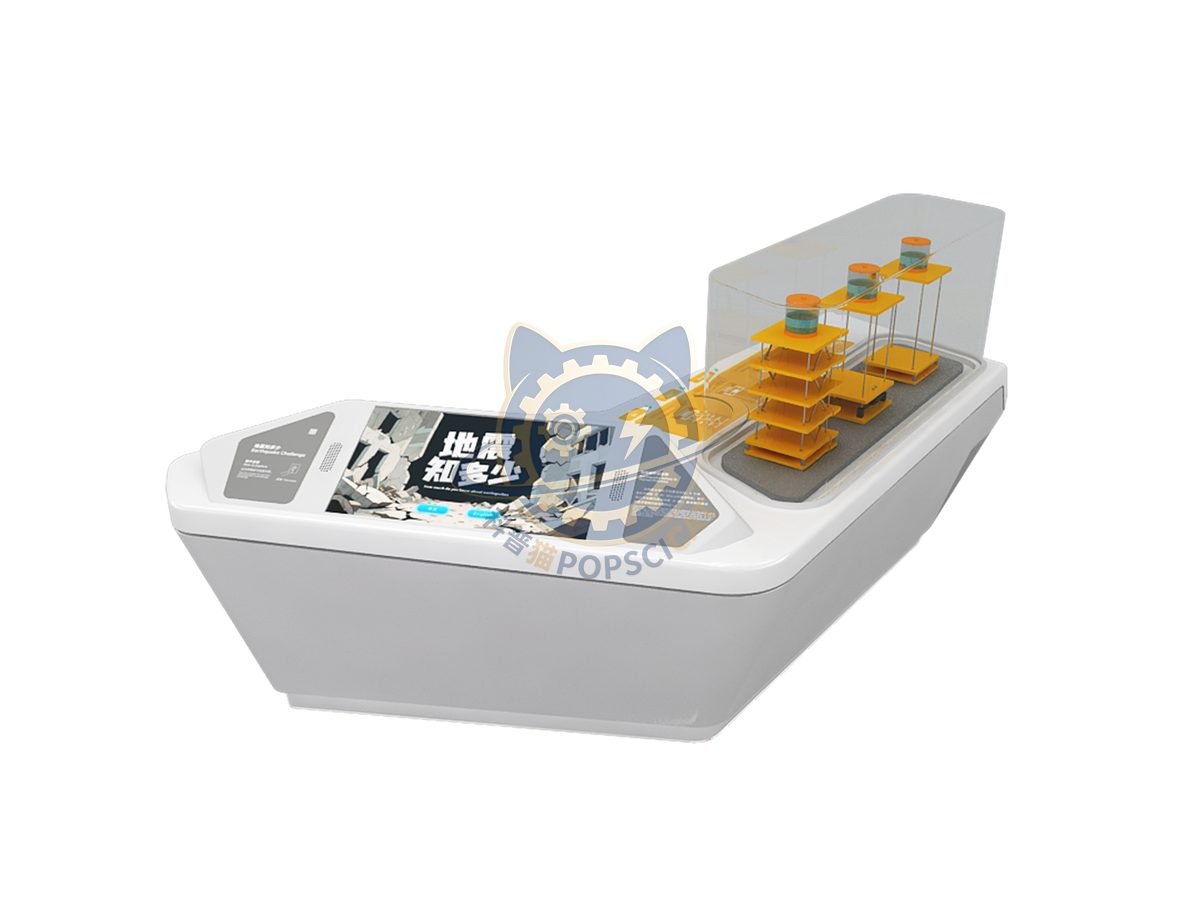
A platform shakes at recorded intensities while a seismograph traces the movement.

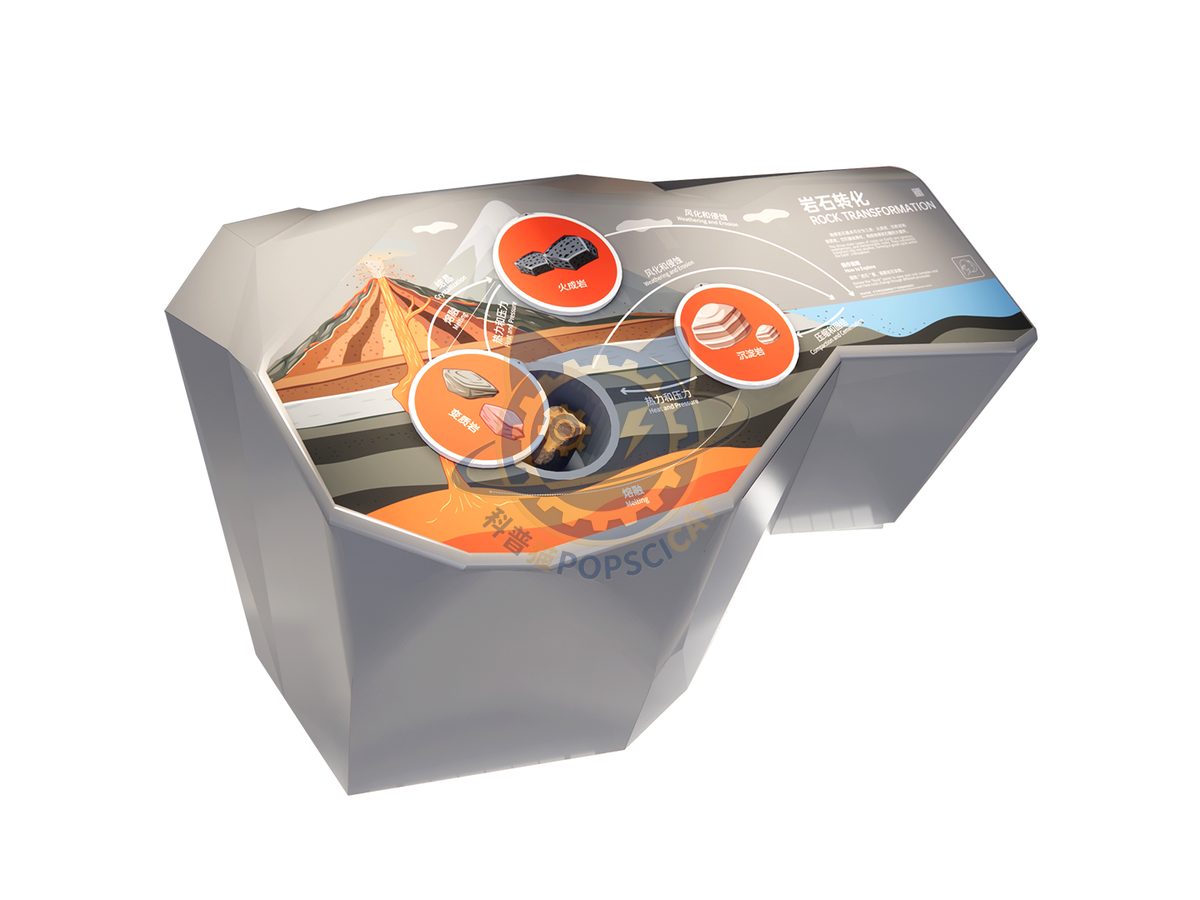
Heat and pressure turn one rock type into another on a turntable.

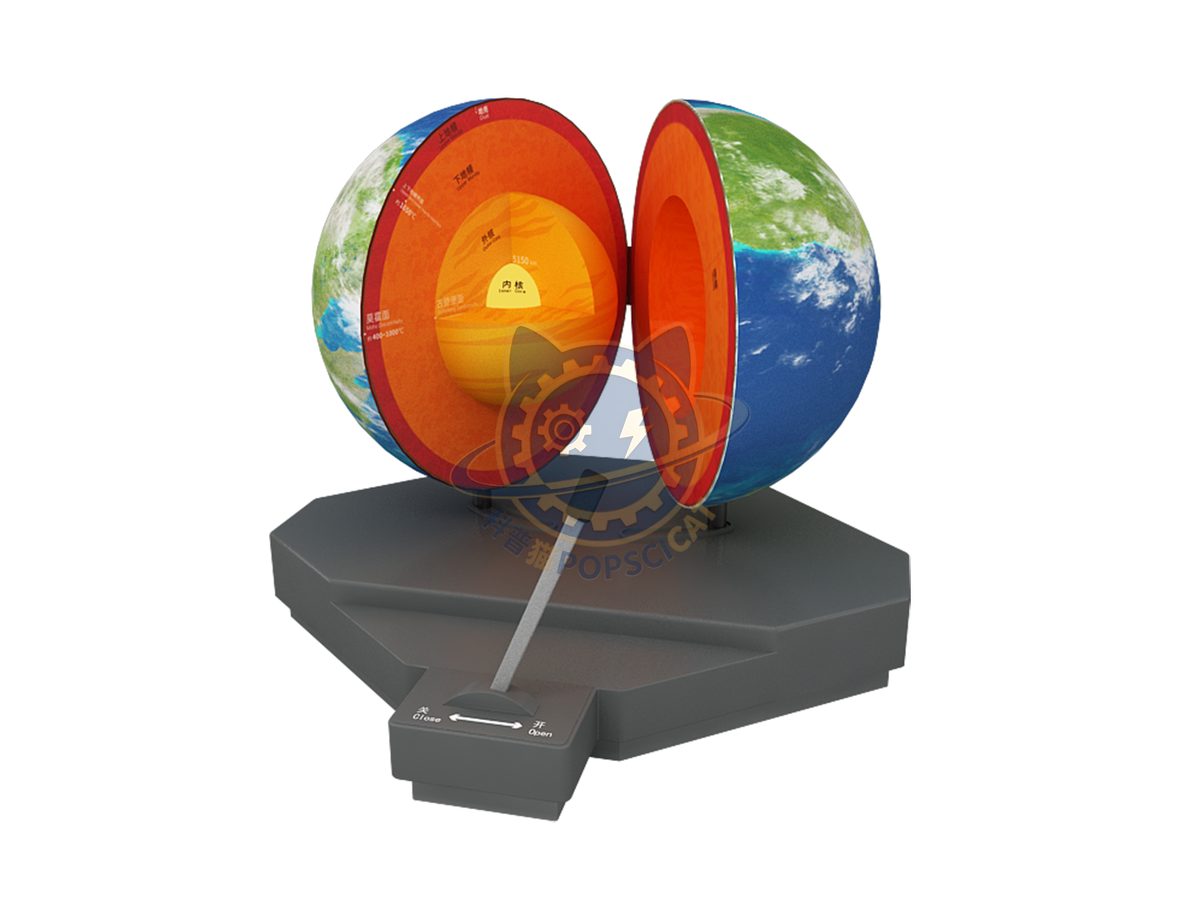
Cut-away globe showing crust, mantle, outer and inner core.
Attach a theme outline, a floor plan, or nothing at all — a photo of the space is enough to start. Quotations are issued against a real exhibit list, not per-square-metre guesses.
Prefer to see the floor before you commit? Factory visits and third-party inspections are welcome.