Do you know how the concept of a "year" came about?In fact, while the Earth is rotating on its axis, it is also orbiting the Sun.
| Category | Technology & Everyday Life |
|---|---|
| Interaction | Hands-on, visitor-operated exhibit |
| Standard size | Built to your floor plan |
| Power | 100–240 V AC, 50/60 Hz, single phase — universal input; no step-down transformer or motor re-tap |
| Supply | Single unit or batch · OEM to your drawing |
| Lead time | Standard 3–6 weeks after deposit (confirmed per contract) |
| Warranty | 1 year, structure and control |
| Documents | Specification sheet · control diagram · spare-part list |
A standard catalogue model: the dimensions, control package and finish are fixed, which is what keeps the price and the lead time predictable. Size, colour and interface language can be adapted without a new design cycle.
Standard models from this range are also listed in our online store, priced in USD — see the price yourself ↗
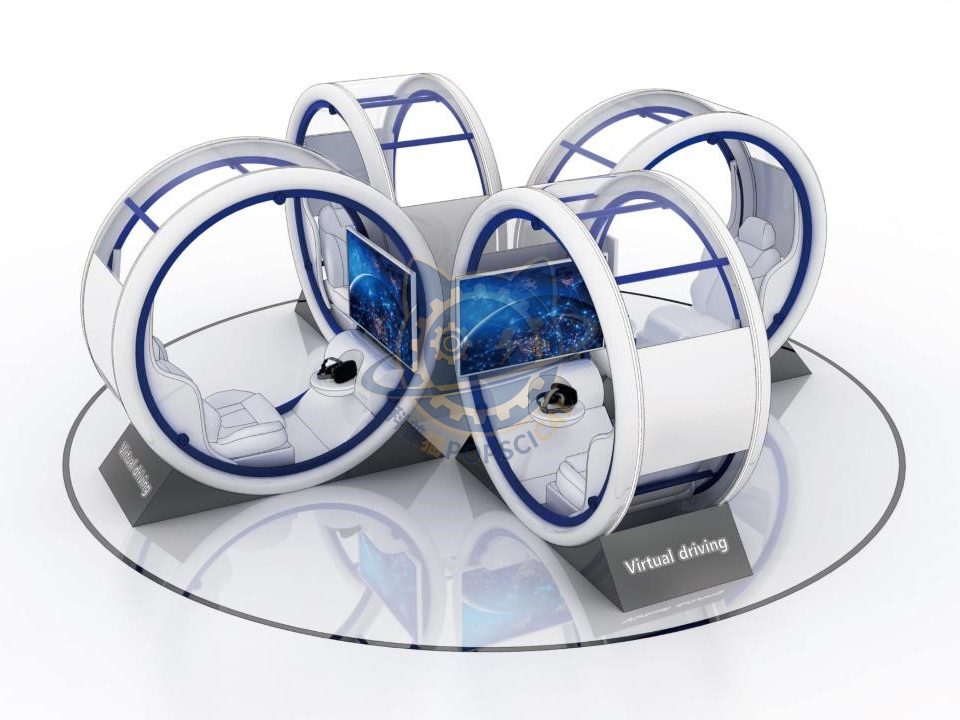
Do you know how the concept of a "year" came about?In fact, while the Earth is rotating on its axis, it is also orbiting the Sun. It takes about 365 days for the Earth to complete one orbit around the Sun, which is what we usually call a year. We call the Earth's motion around the Sun its revolution. The direction of Earth's revolution is the same as that of its rotation, both from west to east. The Earth's orbit around the Sun is elliptical, and the Sun is located at one of the foci of this ellipse. Therefore, the Earth is sometimes farther away from the Sun and sometimes closer. The farther away it is, the slower its orbital speed. The distance between the Earth and the Sun is farthest in early July, and closest in early January. In the solar system, other planets, comets, and asteroids also revolve around the Sun, each with its own orbital speed. Among them, Mercury can orbit the Sun in 88 Earth days, with an average speed of 47.89 kilometers, making it the fastest-moving planet in the solar system. It is precisely because Earth has many unique characteristics that differ from other planets that life exists on it. These unique characteristics include Earth's orbital period. Think about what would happen to life on Earth if the Earth's orbital speed changed. You can operate the touch-interactive joystick area to take a look. It is built for unsupervised public use: surfaces are robust and wipe-clean, there are no loose parts, and the interface works without instruction, so a child of about six can operate it on a busy floor.
Interaction type: Hands-on, visitor-operated exhibit. The unit is designed for unsupervised public use: controls are recessed or shielded, moving parts are enclosed, and the interface is operable by a child of about six with no instruction. Where a screen is used, the language can be switched without changing the hardware, and the content can be replaced on site.
Every unit leaves the factory after a running test: mechanisms cycled, electronics burned in, edges dressed, fixings torqued and marked. Wear parts — bearings, sliders, lamps, belts, touch panels — are modular and listed on the spare-part sheet, so a venue technician can replace them without returning the exhibit. Crating is plywood with foam blocking; the loading plan and packing list travel with the shipment.
Other models from the Technology & Everyday Life line, all held to the same specification and the same control package.

A fixed-base cockpit with a city route and a reaction-time score.

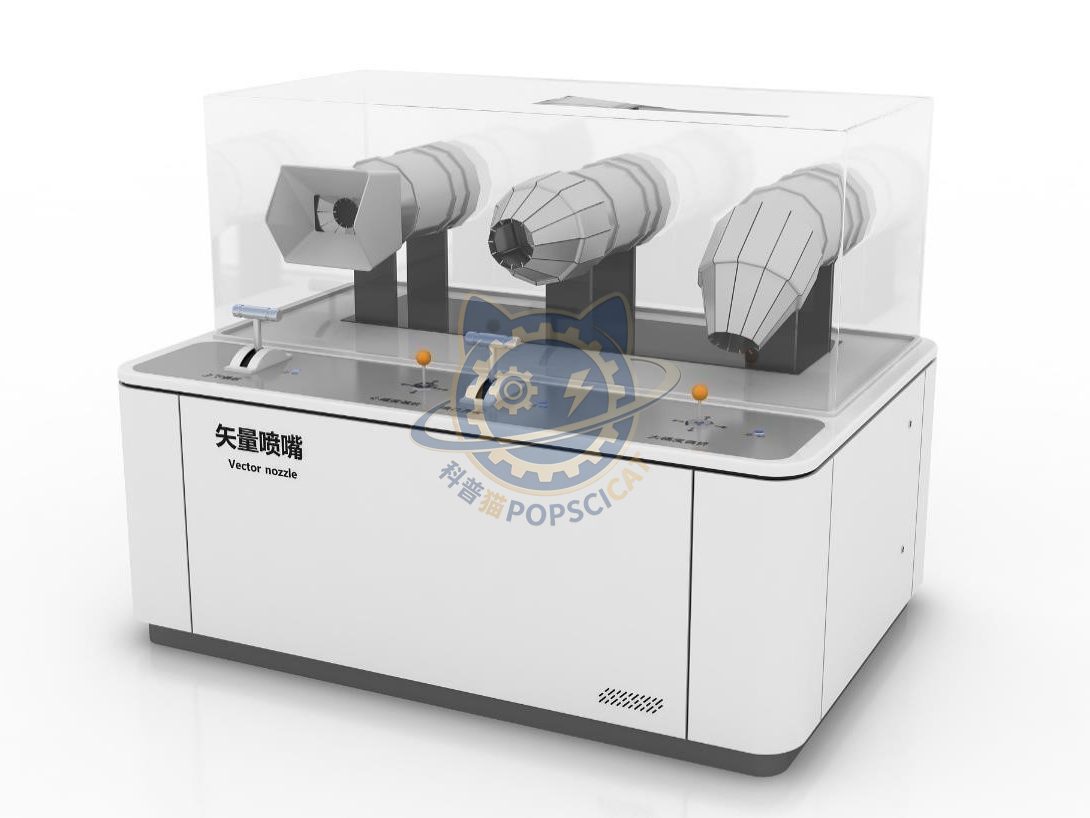
Tilt the nozzle and watch the thrust vector swing.

Angle the panel, watch the current and race the model.

Forty movements from water clock to quartz all reading the same second.
Attach a theme outline, a floor plan, or nothing at all — a photo of the space is enough to start. Quotations are issued against a real exhibit list, not per-square-metre guesses.
Prefer to see the floor before you commit? Factory visits and third-party inspections are welcome.