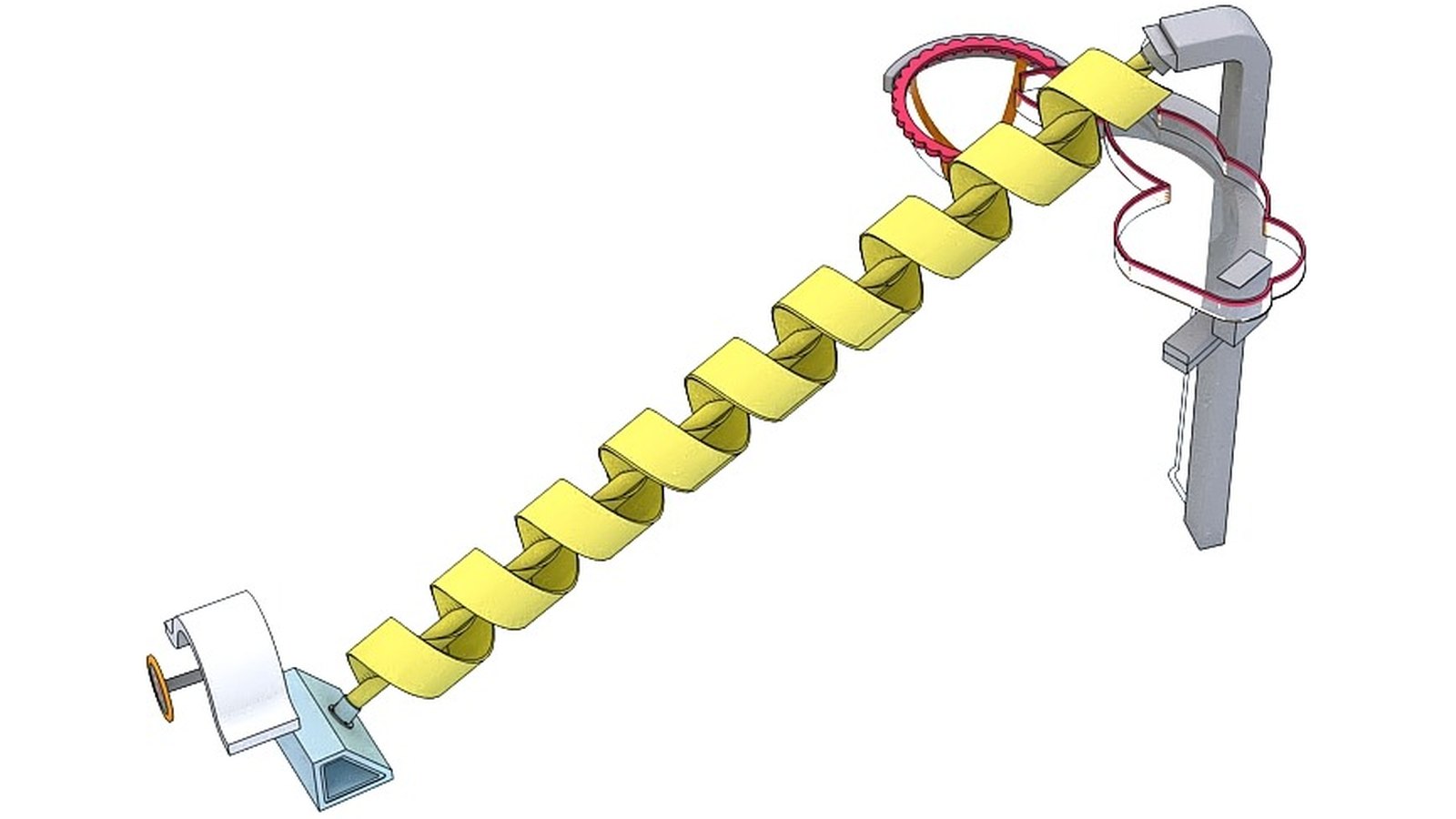
An open helical screw that lifts water two metres by hand.
| Group | Lifting & Pumping |
|---|---|
| Standard size | 2600 × 1300 × 1700 mm |
| Water | Recirculated from the basin; the element drains back by gravity |
| Power | 220–240 V, single phase — pump duty set by the zone loop |
| Materials | SUS304 frame · HDPE touch surfaces · cast acrylic windows |
| Supply | Single unit or batch · OEM to your drawing |
| Lead time | Standard 4–8 weeks after deposit (confirmed per contract) |
| Warranty | 1 year, structure and control |
| Documents | Specification sheet · control diagram · spare-part list |
A standard element: the geometry and the finish are fixed, which is what keeps the price and the lead time predictable. Size, colour and the way it mounts to the basin can be adapted without a new design cycle.
An open helix in a half-pipe trough, set at a shallow angle with its foot in the basin. Visitors turn a crank at the low end; water climbs the flights and spills into a channel at the top, which carries it back to the pool.
The screw does not scoop. Each rotation traps a slug of water between two flights and pushes it up the incline, so the throughput depends on the angle and the clearance between flight and trough. Set it too steep and the water runs back faster than it is lifted — which is why the trough sits shallow and the flights are closely spaced.
One child turns, another watches the water arrive at the top. The crank is geared so the screw can be started from rest by a six-year-old, and the trough is open on the visitor side so the water can be followed the whole way up.
Bolted to the pool apron rather than standing in the water. The discharge channel returns to the basin by gravity; the intake carries a stainless strainer basket so loose props cannot get into the flights.
Other elements from the same group. All held to the same specification, the same material palette and the same control package.

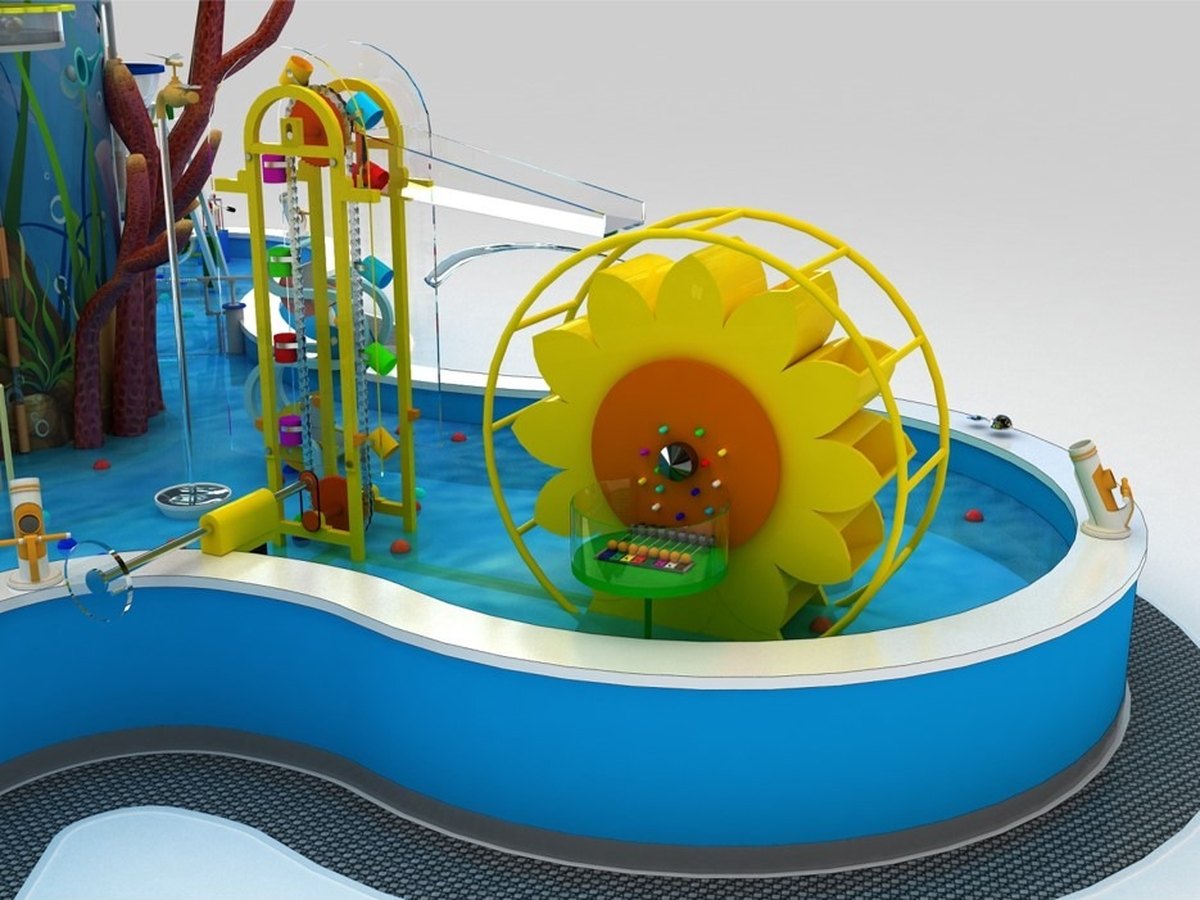
A chain of small buckets on a wheel — the oldest water lift there is.

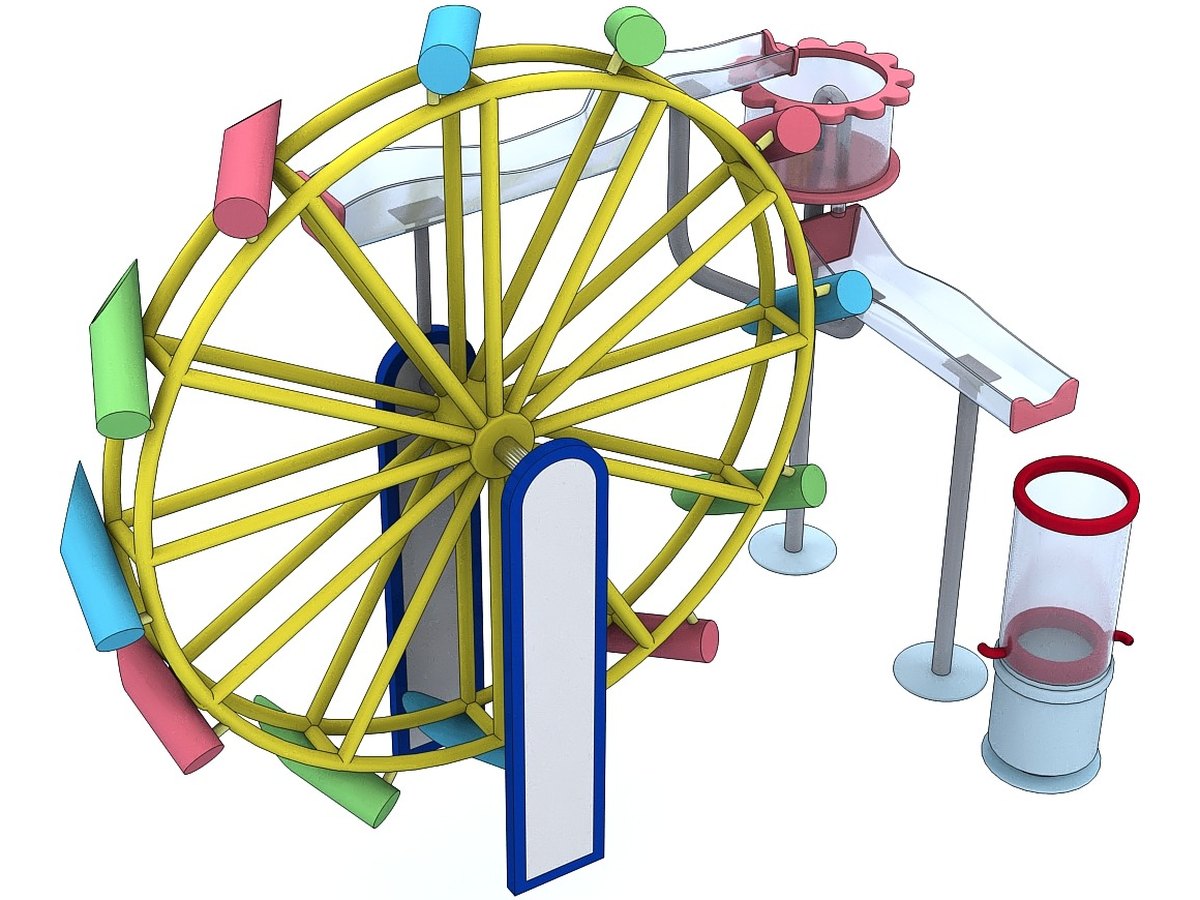
A large spoked wheel with bamboo-section scoops, fed by a hand pump.

Fills until it is top-heavy, then dumps itself. Nobody has to explain it.

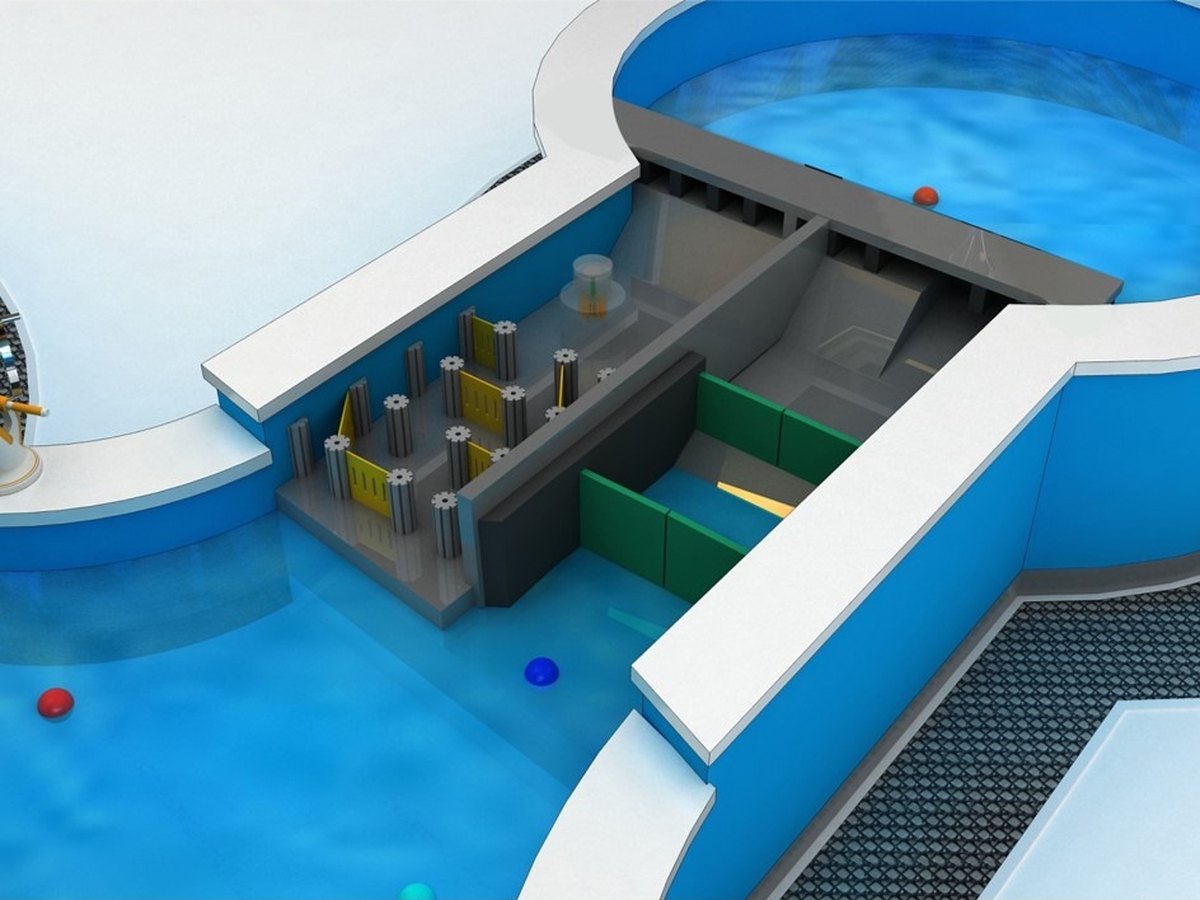
A model dam with working gates — hold the water back, then let it go.
Attach a theme outline, a floor plan, or nothing at all — a photo of the space is enough to start. Quotations are issued against a real exhibit list, not per-square-metre guesses.
Scan to add us