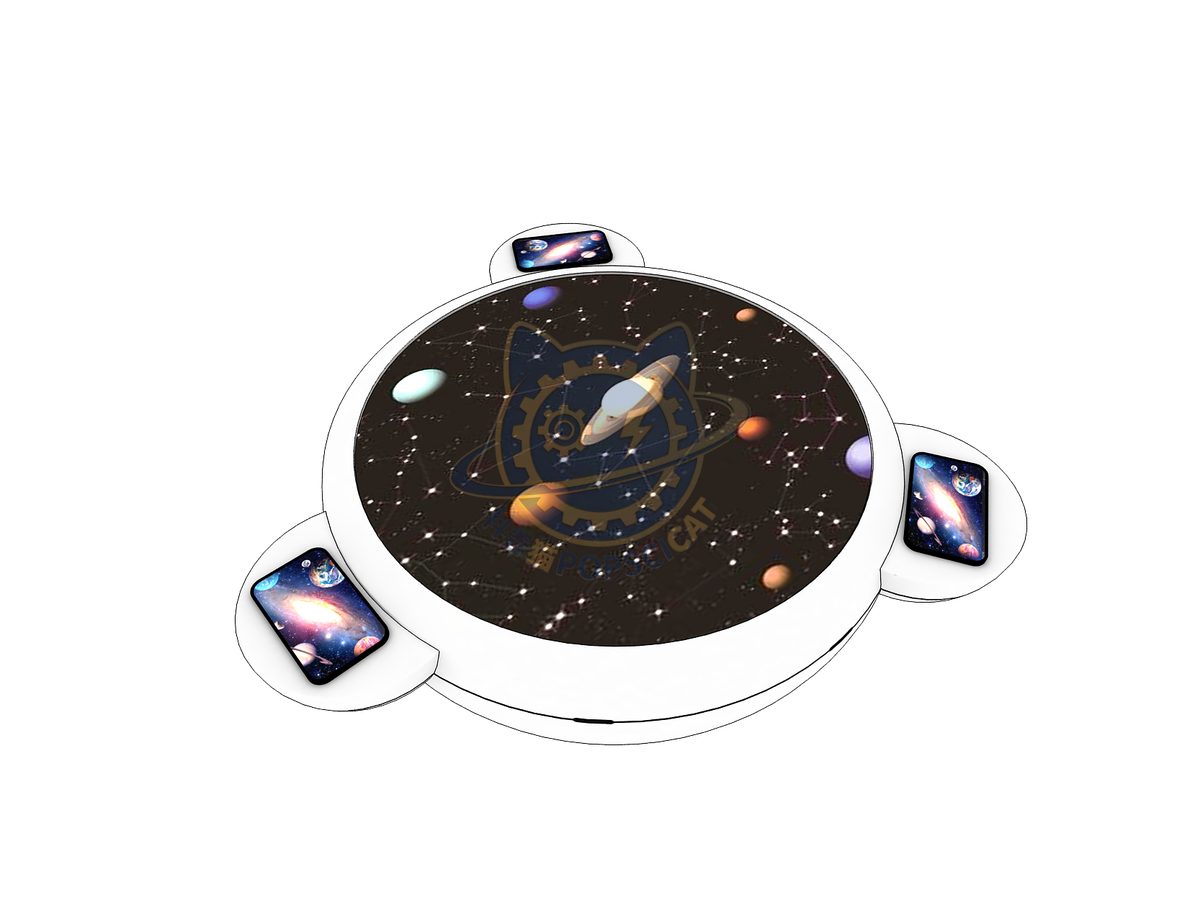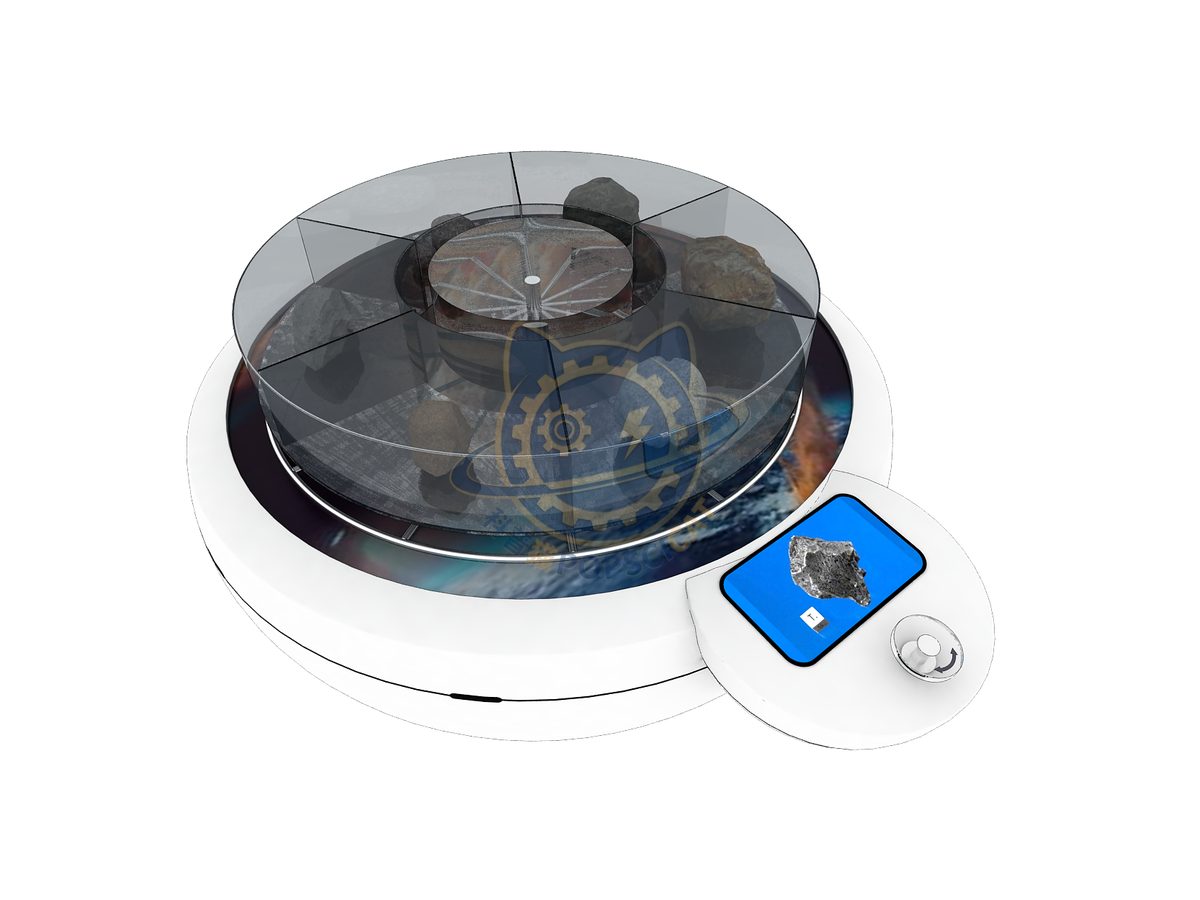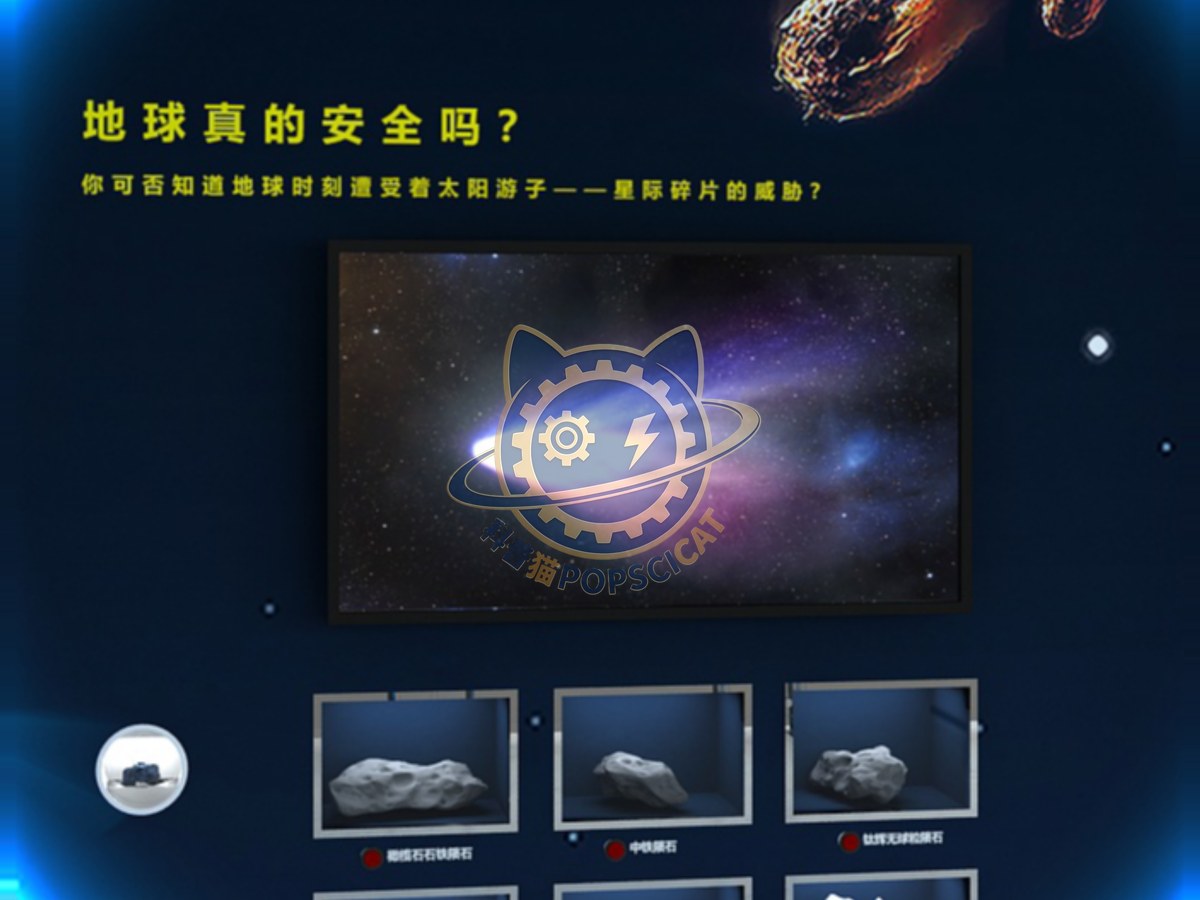
Most meteorites come from the asteroid belt between Mars and Jupiter, which is the home of meteorites.
| Category | Aerospace & Astronomy |
|---|---|
| Interaction | Hands-on, body-and-mind interaction |
| Standard size | Built to your floor plan |
| Power | 100–240 V AC, 50/60 Hz, single phase — universal input; no step-down transformer or motor re-tap |
| Supply | Single unit or batch · OEM to your drawing |
| Lead time | Standard 3–6 weeks after deposit (confirmed per contract) |
| Warranty | 1 year, structure and control |
| Documents | Specification sheet · control diagram · spare-part list |
A standard catalogue model: the dimensions, control package and finish are fixed, which is what keeps the price and the lead time predictable. Size, colour and interface language can be adapted without a new design cycle.
Standard models from this range are also listed in our online store, priced in USD — see the price yourself ↗
Most meteorites come from the asteroid belt between Mars and Jupiter, which is the home of meteorites. These asteroids collide with each other constantly as they move, and sometimes they are knocked out of their orbits and head towards Earth. During their rapid descent, they generate light and heat due to friction with Earth's atmosphere. This phenomenon is what we commonly refer to as a meteor. When the external temperature and high pressure are out of balance with the internal conditions, the celestial body will explode, forming a meteor shower. Those that do not burn up completely fall to Earth and become meteorites. A small number of meteorites come from the Moon and Mars, and are even more valuable. Compared to ordinary rocks, meteorites generally have an irregular shape. This is due to the black fusion crust formed by high-temperature burning as the meteorite passes through the atmosphere, as well as the aerodynamic marks left by air friction. If a meteorite falls to Earth, will it have a serious impact on our lives? We don't need to worry, because only when a small celestial body with a mass exceeding 100,000 tons strikes the Earth will it form a crater and cause tsunamis and earthquakes. However, the probability of such an impact is very low, occurring only once every few tens of millions of years. Moreover, with advancements in technology, we are now able to observe and calculate the orbits of potentially threatening celestial bodies, allowing us to take preventive measures in advance. It is built for unsupervised public use: surfaces are robust and wipe-clean, there are no loose parts, and the interface works without instruction, so a child of about six can operate it on a busy floor.
Interaction type: Hands-on, body-and-mind interaction. The unit is designed for unsupervised public use: controls are recessed or shielded, moving parts are enclosed, and the interface is operable by a child of about six with no instruction. Where a screen is used, the language can be switched without changing the hardware, and the content can be replaced on site.
Every unit leaves the factory after a running test: mechanisms cycled, electronics burned in, edges dressed, fixings torqued and marked. Wear parts — bearings, sliders, lamps, belts, touch panels — are modular and listed on the spare-part sheet, so a venue technician can replace them without returning the exhibit. Crating is plywood with foam blocking; the loading plan and packing list travel with the shipment.
Other models from the Aerospace & Astronomy line, all held to the same specification and the same control package.

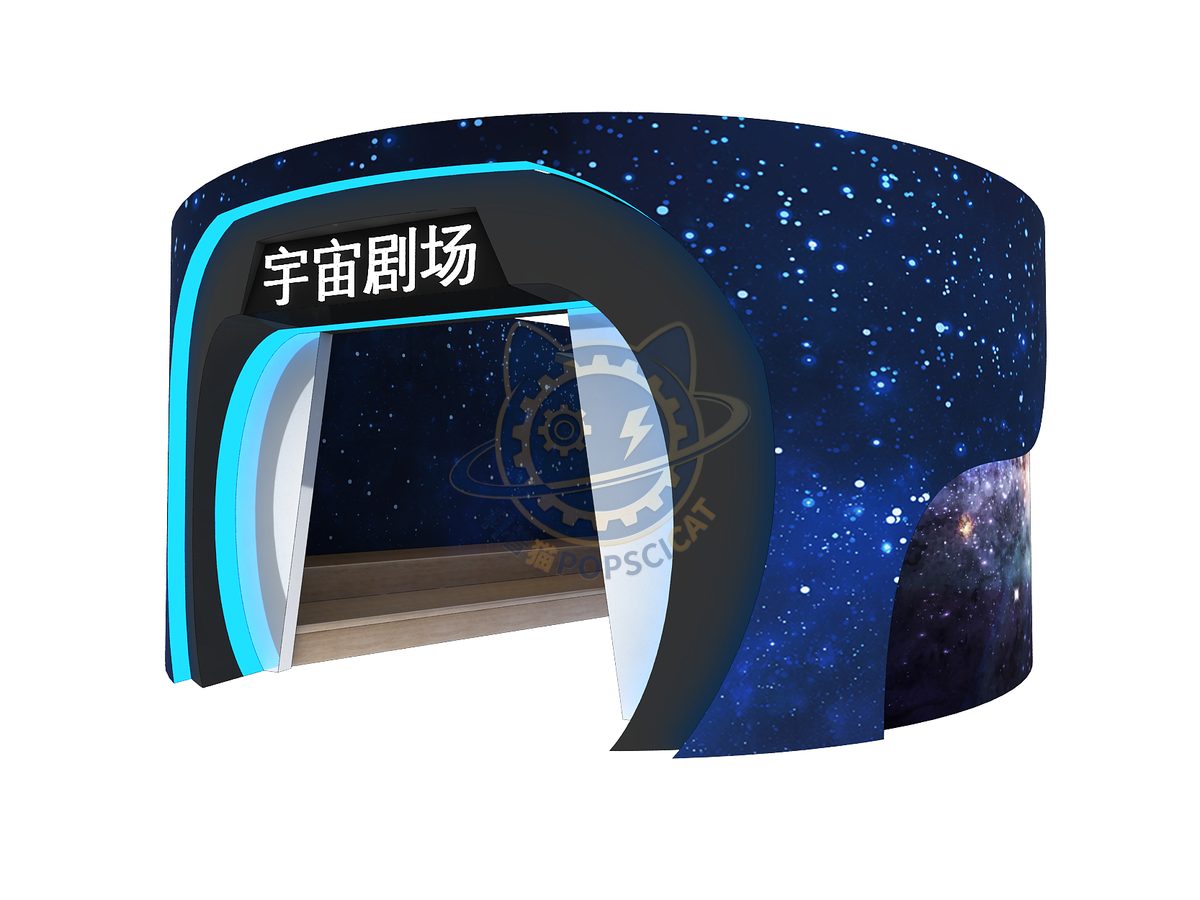
A curved screen and twelve seats for a six-minute flight.

Move a planet across the band and watch liquid water survive or boil.

A comet model whose tail always points away from the light source.

Real meteorite samples beside a simulated entry trail.
Attach a theme outline, a floor plan, or nothing at all — a photo of the space is enough to start. Quotations are issued against a real exhibit list, not per-square-metre guesses.
Prefer to see the floor before you commit? Factory visits and third-party inspections are welcome.