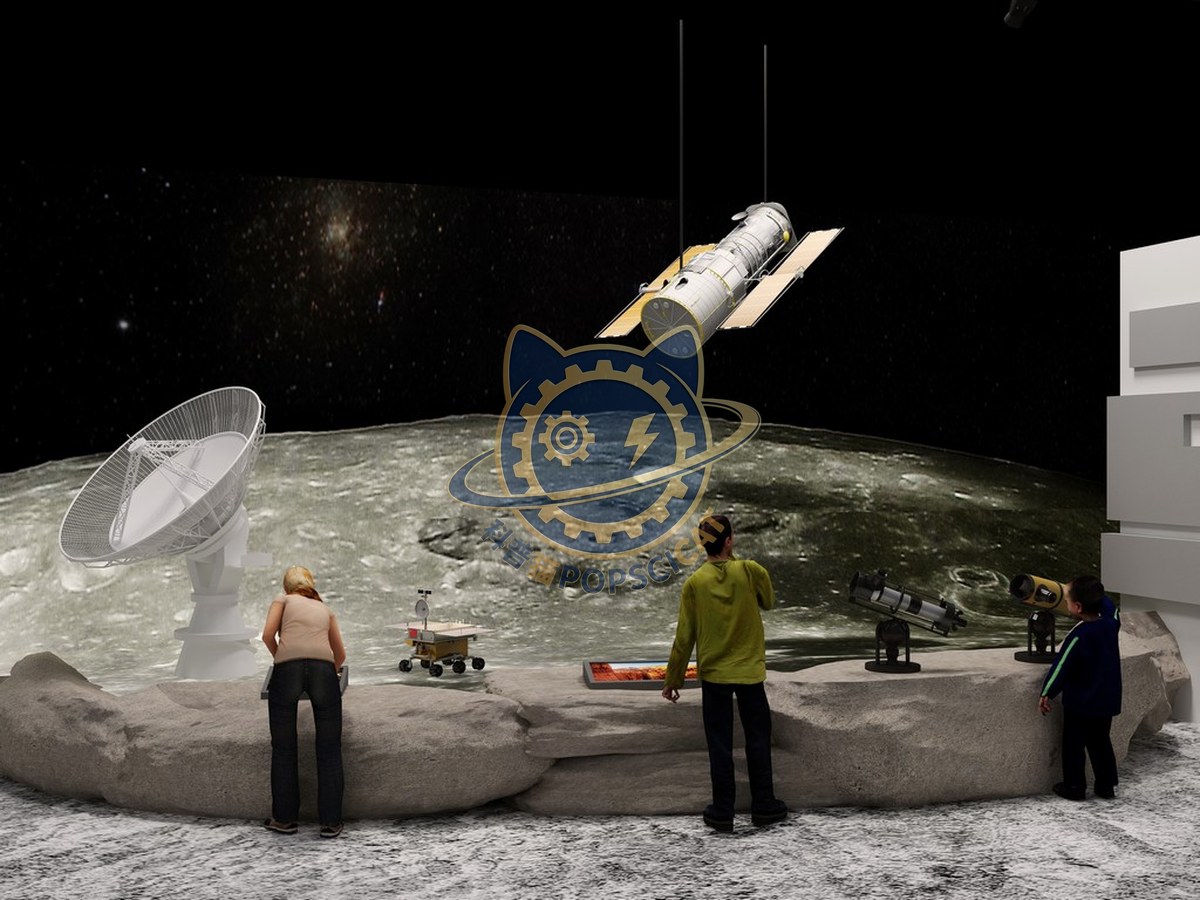
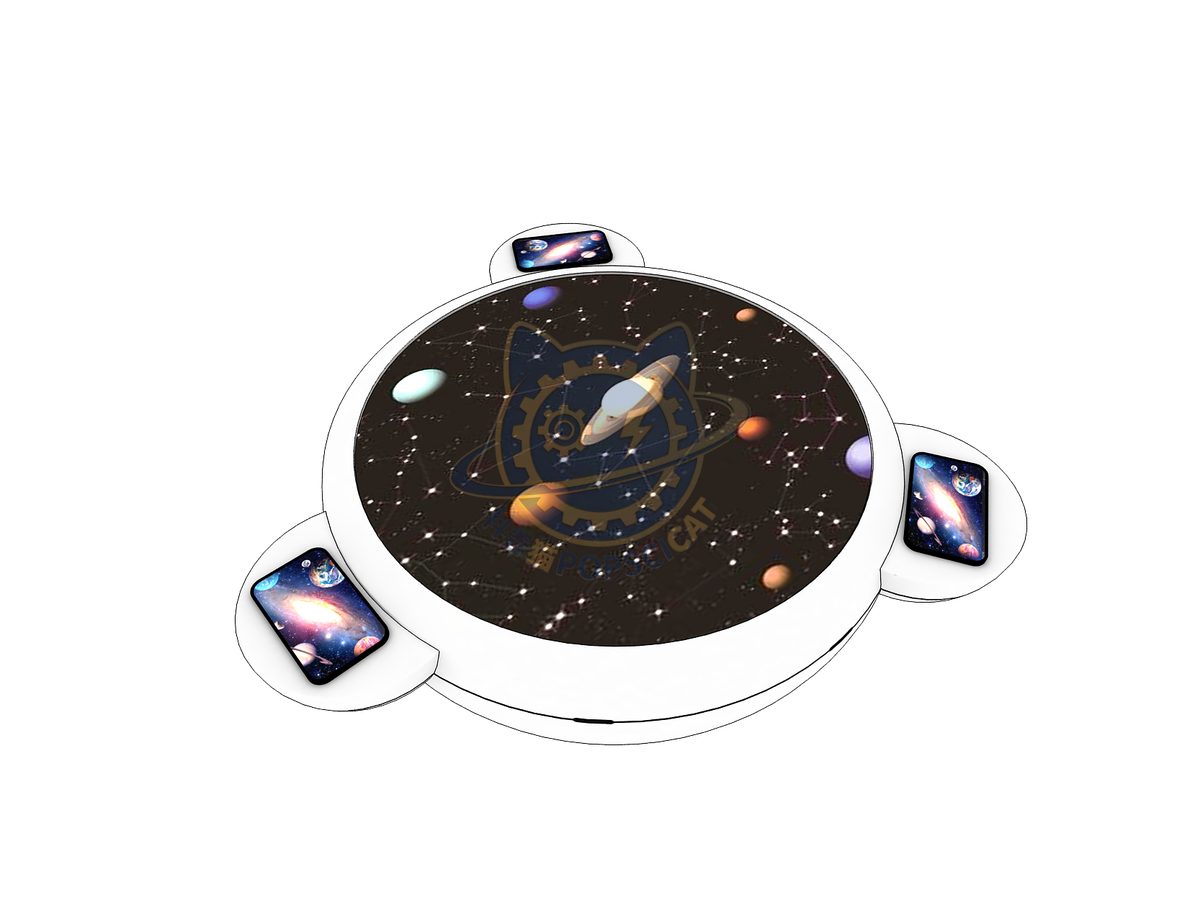
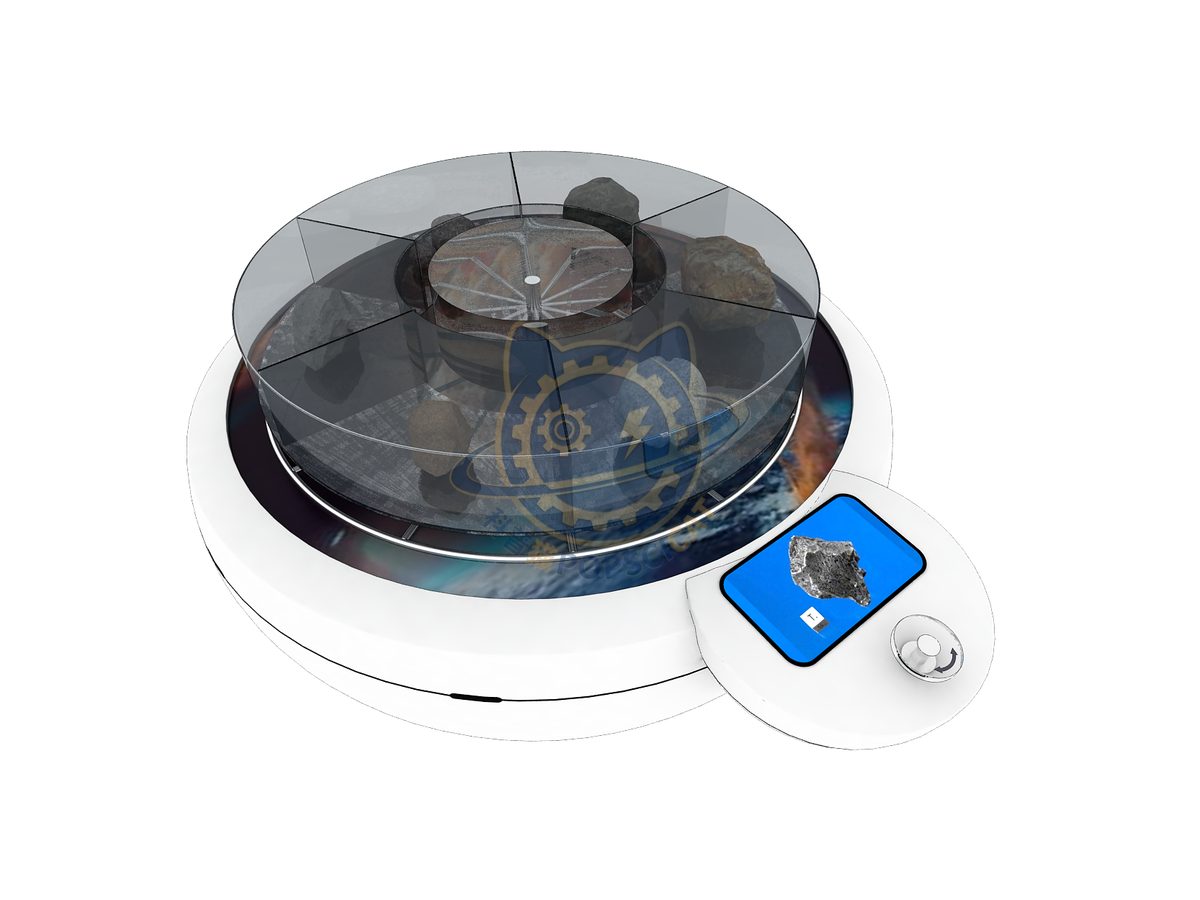
At 1:30 a.m. on December 2, 2013, China successfully launched the Chang'e 3 probe into orbit from the Xichang Satellite Launch Center. At 4:35 a.m. on December 15, 2013, the Chang'e-3 lander separated from the rover, and the "Yutu" rover successfully landed on the lunar surface. Rovers are used for remote missions on the Moon and planets, as humans cannot easily access them. Rovers have been used to explore Mars and the Moon. It takes time to send operating instructions from Earth, and they cannot be repeated. A series of commands must be sent in the form of data packets. Many advanced rovers are programmed to make intuitive decisions on their own. We can use the touchscreen to make Yutu roam the lunar surface and learn about it through animations. The Yutu lunar rover is China's first lunar rover, and together with the lander, it forms the Chang'e 3 probe. The Yutu lunar rover has a design mass of 140 kilograms, is powered by solar energy, and can withstand extreme environments such as the vacuum of the lunar surface, strong radiation, and extreme temperatures ranging from -180°C to +150°C. The lunar rover is capable of climbing slopes of 20 degrees and overcoming obstacles of 20 centimeters. It is equipped with scientific exploration instruments such as a panoramic camera, an infrared imaging spectrometer, a lunar radar, and a particle-induced X-ray spectrometer. The Yutu lunar rover conducted a 114-meter geological survey around the C1 crater, obtaining a wealth of valuable lunar geological data. The results of the work of numerous scientists based on this data were published in the world's leading scientific journal, Science. Data detected by the lunar radar carried by the "Yutu" rover show that the subsurface of the Chang'e-3 landing site is divided into at least 9 layers, indicating that multiple geological processes have occurred there. This is of great significance for exploring the evolutionary history of lunar magma and its subsequent modification. This was also the first time that scientific results from China's Chang'e lunar exploration program were published in a top international academic journal since the program's inception. On July 31, 2016, the Yutu rover ceased operation. The Yutu rover was expected to be in service for 3 months, but it exceeded expectations and served for 2 and a half years, or a total of 972 days, making an indelible contribution to China's lunar exploration program. It is built for unsupervised public use: surfaces are robust and wipe-clean, there are no loose parts, and the interface works without instruction, so a child of about six can operate it on a busy floor.