A children's museum lives or dies on one question: does a four-year-old see it from the door and run to it, or drift to the next bright object? The ten below are not catalogue parts or tabletop novelties. Every one is a room-sized anchor — the kind of exhibit that fills a corner, pulls a queue, and becomes the photo parents take. We would put these on a floor tomorrow, and the reason each earns its place is that children return to it, argue over it, and drag a parent back to it.
What the ten have in common
We did not pick these by catalogue. We picked them against three quiet tests, and a unit has to pass all three before it goes on a children's floor:
- A child can start it alone. If the exhibit needs an adult to switch it on, it is a display, not a play station. Every item here is something a toddler or a seven-year-old can begin without help.
- It rewards repetition. The second try is more interesting than the first. Children learn by doing the same thing ten times, so the exhibit has to survive ten times in a row without going flat.
- It hides a lesson. The fun is on the surface; the science or the skill is underneath, and no one mentions it. That is how a child "learns through play" instead of being taught.
Read the list that way: the delight is the engine, the hands-on interaction is the method, and the knowledge picked up without being taught is the residue. That order matters — put the lesson first and the child walks away. And note the scale: several of these are metres across, because on a real floor, size is part of the invitation.
1. Joyful Water World — Water Play
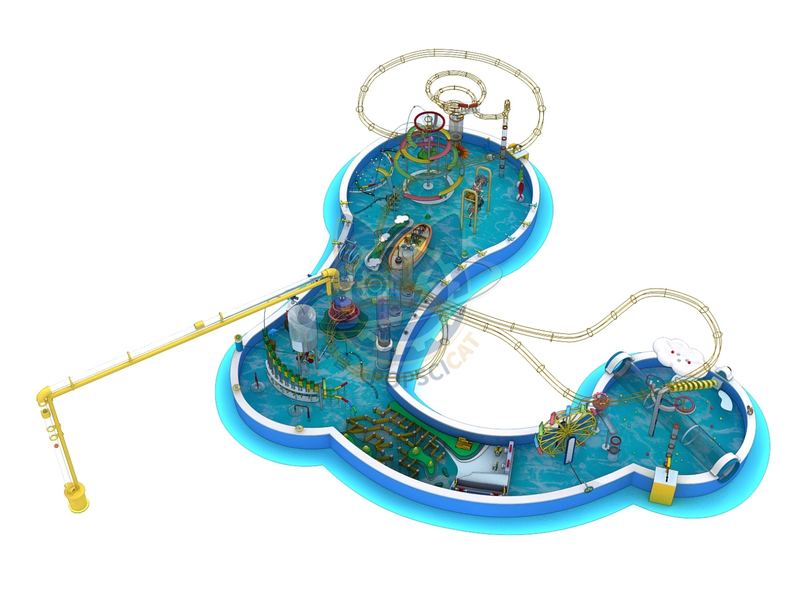
Joyful Water World · 14 × 16 × 4.3 m · Children's Discovery
This is the headline exhibit of the list, and the reason we lead with it: a 14-by-16-metre water playground where children divert channels, crank pumps, and send ocean balls racing along running water. It is the full water world, not a single spout — the kind of installation that anchors an entire early-years zone and keeps a family in one place for the better part of an hour. Standard footprint is 14,000 × 16,000 × 4,300 mm, and it runs on a universal 100–240 V AC supply, so it travels to almost any market without a transformer.
The fun. Water does what the child tells it to. They dam a channel and watch it overflow, they launch a ball upstream and cheer when it beats the current, they get deliberately, happily wet. There is no score and no finish line — the play is the point, and it scales from a cautious three-year-old paddling at the edge to a ten-year-old running the whole circuit.
The interaction. Pumps, gates, and channels are all within reach and all operable without instruction. The ocean ball running path is the clever bit: balls ride the water, vanish into a current, and reappear somewhere the child did not expect, which turns a splash table into a small logistics puzzle.
What they learn without being told. That water has weight, speed, and a path it prefers; that a pump is just a muscle the child controls; and that moving water can move other things. Underneath, it is a first, wordless lesson in flow, force, and cause-and-effect — delivered by play, not by signage.
One practical note: like every water unit, it needs the daily drain-and-refill routine and a floor drain nearby. Site it where a staff member can reach it, pair it with a dry-mat and a "you will get a little wet" sign, and it runs happily for years.
2. Round Ball Rolling – A Bountiful Harvest of Fruits — Ball Play
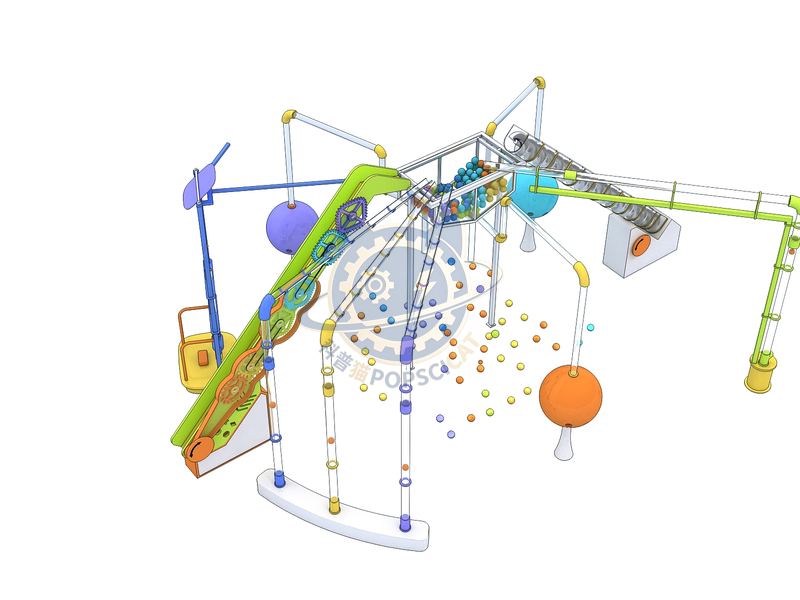
Round ball rolling – a bountiful harvest of fruits · 10.6 × 7.6 × 4.4 m · Children's Discovery
If Joyful Water World is the wet anchor, this is the dry one. A 10.6-by-7.6-metre mechanical ball maze themed as fruit harvest: balls ride belts, gears, and tilting tracks through a little orchard of mechanisms. It is the unit we point to when a client says "show me something that looks busy from across the room" — because it always is. Standard build is 10,600 × 7,600 × 4,400 mm.
The fun. A ball becomes an apple, travels a conveyer, drops through a chute, and rolls back to be sent again. Children invent games around it — race two balls, block a path, build a traffic jam — and the machine keeps rewarding new ideas long after the first novelty passes.
The interaction. Cranks, levers, and turntables move the balls through different transmissions. A child turns something and sees a gear somewhere else turn a ball somewhere else, which is mechanics made visible instead of described.
What they learn without being told. Mechanical transmission — how power and motion pass from one part to the next — plus the patience of a system that only works when you feed it. It is a factory floor shrunk to child height, and the quiet lesson is that complicated things are just simple parts working together.
3. Round Ball Rolling – Ball Travel — Ball Play
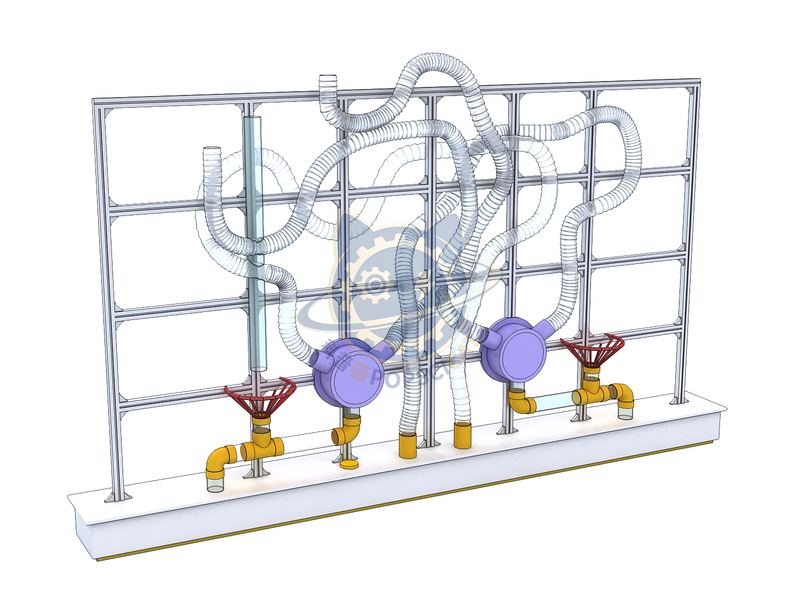
Round Ball Rolling – Ball Travel · 6.6 × 0.77 × 4.0 m · Children's Discovery
The second ball machine on the list, and the one children gravitate to because it is tall and unpredictable. At 6,600 × 770 × 4,000 mm, Ball Travel sends balls along different paths controlled by airflow, so no two runs look the same. It is the exhibit that makes a parent stop and watch too.
The fun. Children load balls at the bottom and watch them climb, loop, and tumble back down a track they cannot fully predict. The pleasure is in the loop itself: a system that never stops, that they helped feed, that does something different every time a ball takes a fork in the track.
The interaction. A child drops balls into the hopper and, depending on the path, watches airflow carry them up and around. Two or three children quickly fall into a rhythm — one loads, one watches the top, one collects at the bottom.
What they learn without being told. That moving air has force (the Bernoulli effect, though no one names it), that a ball's path is a balance of pushes, and that gravity is the thing that brings it back. When several children play together they also practise taking turns and coordinating — cooperation disguised as a game.
4. Bring Balloons Home — Airflow
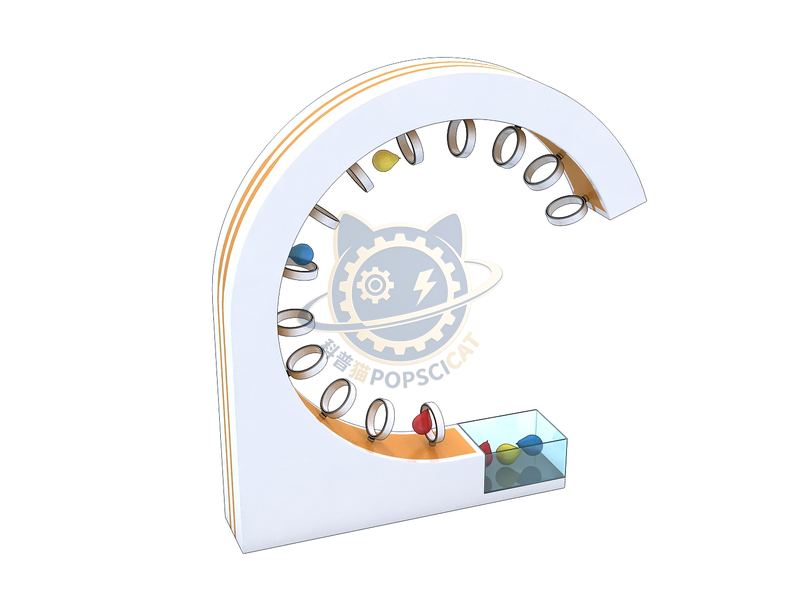
Bring balloons home · 3.0 × 0.5 × 3.2 m · Children's Discovery
A three-metre-tall transparent tower where a hidden fan drives a circular airflow and a balloon rides it up and around, refusing to fall. At 3,000 × 500 × 3,200 mm it is slim enough to slide into a corridor and tall enough to be seen across the hall — exactly the "what is that?" exhibit a floor needs.
The fun. A balloon that will not come down. Children put it in, watch it loop the tower, and try to guess where it will appear next. They learn, by experiment, that blocking the airflow changes the ride.
The interaction. There is almost nothing to operate — which is the point. The child places the balloon and the column does the rest, so even the youngest visitor succeeds on the first try and stays to test variations.
What they learn without being told. The Bernoulli principle in its friendliest form: fast-moving air is lower pressure, and that low pressure holds the balloon up. They feel lift before they ever hear the word, and they learn that "invisible" does not mean "not there".
5. Shining Dots — Light & Pixels
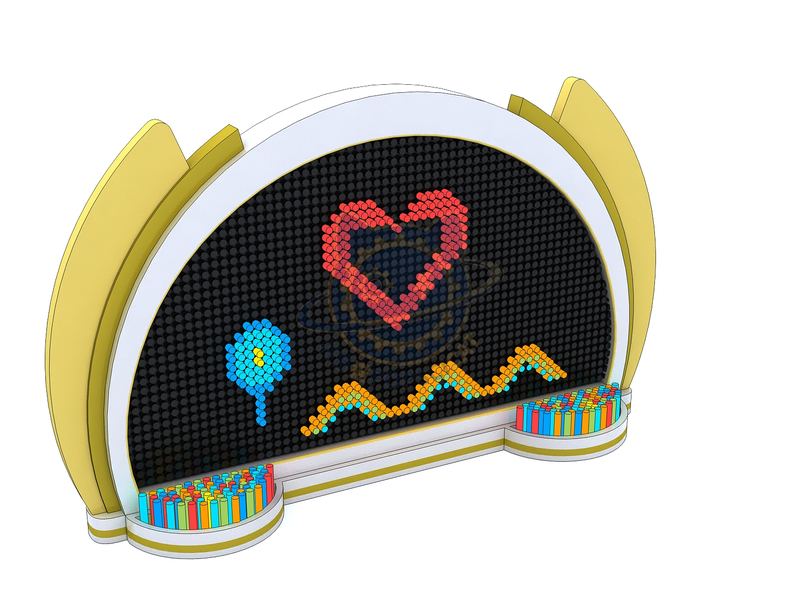
Shining dots · 3.6 × 0.6 × 2.1 m · Children's Discovery
A three-and-a-half-metre light wall built from coloured acrylic rods that act as individual "pixels". At 3,600 × 600 × 2,100 mm it is a glowing slice of the room that invites a child to make a picture out of points of light — and accidentally learn what every screen is made of.
The fun. They poke the rods, light a pattern, and discover that any shape is just many points arranged well. Groups of children cooperate on a giant smiley or spell a name, and the wall turns a solo activity into a shared one.
The interaction. Touching and turning the rods changes which points glow; the combination of colours and positions is the child's canvas. No screen, no button — just light and fingers.
What they learn without being told. The concept of a pixel: that every image, on a phone or a billboard, is built from tiny points of light. It is a quiet, foundational idea about how modern images work, delivered as a glowing toy.
6. See Who Jumps High — Airflow Pressure
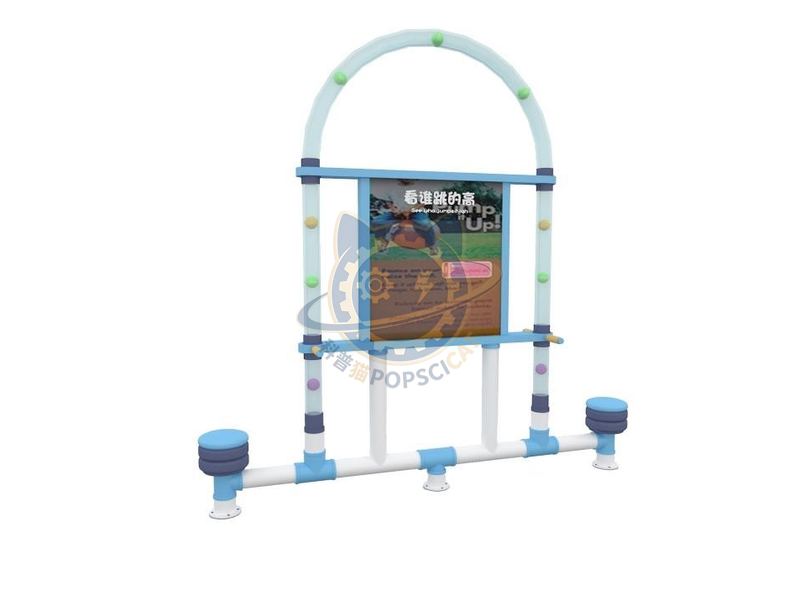
See who jumps high · 2.4 × 0.4 × 2.3 m · Children's Discovery
Two tyre-seat air compressors launch coloured balls up a transparent pipe, and children race them. At 2.4 × 0.4 × 2.3 m it is a compact, high-energy exhibit that turns the abstract idea of air pressure into a competition a five-year-old can win.
The fun. Sit, pump, and watch your ball climb faster than your friend's. The race is instant and repeatable, so the queue never thins — each round is a new match.
The interaction. A child compresses air with their own weight on the seat; the pressurised air pushes a ball up the tube. The harder and smoother the pump, the higher the ball goes, so the body learns the relationship by feel.
What they learn without being told. That compressed air is a force you can store and release, and that pressure moves things. It is a first, physical lesson in pneumatics — the same principle behind air brakes and dentists' drills — hidden inside a race.
7. Happy Water World – Water Vortex — Water Play
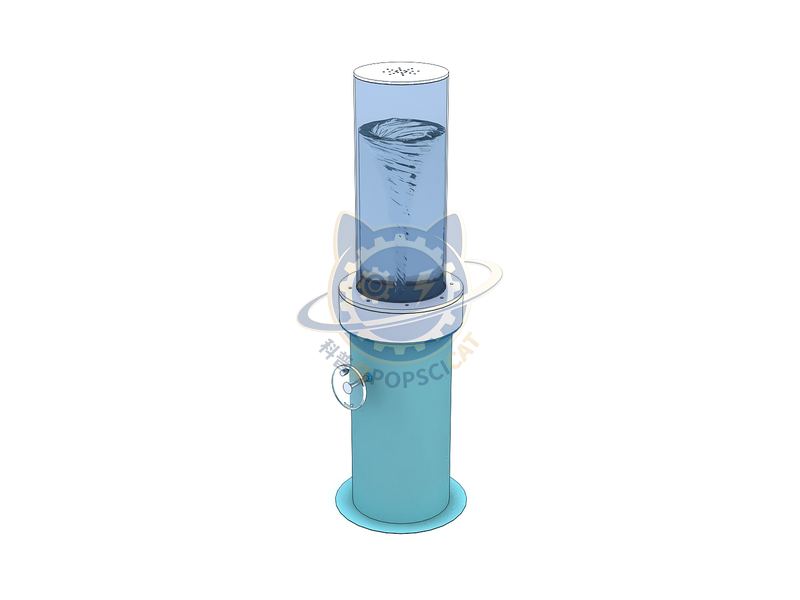
Happy Water World – Water Vortex · 520 × 450 × 1500 mm · Children's Discovery
A slim standing vortex column that shows children the magic of eddies. Smaller than the full water world (520 × 450 × 1,500 mm), it is the perfect companion piece — a focused, single-phenomenon station that fits where the big playground will not.
The fun. A child sets the water spinning and watches a stable whirlpool form, then break apart, then form again. The spinning column is hypnotic, and trying to "catch" the vortex becomes its own game.
The interaction. Turn the flow, watch the spin, change the speed. The control is direct and the response is immediate, so cause and effect stay visible.
What they learn without being told. That spinning water makes a funnel, and that big whirlpools in oceans and bathtubs obey the same rule (the Coriolis effect, though we never say so). A tiny, hands-on window into a global pattern.
8. Sounds of Nature — Sound
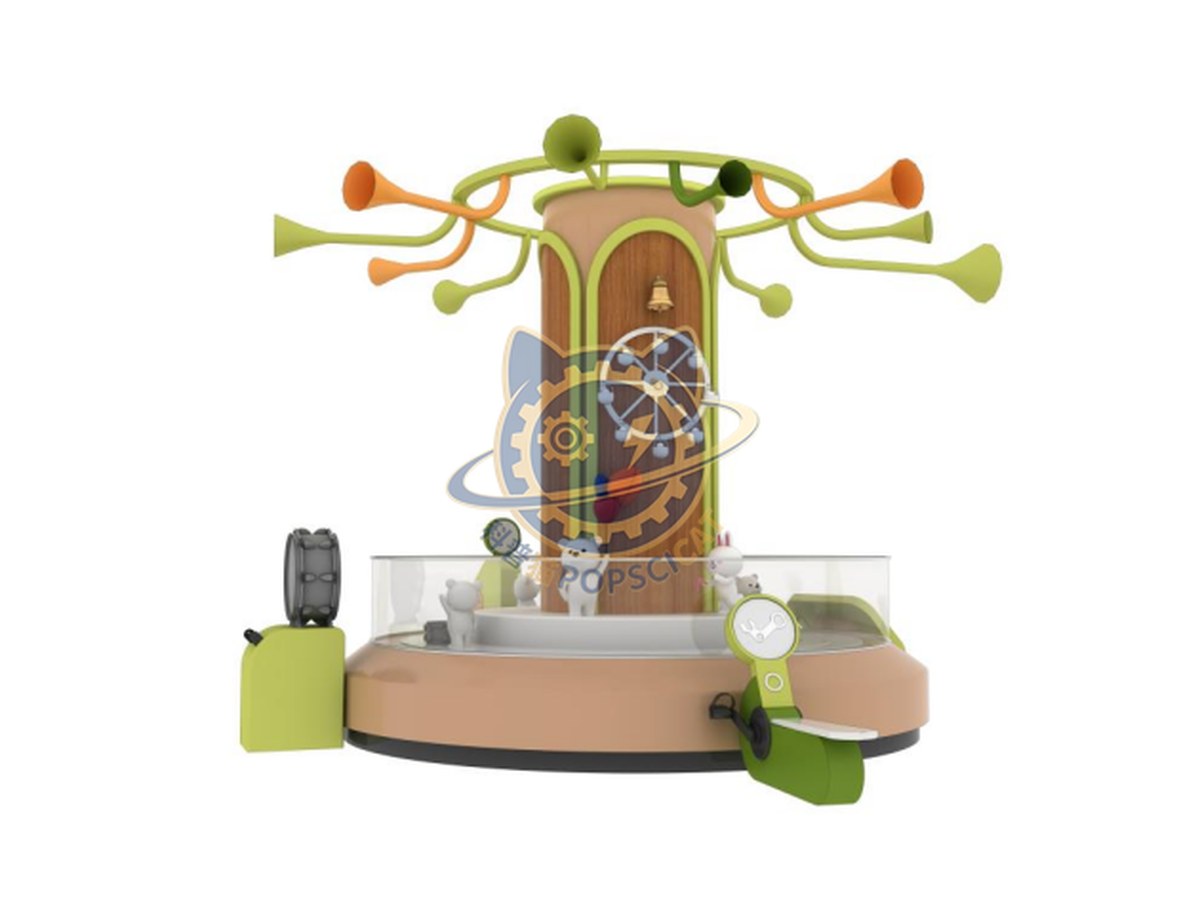
Sounds of Nature · custom size · Children's Discovery
A soundscape station where children hear, isolate, and mix the sounds of the natural world. Built for unsupervised public use — robust, wipe-clean surfaces, no loose parts — it works without instruction, so a six-year-old can run it on a busy floor.
The fun. The listening game. A child hears a rustle, a bird, a stream, and tries to point to its source; add the layering controls and it becomes a personal sound map of a forest or a shore.
The interaction. Listen, decide, combine. No reading, no instructions; it works from age three up, and it is often the exhibit where a shy child plays with someone else rather than alongside them.
What they learn without being told. That sound comes from a source, that they can tell roughly where it is, and the difference between a high note and a low one. It is ear-training and a first music lesson, and the moment many children realise their ears can "see".
9. How Does Animation Move? — Media & Perception
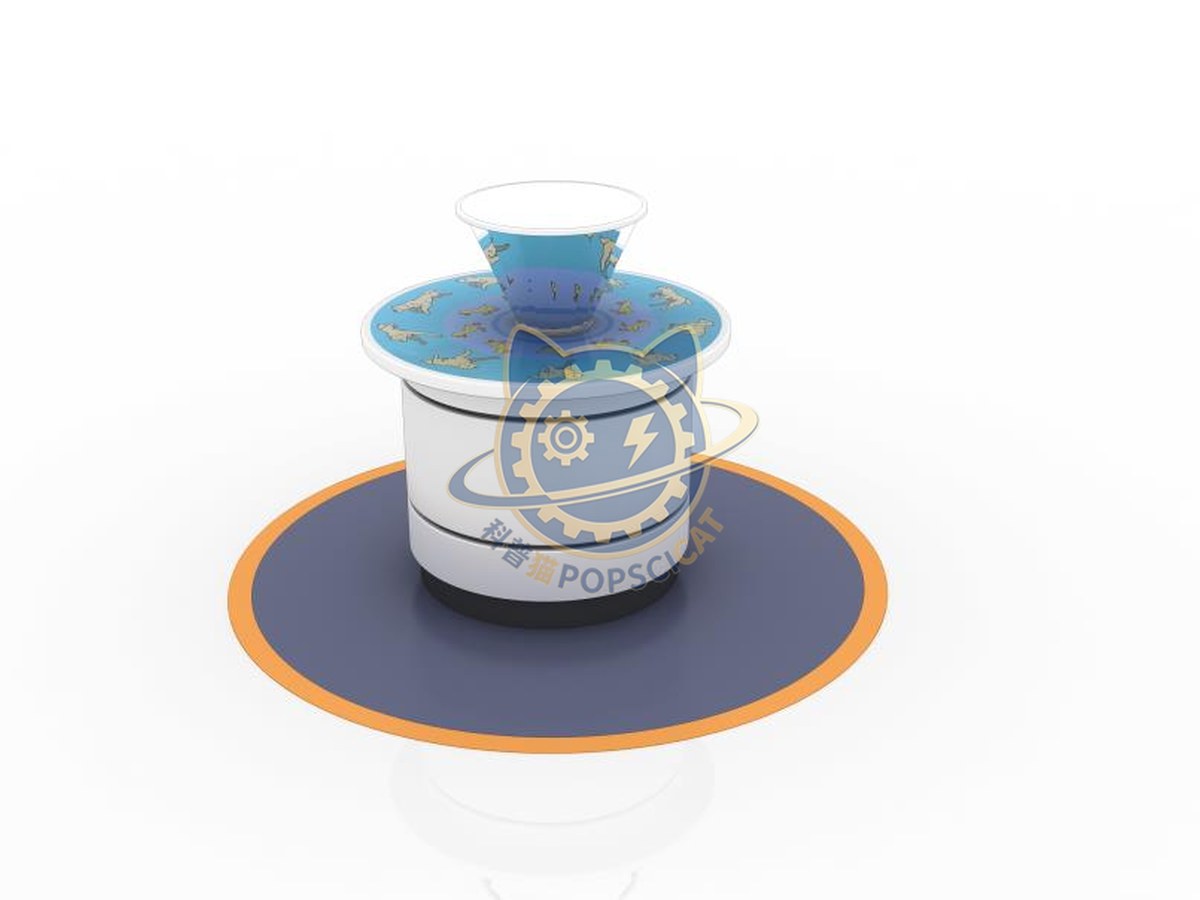
How does animation move? · custom size · Children's Discovery
The exhibit that answers the question every child eventually asks: why does a flip-book move? It lets a child make a drawing come alive, and it is built for open-ended, unsupervised play with no loose parts to lose.
The fun. Draw a stick figure, turn the wheel, and watch it walk. The delight is in the moment a static picture starts to move — the child is the animator, not the audience.
The interaction. They draw, they crank, they watch the persistence of vision do its trick. The mechanism is exposed, not hidden, so the "how" is part of the play.
What they learn without being told. That motion is an illusion built from still frames shown fast enough — persistence of vision. It is a first, friendly lesson in how film, cartoons, and screens actually work, handed over as a toy.
10. Who Lives Under the Soil? – The World Through the Eyes of Animals — Nature
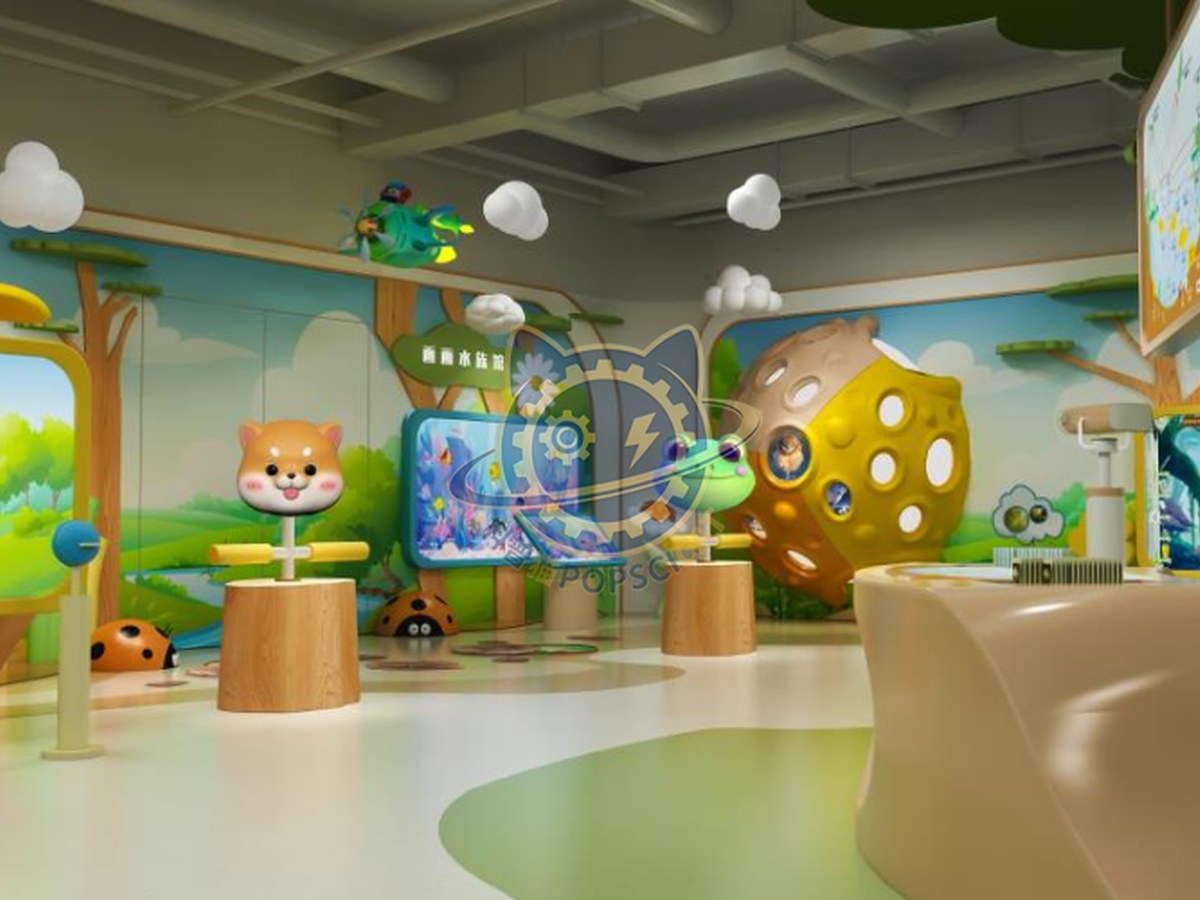
Who lives under the soil? – The World Through the Eyes of Animals · custom size · Children's Discovery
An immersive window into the underground world, seen through the senses of the animals that live there. It is the quiet, winding-down exhibit of the list — the one a child settles into after the water and the balls — and it rewards slow looking.
The fun. Crouch in, look through, and discover that the soil teems with life a child walking past would never notice. Seeing the world as a worm or a mole does is novel enough to hold attention without any prize.
The interaction. Look, compare, imagine. The exhibit asks the child to swap viewpoints rather than push a button, which is a different and valuable kind of play.
What they learn without being told. That a whole ecosystem lives beneath our feet, and that other creatures experience the world completely differently. It is a first, gentle lesson in empathy and biodiversity, disguised as a peek underground.
The ten at a glance
| # | Exhibit | Lives in | Footprint | What a child does | What they pick up | Best from |
|---|---|---|---|---|---|---|
| 1 | Joyful Water World | Water Play | 14 × 16 × 4.3 m | Diverts water, races ocean balls | Flow, force, cause & effect | 2–12 |
| 2 | Round Ball Rolling – Bountiful Harvest | Ball Play | 10.6 × 7.6 × 4.4 m | Cranks gears, moves balls | Mechanical transmission, systems | 3+ |
| 3 | Round Ball Rolling – Ball Travel | Ball Play | 6.6 × 0.77 × 4.0 m | Loads balls into an airflow loop | Air force, gravity, turn-taking | 4+ |
| 4 | Bring Balloons Home | Airflow | 3.0 × 0.5 × 3.2 m | Watches a balloon ride the air | Bernoulli lift; "invisible" force | 4+ |
| 5 | Shining Dots | Light & Pixels | 3.6 × 0.6 × 2.1 m | Builds pictures from light points | The pixel; how images are made | 3+ |
| 6 | See Who Jumps High | Airflow Pressure | 2.4 × 0.4 × 2.3 m | Pumps air, races a ball up a tube | Compressed air; pressure as force | 4+ |
| 7 | Happy Water World – Water Vortex | Water Play | 0.52 × 0.45 × 1.5 m | Spins a whirlpool | Eddies; the Coriolis effect | 3+ |
| 8 | Sounds of Nature | Sound | Custom size | Hears and mixes nature sounds | Sound has a source; pitch; ears "see" | 3+ |
| 9 | How Does Animation Move? | Media & Perception | Custom size | Makes a drawing come alive | Persistence of vision; how film works | 4+ |
| 10 | Who Lives Under the Soil? | Nature | Custom size | Sees the world as a burrowing animal | Biodiversity; empathy; ecosystems | 3+ |
How to choose between them
Ten is more than a small centre needs on day one, so choose by covering the five kinds of play rather than by favourite. The list already balances them:
- Water (wet, high-delight, needs a drain) — Joyful Water World, Happy Water World – Water Vortex. Highest joy, but they need the daily water routine and a staff member nearby.
- Ball & mechanical motion (the "busy from across the room" exhibits) — Round Ball Rolling – Bountiful Harvest, Round Ball Rolling – Ball Travel. These are the ones parents photograph.
- Airflow (clean, dry, endlessly repeatable) — Bring Balloons Home, See Who Jumps High. No water, no mess, and they survive the roughest handling.
- Light & perception (quiet, thinking play) — Shining Dots, How Does Animation Move?. Good for the child who lingers rather than sprints.
- Sound & nature (calm, cooperative) — Sounds of Nature, Who Lives Under the Soil?. These are what turns a row of exhibits into a social, wandering floor.
A floor with one from each group feels complete to a child even if it is small. And match the age band: Joyful Water World and the ball mazes suit the school-age crowd and the confident toddler alike, while Sounds of Nature and the soil exhibit are the gentle entry points for the under-threes.
What to send a supplier
If this list nudges a decision, the most useful first message contains four things: the age band of the primary visitor, the weekly opening hours, a rough floor plan, and a budget range — even a wide one. With those, a manufacturer can say honestly which of these fit, which to cut, and what a floor actually costs to run, not just to buy.
Two things we always flag on a children's floor: ask for a spare kit with the order (balls, panels, the one critical module), and write an acceptance checklist before delivery that includes "every powered unit runs a full cycle" and "every wear part is reachable with one tool". Neither is exotic, and both are the difference between a delivery and a handover. Send a layout and we will come back with a unit list — start a quote here, or read the buying guide first if you want the sequence spelled out.
Written by our engineering and sales team from live project work, not from a survey. Figures describe our own projects and are indicative; they are not a quotation. Sizes, ages and specifications refer to standard models and change with custom work.

