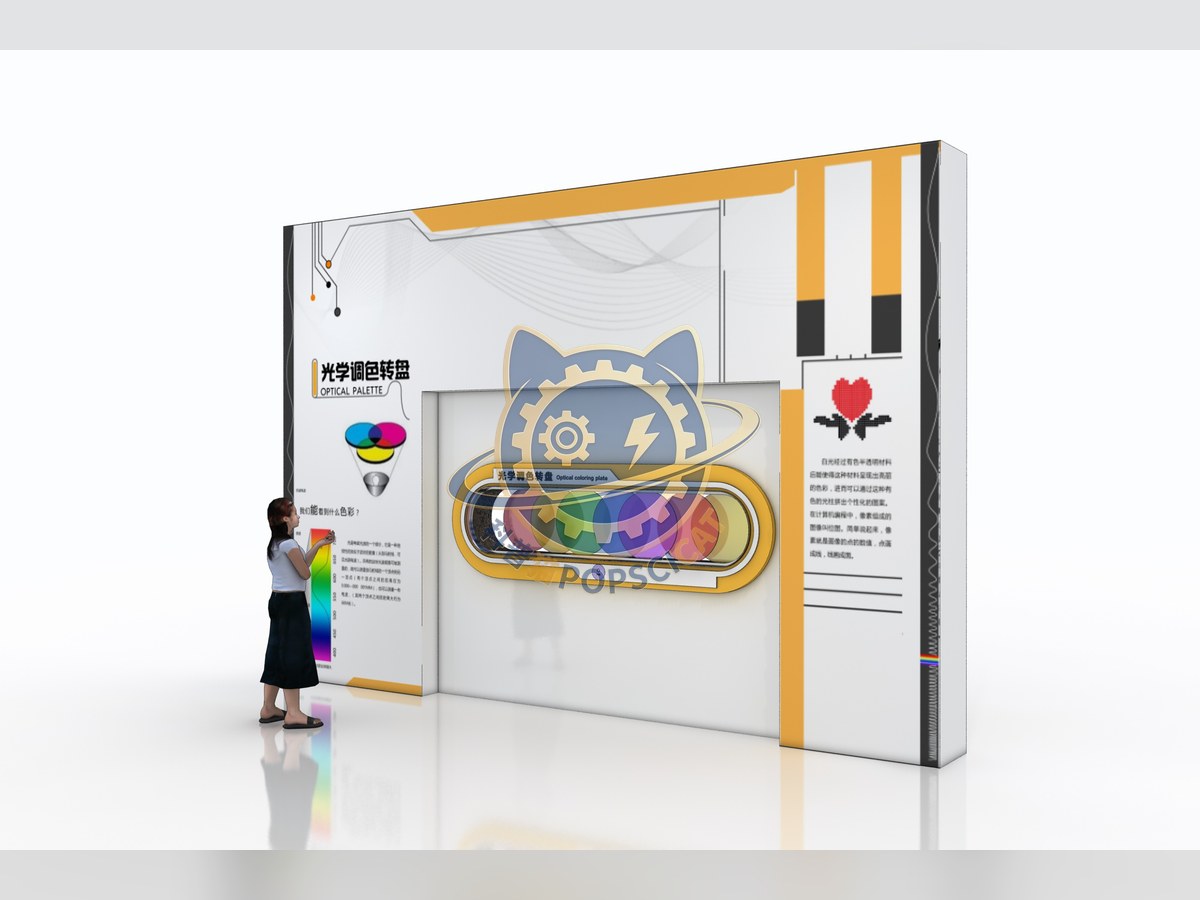
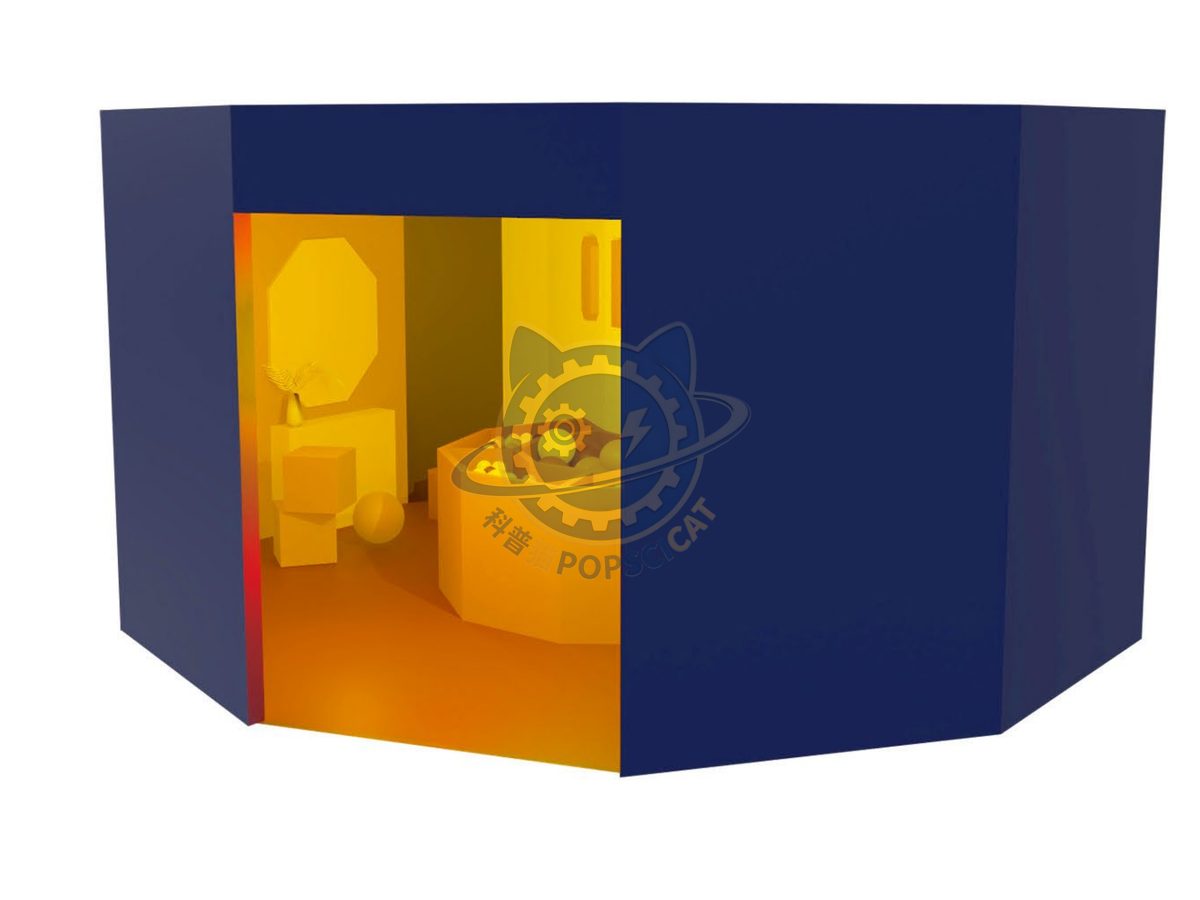
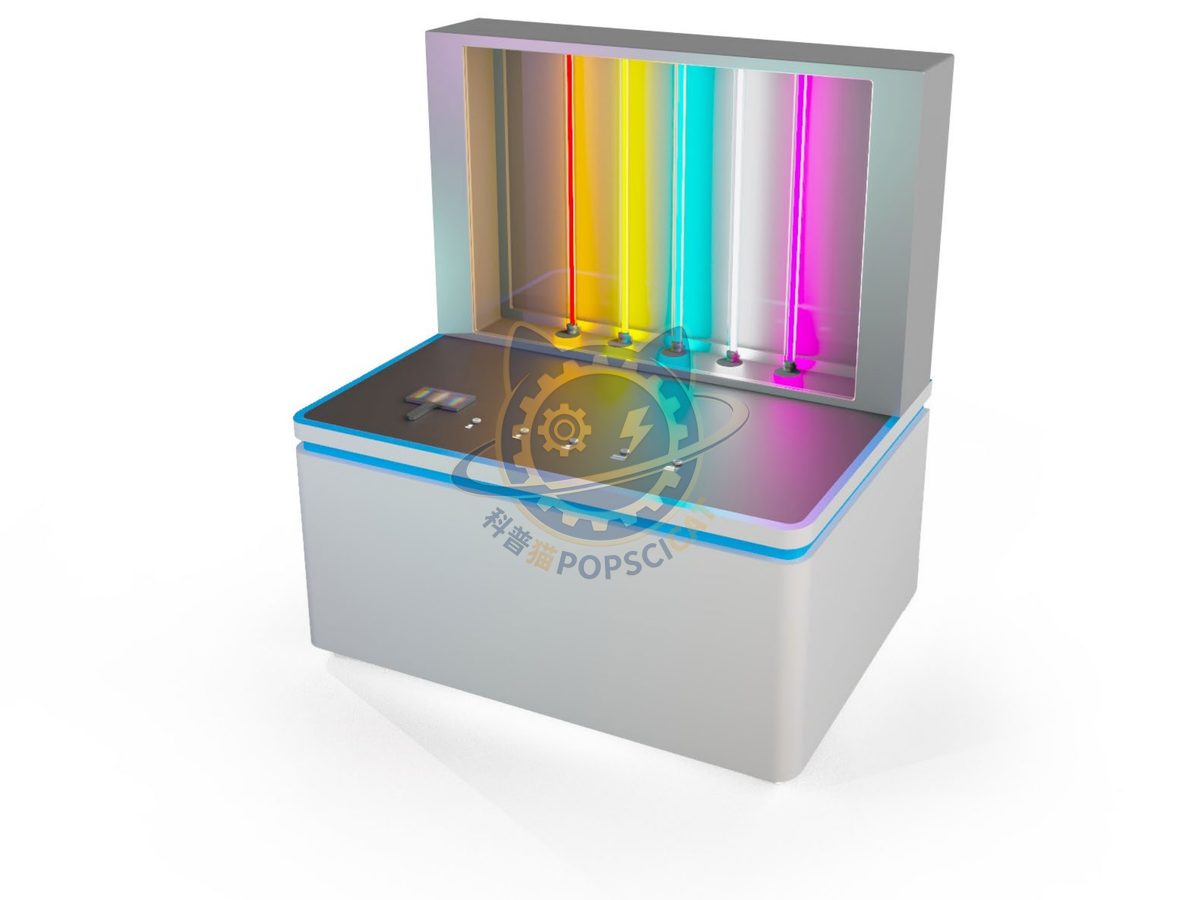
I. Purpose of the Exhibit This exhibit demonstrates the principles and knowledge related to the three primary colors through electromechanical interaction. II. Scientific Principles Primary colors refer to the three basic colors that cannot be further broken down. These are commonly known as the three primary colors: magenta, yellow, and cyan (note that it is cyan, not blue; blue is a mixture of magenta and cyan). The three primary colors can be mixed to produce all colors, and when combined, they form black. Black, white, and gray belong to the achromatic color scheme. The three primary colors generally refer to the three primary colors of pigments, which are magenta, yellow, and cyan under pure white light, and belong to the subtractive color system. They do not emit light themselves and are seen by reflection. Since the material absorbs light of specific wavelengths, only the unabsorbed portion is reflected back. The more colors added, the more light is absorbed, and the resulting color after mixing is white. When primary colors are mixed in different proportions, other colors are produced. Different color space systems have different combinations of primary colors. Additive primary colors Generally speaking, the colors used when light is projected belong to the "additive" primary color system, which includes the three primary colors of red, green, and blue, also known as the "three primary colors." These three primary colors can be used to produce other colors. For example, mixing red and green can produce yellow or orange, mixing green and blue can produce cyan, and mixing blue and red can produce purple or magenta. When these three primary colors are superimposed in equal proportions, they become gray. If the saturation of these three primary colors is adjusted to the maximum and they are superimposed in equal amounts, they will appear white. Subtractive primary colors Generally speaking, the colors used when coloring with reflected light sources or pigments belong to the "subtractive" primary color system, which includes the three primary colors of yellow, cyan, and magenta, and is another "three primary color" system. When these three primary colors are mixed, other colors can be produced. For example, mixing yellow and cyan can produce green, mixing yellow and magenta can produce red, and mixing magenta and cyan can produce blue. When these three primary colors are superimposed in equal proportions, they turn gray. If the saturation of these three primary colors is set to the maximum and they are mixed in equal amounts, they should theoretically appear black, but in reality, they appear as a muddy brown. III. Function Description (Technical Solution) The exhibit visually presents knowledge related to the three primary colors to the audience by allowing them to observe the color changes that occur when different colored discs overlap. 4. Operating Instructions Press the "Start" button and wait a few seconds. Observe the colors displayed when the differently colored discs overlap, and enjoy the colorful city through the color discs with different color combinations. It is built for unsupervised public use: surfaces are robust and wipe-clean, there are no loose parts, and the interface works without instruction, so a child of about six can operate it on a busy floor.